



|
Getting your Trinity Audio player ready...
|
By: Fern Sidman
Columbia University has unveiled a sweeping new policy initiative aimed at addressing rising concerns over antisemitism on its New York campus, a move that represents one of the most significant institutional responses to anti-Jewish bias in American higher education this year. As VIN News reported on Tuesday, the university’s leadership announced several measures, including the adoption of the widely recognized International Holocaust Remembrance Alliance (IHRA) working definition of antisemitism, a strengthened partnership with the Anti-Defamation League (ADL), and new enforcement mechanisms to address campus harassment and discrimination.
The IHRA definition, which categorizes certain forms of anti-Israel rhetoric as antisemitic—such as denying the Jewish people’s right to self-determination or applying double standards to Israel not expected of other democratic nations—will now serve as the university’s official framework for identifying antisemitic incidents. According to the information provided in the VIN News report, this adoption places Columbia among a growing list of academic institutions recognizing the IHRA standard amid increasing scrutiny from federal authorities and advocacy groups.
Columbia’s agreement with the ADL will include training sessions for both faculty and students. These sessions are designed to foster greater awareness of antisemitic tropes and to promote a more inclusive campus culture. The ADL’s involvement reflects a broader effort by Columbia’s administration to signal its commitment to proactive engagement on these issues.
One of the most notable components of Columbia’s announcement is its decision to bar official recognition of any student or employee organizations that endorse the Boycott, Divestment, Sanctions (BDS) movement against Israel. University officials stated that groups promoting BDS tactics will no longer be eligible for campus resources, funding, or official university recognition. The move marks a distinct policy shift for Columbia, which had long been considered a focal point for anti-Israel activism within American academia.
The VIN News report highlighted that these new measures come as the university engages in advanced negotiations with the Trump administration regarding the reinstatement of $400 million in federal funding. This funding was suspended in March following claims by federal authorities that Columbia had failed to adequately protect Jewish students from targeted harassment and discrimination. University officials hope that their enhanced policies will demonstrate a clear commitment to rectifying those concerns.
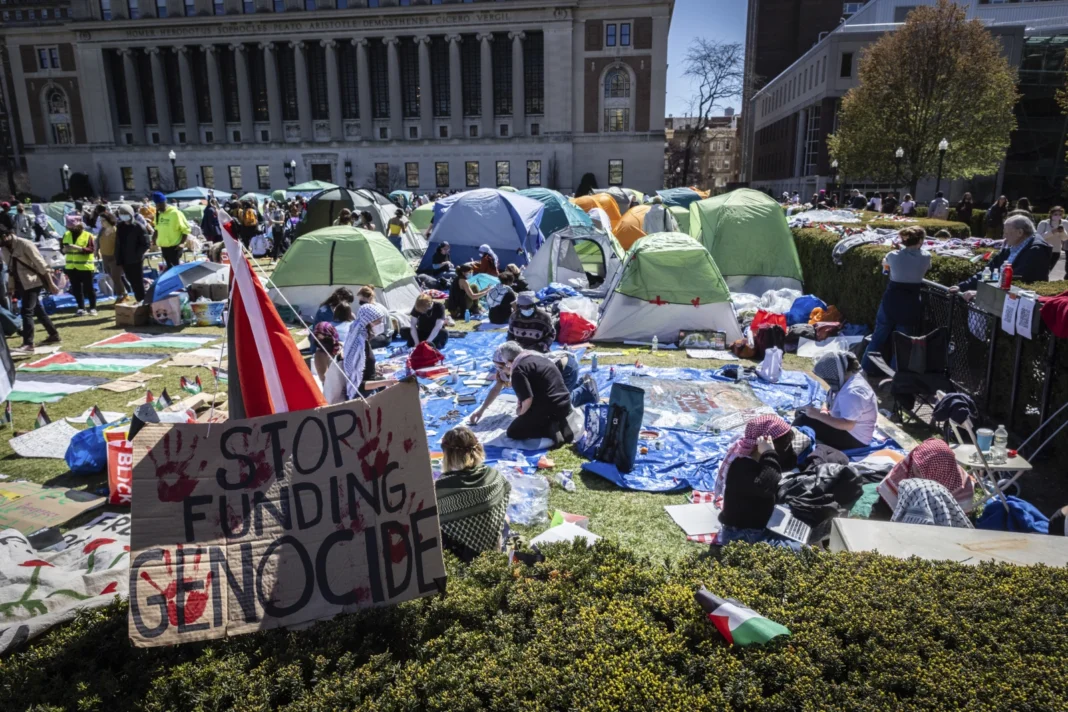
The decision to enforce these new measures follows months of heightened scrutiny of Columbia’s campus environment. Both Jewish students and outside advocacy groups have voiced repeated concerns over campus protests, inflammatory rhetoric, and instances of harassment that contributed to what they described as a hostile climate for Jewish members of the Columbia community.
Columbia’s policy shift signals a broader institutional acknowledgment of these longstanding issues. As the report at VIN News emphasized, the university has pledged to strengthen its internal monitoring processes by appointing dedicated monitors to handle reports of discrimination and harassment. These monitors will be tasked with ensuring that all complaints are thoroughly investigated and addressed in a timely manner.
The move also positions Columbia at the forefront of an ongoing national debate over how American universities handle campus activism related to Israel and Jewish identity. Columbia’s action comes amid a broader reexamination of how universities balance freedom of expression with the need to maintain a safe and inclusive environment for all students.
The adoption of the IHRA definition and the rejection of BDS-affiliated groups mark significant departures from past practices. Historically, Columbia had been criticized for allowing groups with overt anti-Israel agendas to operate freely on campus, contributing to what many Jewish students described as a climate of fear and alienation.
The ADL, a longstanding partner in efforts to combat antisemitism nationwide, welcomed the collaboration. ADL representatives expressed cautious optimism that the partnership with Columbia could serve as a model for other universities grappling with similar challenges.
Columbia’s leadership also emphasized the importance of education and dialogue in addressing antisemitism. As detailed in the VIN News report, university officials emphasized that the new measures are not solely punitive but are designed to foster a campus environment grounded in mutual respect and informed discourse.
In response to the announcement, leaders within the Jewish community expressed a mixture of relief and cautious optimism. VIN News reported that many advocacy organizations view Columbia’s initiative as a critical step toward restoring trust between the university and the Jewish community, though they cautioned that sustained commitment and transparent enforcement would be key to ensuring long-term success.
Columbia’s shift comes amid a broader reckoning within higher education regarding antisemitism, especially in the wake of global tensions surrounding the Israeli-Palestinian conflict.
As negotiations with the Trump administration continue, Columbia’s leadership is positioning the new measures as part of a comprehensive effort to not only restore federal funding but also to reaffirm the university’s commitment to its entire student body. Both the administration and federal officials appear intent on using this moment to set a precedent for how universities should address antisemitism and discrimination in higher education.
While questions remain about how these new policies will be implemented and enforced, the steps announced by Columbia represent a significant policy shift and a clear acknowledgment of the concerns raised by students, parents, and Jewish organizations. As the VIN News report emphasized, the university’s actions will likely be closely watched by both supporters and critics in the weeks and months ahead.
