



|
Getting your Trinity Audio player ready...
|
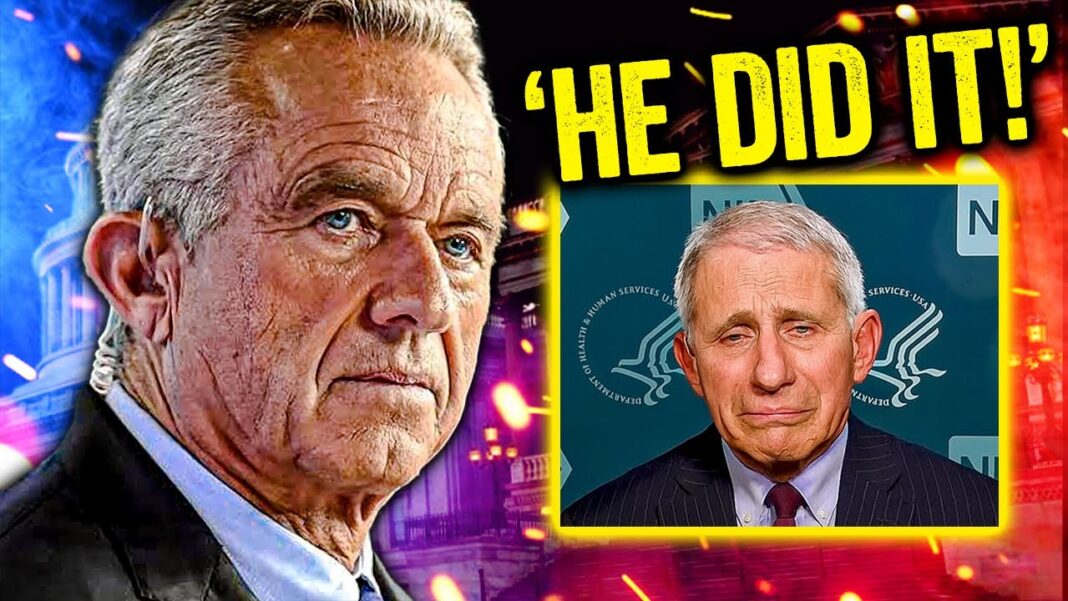
(TJV NEWS) In a provocative accusation that challenges the official narrative surrounding the pandemic, Robert F. Kennedy Jr. has alleged that Dr. Anthony Fauci was granted immunity to shield him from legal consequences tied to the origins of COVID-19.
Speaking in a recent interview, Kennedy questioned the rationale behind what he described as a “preemptive pardon” for Fauci, suggesting it was not a procedural measure but rather a calculated effort to protect him from fallout over his alleged role in funding risky virus research. “Why was he given immunity?” Kennedy asked. “Because he was involved from the start.”
According to Kennedy, Fauci’s agency—then the National Institute of Allergy and Infectious Diseases (NIAID)—channeled U.S. taxpayer dollars to China’s Wuhan Institute of Virology, helping enable gain-of-function research that may have led to the creation of SARS-CoV-2, the virus that caused the global pandemic.
Kennedy points to whistleblower accounts, leaked documents, and emerging findings from congressional probes as evidence that the funding continued despite a U.S. ban on such research. He claims that critical oversight was intentionally bypassed, and that the media and political establishment have been complicit in downplaying or ignoring these links.
“If these allegations are confirmed,” Kennedy said, “this could be one of the most staggering betrayals in American history. Millions died, our economy collapsed, and people were stripped of basic freedoms—all while those responsible were shielded from scrutiny.”
He criticized the lack of transparency and has demanded a full, independent investigation into Fauci’s ties to the Wuhan lab, calling for access to classified documents, funding records, and internal communications.
“This isn’t about scoring political points,” Kennedy insisted. “It’s about getting to the truth. The American people deserve answers.”
Kennedy’s claims have reignited debate over the origins of COVID-19, government transparency, and whether public health officials should be held to account for their decisions before and during the crisis. As pressure builds for a formal inquiry, questions continue to mount about who knew what—and when.