




|
Getting your Trinity Audio player ready...
|
By: Jerome Brookshire
As Israel stands at a crossroads marked by economic turbulence and regional threats, few names resonate with the same mixture of entrepreneurial brilliance and unwavering national commitment as the Nakash brothers. Founders of the Jordache empire and stewards of one of Israel’s most strategic assets–the Port of Eilat–the Nakash family has not merely built businesses; they have built bastions of sovereignty, resilience, and opportunity.
This week, as Ynet News reported, the Port of Eilat teeters on the brink of closure due to financial duress and operational stagnation, attention has turned once more to the Nakash brothers and the colossal imprint they have left on Israel’s economic and logistical infrastructure. While preparations are underway for the highly anticipated IPO of Jordache Israel, another arm of the family’s enterprise–the Pfau Shipping Company, operator of the Port of Eilat–is locked in a battle not only for solvency but for the soul of Israel’s southern gateway.
The Port of Eilat, a critical southern anchor for Israel’s maritime activity, has been virtually dormant since November 2023. According to the information provided in the Ynet News report, the cessation stems from persistent security concerns in the Bab al-Mandab Strait, where Yemen’s Iranian-backed Houthi terrorists have increasingly targeted shipping routes. This geopolitical chokehold has slashed port revenue by a staggering 80% year-over-year in 2024.
For most companies, such losses would spell a swift retreat. But the Nakash brothers have always played a longer game–anchoring their economic ambitions in a commitment to Israel’s national development. The looming closure of the port this week–announced by the Shipping and Ports Authority (SPA)–has ignited alarm far beyond the private sector. The National Emergency Authority has issued dire warnings to the Ministers of Defense and Transportation, as well as the National Security Headquarters, citing a cascade of negative consequences if Eilat’s port operations cease altogether.
“The closure of this port,” one official told Ynet News, “would constitute a strategic victory for the Houthis and a profound loss for the Israeli economy.”
To grasp the gravity of the situation, one must appreciate the port’s singular role in Israel’s national architecture. The Port of Eilat is not just another maritime outlet–it is a critical node for military logistics, energy transportation, and economic diversification. The report at Ynet News noted that tugboat operations supporting Israeli Navy missions in the Red Sea would grind to a halt. The Europe-Asia pipeline–which funnels crude oil from Eilat to Ashkelon–would lose a vital southern terminus. Potash exports from the Dead Sea Works would be rerouted to Ashdod, disrupting efficiency and weakening economic output.
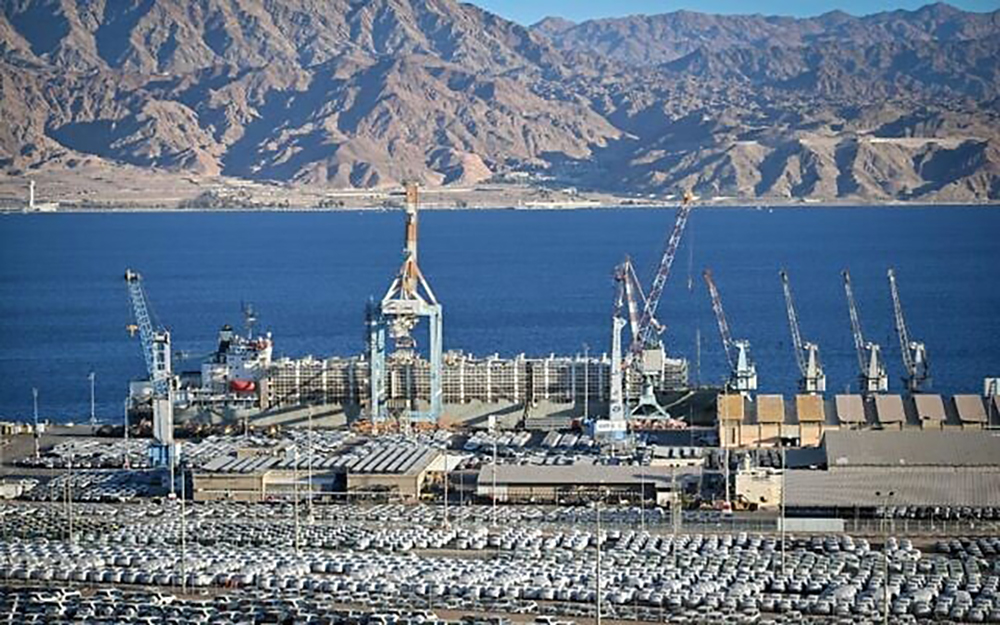
Above all, the port’s automobile import operations have historically been its lifeblood. In 2023 alone, Eilat facilitated the import of over 150,000 vehicles–more than half of Israel’s new car market. This high-yield, low-cost activity generates outsized revenues compared to other forms of port traffic. Officials at the port have implored the Ministry of Economy to reinstate a 2016 import directive mandating that vehicles manufactured in East Asia enter Israel exclusively through Eilat. So far, those calls have gone unheeded.
Yet amidst this backdrop of economic anxiety, the Nakash brothers have remained remarkably steadfast. As the Ynet News report highlighted, even as the state appears unwilling to rescue this private enterprise–one integral to national security–the Nakash family has continued to honor its commitments, lobbying for the preservation of the port not merely as an asset, but as a national necessity.
The Port of Eilat is but one pillar in the Nakash brothers’ enduring legacy. Since establishing Jordache Enterprises, the brothers–Joseph, Avi, and Ralph–have extended their reach into virtually every sector of Israel’s economy: aviation, real estate, agriculture, fashion, energy, and tourism. Their investments reflect a deep conviction that economic development is itself an act of Zionism.
Their acquisition and revitalization of the El Al subsidiary airline Sun d’Or is emblematic of this vision. They turned a dormant carrier into a profitable venture while expanding air links between Israel and global destinations. Similarly, their real estate holdings, including the iconic Setai Hotel in Tel Aviv and multiple luxury properties in Jerusalem and Eilat, have redefined the Israeli hospitality landscape while attracting tourism and generating employment.
Ynet News has frequently spotlighted the brothers’ instrumental role in restoring historic neighborhoods and rejuvenating blighted urban centers. In all these ventures, the Nakash ethos is clear: build not just for profit, but for posterity.
The current crisis at the Port of Eilat shines a spotlight on a persistent dilemma in Israel’s governance–namely, the failure to support vital private sector operators even when they serve national interests. In June 2025, the government approved a two-part NIS 15 million aid package to the Eilat Port Company, conditional upon repayment of NIS 3.2 million in deferred port usage fees. Yet even with the designation of the port as a “strategic national asset,” these funds have proven insufficient.
“There’s a painful irony here,” a port official lamented to Ynet News. “During the pandemic, the state bailed out fashion brands and airlines–some of which are now thriving. But when it comes to essential infrastructure, they look the other way.”
It is a view shared by employees and executives alike. Many see the looming closure as not just a financial failure, but a moral abdication. “The state expects a private company to survive nearly two years of zero revenue,” one senior official stated. “We’ve been left to drown.”
More than an economic facility, the Port of Eilat has become a symbolic front in Israel’s multifaceted war–against terrorism, against economic stagnation, and against public complacency. The closure of this strategic asset under pressure from Houthi aggression represents not only a tactical retreat, but a psychological blow to Israel’s maritime sovereignty.
This is precisely why the Nakash brothers’ leadership is so critical at this moment. In stark contrast to state indifference, they have exhibited what can only be described as entrepreneurial patriotism. They have kept the lights on at the port, sustained their workforce, and absorbed staggering losses–all in the hope that the government would recognize what they already know: that this port, like so many of their projects, is not merely a business. It is a lifeline.
It is now up to Israel’s leaders–economic, political, and military–to decide whether the Nakash brothers’ vision will be vindicated or squandered. Will they step in to salvage a strategic asset, or will they allow one of Israel’s most vital lifelines to be choked off by external threats and internal inertia?
One thing is certain: The Nakash brothers have given Israel more than business acumen. They have given it belief. In airports and office towers, in hotels and port terminals, in crises and in calm–they have invested not only money, but meaning.