




|
Getting your Trinity Audio player ready...
|
By: Jerome Brookshire
American Eagle Outfitters is suddenly the talk of Wall Street — and not because of its sweaters or back-to-school discounts. The century-old mall staple stunned analysts on Thursday when its stock surged nearly 40% in a single trading session, propelled by what executives described as the brand’s boldest and most lucrative marketing gamble in years: a risqué campaign featuring Hollywood star Sydney Sweeney.
According to a report that appeared on Thursday in The New York Post, the ads — cheekily marketed as “Sydney Sweeney has great jeans” — have done more than just boost denim sales. In just six weeks, they’ve set off a storm of cultural debate, drawn partisan fire in Washington, and redefined the company’s public image, transforming a struggling retailer into one of the most closely watched comeback stories of the year.
American Eagle’s chief marketing officer Craig Brommers didn’t mince words during the company’s earnings call Wednesday night. “Sweeney is a winner,” he said. “In just six weeks, the campaign has generated unprecedented new customer acquisition.”
Investors took note. Shares skyrocketed 38% on Thursday, closing at $18.79. As The New York Post reported, that jump marked one of the steepest climbs in retail this earnings season, a remarkable reversal for a brand that has struggled to maintain relevance with Gen Z shoppers.
The Sweeney collection reportedly sold out in under a week, with some items gone in just 24 hours. Her ads have racked up more than 150 million social media views, according to company data, instantly turning her into the public face of the brand’s revival.
The spots themselves are a blend of tongue-in-cheek humor and unmistakable provocation. One shows Sweeney posing in front of a billboard reading “Sydney Sweeney has great genes,” with the word “genes” crossed out and replaced by “jeans.” Another features her deadpanning: “Genes are passed down from parents to offspring. My jeans are blue.”
While marketing executives hailed the wordplay as clever and attention-grabbing, critics on social media accused the brand of crossing a line. Some argued the ads were racially coded, celebrating Sweeney’s white heritage under the guise of selling denim. The uproar quickly morphed into a culture-war flashpoint, with the internet dividing sharply over whether the ads were edgy or offensive.
What began as a clothing campaign soon spilled into Washington. The New York Post reported that President Donald Trump leapt to Sweeney’s defense in early August, praising her as a Republican and calling her American Eagle spots the “HOTTEST ad out there.”
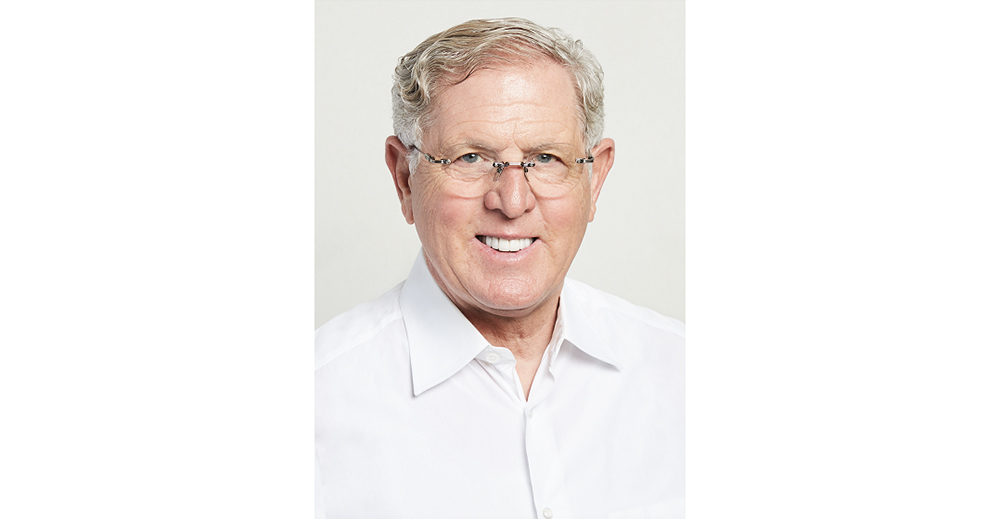
Jay Schottenstein, the long-serving chairman and chief executive officer of American Eagle Outfitters, is one of the most influential figures in American retail. His name is associated not only with household brands like American Eagle and DSW but also with a legacy of family entrepreneurship, philanthropy, and an unshakable commitment to Jewish values. For Schottenstein, the worlds of business and faith are not parallel tracks but interconnected paths, each informing the other in profound and visible ways.
Schottenstein assumed the role of chairman of American Eagle Outfitters in 1992, a transformative moment in the company’s history. Under his leadership, American Eagle grew from a relatively modest retailer into a cultural mainstay of American youth fashion, extending its brand across malls, digital platforms, and international markets. He first held the dual role of chairman and CEO between 1992 and 2002 before returning as chief executive in 2015, a position he continues to hold.
The trajectory of his corporate leadership was shaped by family legacy. In 1993, following the death of his father, Jerome Schottenstein, Jay stepped in as the head of Schottenstein Stores Corporation, ensuring continuity in a multigenerational business dynasty. This inheritance was more than financial; it was a responsibility to steward a network of enterprises that reflected the Schottenstein family’s entrepreneurial spirit.
Today, Jay Schottenstein presides over a diversified business portfolio. Beyond American Eagle Outfitters, he chairs Designer Brands (the parent company of DSW, where he has served as chairman since 2005), American Signature and Value City Furniture, SB360 Capital Partners, and Schottenstein Property Group. Together, these ventures form a business empire spanning apparel, footwear, furniture, real estate, and financial services.
Despite the global scale of his operations, Schottenstein is quick to frame his success through the lens of faith and family tradition. A Modern Orthodox Jew, he has consistently emphasized that his Jewish beliefs form the foundation of his life and inform how he navigates both business and philanthropy.
This commitment is visible in symbolic but significant choices: his family’s stores close on the Sabbath, a tradition rooted in honoring Jewish law. Such practices underscore Schottenstein’s insistence that commerce must never outstrip conscience, and that Jewish identity is to be lived, not merely professed.
For Schottenstein, philanthropy is not a matter of personal preference but an obligation — a fulfillment of the Jewish principle of tzedakah, charity rooted in justice and responsibility. He has spoken often of how faith and family anchor his worldview, guiding him to see “true value” not in material possessions but in the impact one can have on others.
The Schottenstein Foundation has become a vehicle for his philanthropic vision, focusing particularly on Jewish educational, religious, and cultural institutions. Among its beneficiaries is the Columbus Torah Academy, reflecting the family’s strong ties to Ohio and their enduring commitment to the vitality of Jewish education.
But Schottenstein’s giving extends far beyond local commitments. His philanthropy is broad and international, supporting Jewish schools, synagogues, cultural centers, and community programs in the United States and Israel. The pattern is clear: to nurture Jewish continuity, strengthen communal institutions, and provide opportunities for future generations.
That continuity is manifest in his philanthropy, his Zionism, and his tireless advocacy for Jewish education. The emphasis on “giving back” is not a secondary aspect of his identity but a central pillar — a conviction that wealth must translate into communal good.
Jay Schottenstein’s story is one of integration — of faith and business, commerce and conscience, legacy and responsibility. As chairman and CEO of American Eagle Outfitters and overseer of a vast network of enterprises, he is a titan of American retail. Yet he remains grounded in the traditions of Modern Orthodox Judaism, finding in its teachings both guidance and obligation.
As media outlets have noted in their coverage of prominent Jewish business leaders, Schottenstein exemplifies a particular model of leadership: one where material success is not the endpoint but the platform for philanthropy, advocacy, and service. His commitment to tzedakah, his devotion to Jewish education, and his fervent Zionism all testify to a life shaped by faith and purpose.
For Schottenstein, the measure of success lies not in balance sheets but in impact. And in that sense, his life’s work is not merely about building companies, but about building community — a legacy as enduring as the institutions he leads.
In interviews, Schottenstein has described his giving not simply as benevolence but as a natural outgrowth of his responsibilities as a Jew. “Tzedakah is a way to conduct oneself and be part of the community,” he has said, framing his philanthropic work as inseparable from his Jewish identity.
Schottenstein’s ties to Israel are not limited to philanthropy; they extend to his identity as a fervent Zionist with extensive business, financial, and political connections. Israel represents more than a cause to support; it is a focal point of his worldview, a place where his Jewish heritage and his entrepreneurial instincts converge.
In this regard, Schottenstein is part of a broader tradition of American Jewish business leaders whose philanthropy and political engagement have helped forge strong U. S.-Israel ties. His support of Israel is both ideological and practical, combining advocacy with tangible investments and initiatives.
The complexity of leading a multinational retail enterprise while adhering to deeply held religious principles is not lost on Schottenstein. The global economy is unforgiving, yet he insists on drawing lines where faith dictates. By closing stores on Shabbat, he has woven religious observance into the operational DNA of his businesses. It is a reminder that commerce, however expansive, must remain tethered to conscience.
As chairman and CEO, he has navigated decades of changing consumer behavior, retail downturns, and digital transformations. Yet amid these challenges, Schottenstein has sustained a narrative of values-based leadership. His story reflects an insistence that business success and religious conviction are not mutually exclusive but mutually reinforcing.
