



|
Getting your Trinity Audio player ready...
|
By: Andrew Carlson
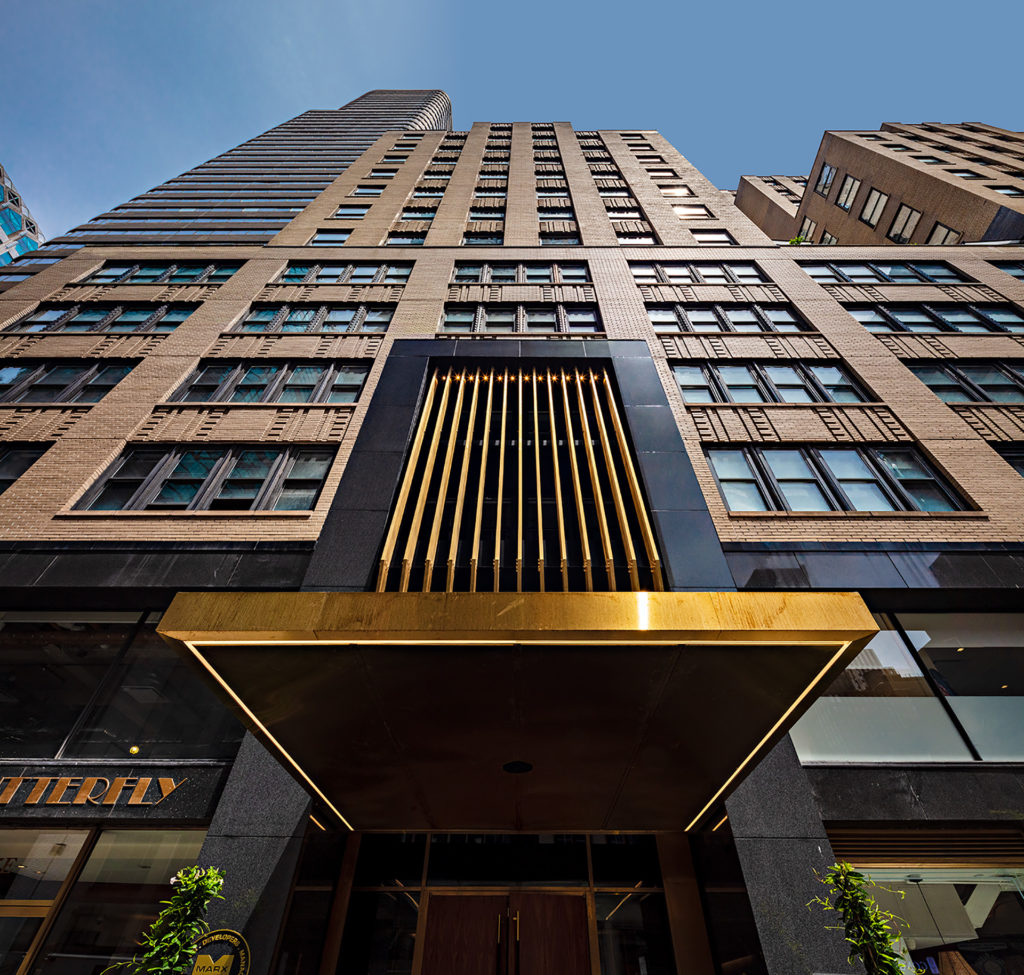
When a landlord moves its own headquarters to accommodate another tenant, it’s often a clear indicator of strong demand. That’s precisely the case at Marx Realty’s 10 Grand Central, the 450,000-square-foot Art Deco office tower at East 44th Street and Third Avenue that has undergone a dramatic revival in recent years. As The New York Post reported on Sunday, the building—formerly known by its address, 708 Third Avenue—has become one of Midtown’s hottest commercial properties since a sweeping repositioning effort in 2018.
The transformation began when Marx Realty Chief Executive Officer Craig Deitelzweig spearheaded a $45 million redevelopment plan. A key part of the project was rebranding the tower with a new identity, discarding the avenue address in favor of “10 Grand Central,” and shifting its main entrance to East 44th Street. The strategy, according to the information provided in The New York Post report, was designed to shed the property’s dated image and align it more closely with the prestige of nearby Grand Central Terminal.
The investment has paid off. Since the repositioning, 10 Grand Central has been on what The New York Post report described as a “leasing juggernaut,” attracting a steady stream of high-profile tenants. Most recently, approximately 27,000 square feet of new leases have pushed occupancy to over 95 percent—a level virtually unheard of in Manhattan’s still-recovering office market.
To meet tenant needs, Marx Realty will relocate its own corporate offices from 9,000 square feet on the seventh floor to a larger, 11,000-square-foot suite on the 11th floor. The move clears the way for 1-800-Flowers to expand into Marx’s current headquarters space from a smaller sublease on the 18th floor.
“I never saw before in my 24-year career so many tenants expanding or wanting to,” Deitelzweig told The New York Post, noting the unusual breadth of demand across the building’s roster.
Deitelzweig attributed the surge in leasing activity to a shift in workplace patterns. Many companies that were cautious about expanding during the pandemic—and in its immediate aftermath—have now embraced a return to the office, often four or five days per week. “People thought hybrid work would last forever,” he said, adding that the reality has been markedly different for firms seeking to reestablish in-person collaboration and culture.
The result is a steady stream of expansions and relocations within the building. For example, alternative asset management firm Hayfin Capital Management will move from its current location in the GM Building to a 7,000-square-foot space on 10 Grand Central’s 16th floor. That space became available only when telehealth provider Teladoc expanded its presence to the 17th floor, another sign of the building’s internal leasing momentum.
Demand has also fueled aggressive rent growth. As The New York Post report noted, Marx Realty has raised asking rents at 10 Grand Central four times in the past year alone, from $82 per square foot to $130 per square foot. Two floors at the top of the tower—previously reserved for mechanical use—are now being converted into premium office space featuring all-glass perimeters. Those floors will command an asking rent of $230 per square foot, placing them firmly in the top tier of Midtown’s market.
The premium pricing reflects not only the building’s high occupancy but also its amenity-rich environment and design-forward approach to office interiors.
One of the building’s most distinctive features is The Meeting Galleries, an 11,000-square-foot amenities complex designed to serve as a hub for corporate gatherings, client events, and employee collaboration. Comprising four distinct meeting spaces, the complex includes a “Town Hall” lounge outfitted with design cues reminiscent of luxury train travel in the 1930s. According to the information contained in The New York Post report, every detail—from the seating to the murals and artworks—was selected to evoke a sense of timeless sophistication while catering to the needs of modern tenants.
These shared spaces have proven to be a strong draw for prospective tenants, many of whom now prioritize flexible, high-quality meeting environments as part of their leasing decisions.
10 Grand Central’s success stands out in a Manhattan office market still facing high vacancy rates in the wake of pandemic-driven workplace changes. The property’s transformation underscores the role that targeted capital investment, rebranding, and amenity curation can play in repositioning older assets to compete with new construction.
As The New York Post report highlighted, the reimagining of the building’s identity—coupled with visible physical improvements—has not only changed perceptions but also delivered measurable returns in terms of occupancy, rent growth, and tenant retention.
In many ways, the building’s trajectory mirrors broader trends in the New York City office sector, where high-quality, well-located properties with robust amenity packages continue to outperform. For landlords, the lesson from 10 Grand Central’s resurgence is clear: tenants are willing to pay a premium for space that combines prime location, distinctive design, and functional amenities that support both productivity and workplace culture.
As Marx Realty settles into its new headquarters within the same building, the decision to vacate space for an expanding tenant signals a level of landlord confidence that few Midtown properties can currently match. In a market still defined by uncertainty, 10 Grand Central’s near-full occupancy and rapid rent escalation offer a compelling case study in how to reposition an asset for long-term success.
