



|
Getting your Trinity Audio player ready...
|
By: Jerome Brookshire
In a transaction as expansive as it is contentious, a sweeping reshuffling of ownership within New York’s nursing home sector is underway—one that intertwines staggering financial ambition with lingering questions about oversight, accountability, and the stewardship of vulnerable populations. At the center of this transformation is the Emerald Group, whose recent acquisition of multiple facilities from Centers Healthcare marks a pivotal chapter in a broader $1.7 billion deal that is rapidly redrawing the contours of long-term care infrastructure in the region.
As reported by The Real Deal on Thursday, the transaction underscores both the enduring profitability of healthcare real estate and the profound ethical considerations that accompany its management.
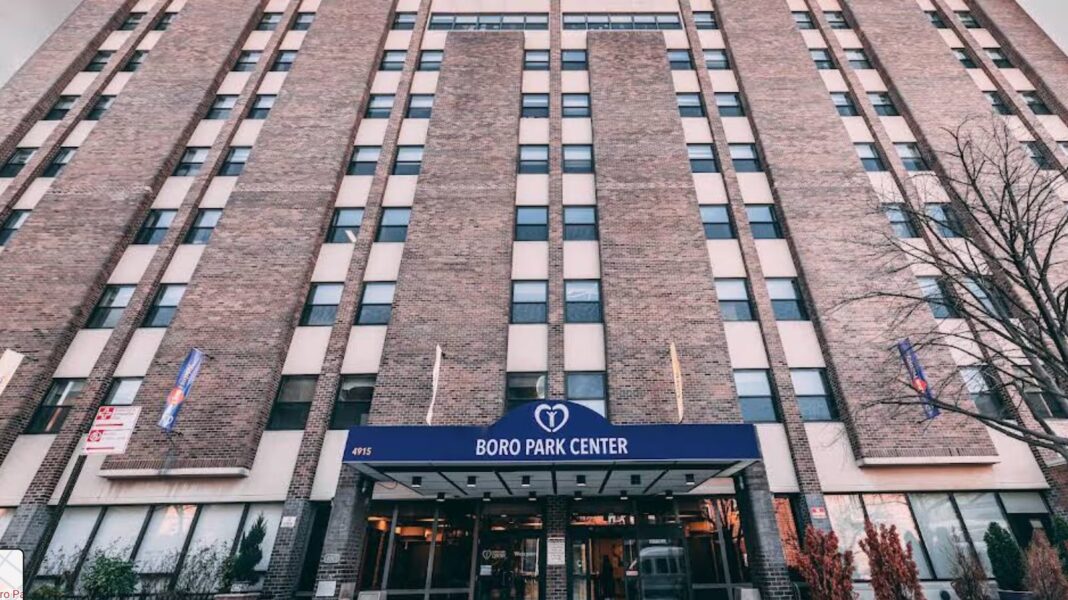
The most prominent component of the acquisition is the $296 million purchase of three Brooklyn-based nursing and rehabilitation facilities. Chief among them is the sprawling Boro Park Center, located at 4915 10th Avenue in Borough Park, Brooklyn, which alone accounted for $161 million of the total deal.
This 504-bed facility represents not merely a significant real estate asset but a cornerstone of community healthcare provision. According to The Real Deal report, its valuation has undergone a dramatic transformation over the past decade. Originally acquired in 2011 for just $19 million by Daryl Hagler, the property has since expanded by 150 beds and appreciated exponentially in value.
The transaction also includes the Brooklyn Center for Rehabilitation and Nursing at 170 Buffalo Avenue and the Bushwick Center for Renal Dialysis, located at 51 Georgia Avenue and 50 Sheffield Avenue. Together, these facilities form a substantial segment of Brooklyn’s healthcare infrastructure, serving hundreds of patients with a range of medical and rehabilitative needs.
The scale of the acquisition is matched by the complexity of its financing. As reported by The Real Deal, the deal was underwritten by a $240 million loan administered by Huntington Bank. This infusion of capital reflects both the confidence of financial institutions in the long-term viability of healthcare real estate and the significant leverage required to execute transactions of this magnitude.
For Emerald Group, headquartered in Lakewood, New Jersey, the acquisition represents a strategic expansion of its footprint in the healthcare sector—a domain increasingly viewed by investors as resilient amid broader economic volatility.
The Brooklyn acquisitions are but one component of a far more ambitious undertaking. As The Real Deal has reported, Emerald’s purchases are part of a comprehensive $1.7 billion agreement to acquire a substantial portion of Centers Healthcare’s portfolio.
Centers, co-owned by Hagler and Kenneth Rozenberg, operates more than 45 nursing homes, the majority of which are located within New York State. The scale of this portfolio underscores the significance of the transaction, positioning Emerald as a major player in the region’s long-term care market.
In addition to the Brooklyn facilities, Emerald also acquired two properties in the Bronx—located at 1540 Tomlinson Avenue and 1010 Underhill Avenue—for $35.75 million. These acquisitions further consolidate Emerald’s presence across multiple boroughs, enhancing its operational reach and influence.
Yet the financial magnitude of the deal is inextricably linked to a backdrop of legal and regulatory scrutiny that continues to shadow Centers Healthcare and its leadership. As highlighted by The Real Deal report, Hagler and Rozenberg reached a $45 million settlement in 2024 with New York Attorney General Letitia James.
The lawsuit alleged that the executives had diverted more than $83 million in Medicaid and Medicare funds for personal enrichment, even as residents in their facilities allegedly endured substandard conditions. Such allegations, if substantiated, strike at the heart of public trust in the administration of healthcare services—particularly those funded by taxpayer dollars.
Compounding these concerns, the state of New Jersey initiated legal action earlier this year against Hagler, Rozenberg, and 31 additional family members. The lawsuit alleges the diversion of tens of millions of dollars in Medicaid funds, raising further questions about governance practices within the organization.
The juxtaposition of these legal challenges with the scale of Emerald’s acquisition invites a broader reflection on the intersection of profit and care within the nursing home industry. Healthcare facilities occupy a unique position within the real estate landscape: they are simultaneously commercial assets and essential service providers.
This dual identity creates inherent tensions. On one hand, investors seek to maximize returns through strategic acquisitions, operational efficiencies, and asset appreciation. On the other, these facilities are entrusted with the care of some of society’s most vulnerable individuals—patients whose well-being depends on the quality and integrity of the services provided.
As The Real Deal report observed, the rapid appreciation in property values—such as the transformation of the Boro Park Center from a $19 million purchase to a $161 million asset—highlights the lucrative nature of the sector. Yet such financial gains must be weighed against the ethical imperative to ensure that profitability does not come at the expense of patient care.
For Emerald Group, the acquisition represents both an opportunity and a responsibility. As the new owner of these facilities, the firm inherits not only valuable real estate assets but also the obligation to address the concerns that have been raised regarding their prior management.
The absence of public comment from Emerald, Centers Healthcare, and Hagler—despite inquiries reported by The Real Deal—leaves many questions unanswered. How will Emerald approach the operational challenges associated with these facilities? What measures will be implemented to ensure compliance with regulatory standards and the delivery of high-quality care?
These questions are not merely academic. They bear directly on the lives of residents, the confidence of families, and the credibility of the healthcare system as a whole.
The broader implications of the transaction extend beyond the immediate parties involved. The consolidation of nursing home assets under new ownership reflects a continuing trend within the industry—one characterized by large-scale portfolio deals and increasing institutional investment.
As The Real Deal has consistently reported, such trends are reshaping the landscape of healthcare real estate, introducing new dynamics in ownership, management, and financing. For policymakers and regulators, these developments present both opportunities and challenges, necessitating vigilant oversight to ensure that the interests of patients remain paramount.
The $1.7 billion transaction involving Emerald Group and Centers Healthcare is, in many respects, a defining moment for New York’s nursing home sector. It encapsulates the convergence of financial ambition, regulatory scrutiny, and societal responsibility that characterizes modern healthcare real estate.
As the dust settles and the transition unfolds, the true measure of the deal will not be found in its dollar value but in its impact on those who depend on these facilities for care and support. The stakes are high, and the scrutiny will be intense.
In the words of The Real Deal, this is more than a real estate transaction—it is a test of whether the pursuit of profit can be reconciled with the imperative of compassion.
