



|
Getting your Trinity Audio player ready...
|
By: Russ Spencer
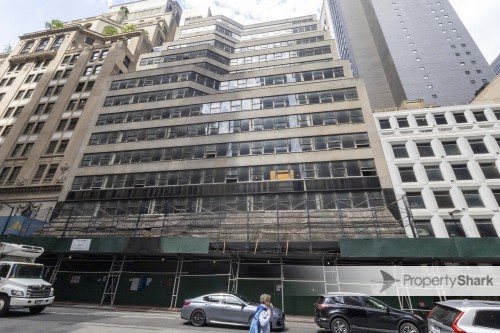
Charles Cohen, once one of Midtown Manhattan’s most entrenched landlords, is increasingly being forced to part with marquee properties under growing financial duress. In the latest sign of distress, Cohen has struck a deal to sell 3 East 54th Street, a 19-story, 300,000-square-foot office tower, for $188 million — barely enough to cover the debts encumbering the property, and yet another example of the steep discounts defining his current predicament.
According to court filings cited in a report on Wednesday on The Real Deal website, the transaction values the building at just $627 per square foot, a figure that underscores the weakened demand for Midtown office assets in an era still reeling from hybrid work patterns and high interest rates. The property, which carried an $85 million mortgage, was internally valued at a net $109 million. Notably, Cohen controlled just 63 percent of the asset, further limiting the liquidity the sale will generate.
The context of Cohen’s divestitures is as dramatic as the fire-sale pricing. Earlier this year, a New York judge ordered the developer to repay $187 million in loans personally guaranteed to Fortress Investment Group. The Real Deal has documented the bruising legal standoff, in which Fortress has pursued Cohen over what it alleges are defaults exceeding $500 million.
Cohen’s attorneys have admitted that the combined proceeds of the 3 East 54th Street sale and the recent $218 million sale of 623 Fifth Avenue — another Midtown tower long considered a prized part of his portfolio — will generate roughly $100 million. While significant, that sum represents barely half of what Cohen owes Fortress under the judgment, leaving a gaping financial shortfall.
Fortress, for its part, remains skeptical. In an Aug. 29 filing reported by The Real Deal, the private equity firm noted that the distressed sales “confirm a troubling fact: that Mr. Cohen has wildly overstated the value of his real estate portfolio.” That assessment mirrors the steep drop in Cohen’s estimated net worth, which fell nearly $1 billion in a single year. By the end of 2023, disclosures pegged his empire at $2 billion, down from nearly $3 billion just 12 months prior.
Cohen, whose Cohen Brothers Realty controls some 12 million square feet of mostly Midtown office space, is confronting the brutal realities of the post-pandemic office market. Vacancy rates in Manhattan remain near historic highs, leasing velocity has slowed, and lenders are increasingly unwilling to extend or refinance debt without steep equity concessions. For Cohen, whose business model relied heavily on debt-fueled expansion, the timing could not be worse.
The Real Deal report noted that the developer’s liquidity is limited — roughly $200 million in liquid assets, with $130 million of that in cash. Such reserves offer little cushion against Fortress’s aggressive pursuit, not to mention the broader refinancing wave looming over Cohen’s portfolio.
CBRE is already shopping his 1 million-square-foot 622 Third Avenue property, which carries a hefty $400 million mortgage. According to the information provided in The Real Deal report, five prospective buyers are circling, though whether Cohen can secure terms that meaningfully reduce his obligations remains uncertain.
The 3 East 54th Street sale also hints at a potential change in the fabric of Midtown itself. Cohen’s attorneys described the tower as a redevelopment opportunity, suggesting the buyer may raze it to make way for a hotel or luxury residential project. Such adaptive reuse would not be unprecedented in a submarket increasingly struggling to reimagine aging office stock in the face of tenant flight to newer, amenity-rich towers.
Still, Cohen’s exit from properties once considered long-term holds represents a dramatic reversal. At its peak, his portfolio was described in The Real Deal report as a collection of irreplaceable Midtown assets that generated steady cash flow and prestige. Today, those same buildings are being liquidated under pressure, often at values far below their internal assessments.
Adding to the tension are Fortress’s allegations that Cohen has sought to shield assets by transferring ownership of his Connecticut estate and a 220-foot yacht into his wife’s name. Cohen has denied these accusations, but the claims illustrate the acrimony surrounding one of the most closely watched real estate battles in New York.
For Fortress, the fire sales are progress, but not yet victory. Even if Cohen liquidates multiple properties, the sums may fall short of satisfying the firm’s claims. For Cohen, the forced sales not only erode his reputation but also chip away at the control of an empire he has spent decades constructing.
The drama surrounding Cohen also mirrors the larger struggles of Midtown Manhattan. As The Real Deal has frequently reported, landlords across the district are grappling with rising vacancies, higher borrowing costs, and questions about the long-term viability of office demand. Once-storied towers are increasingly being repositioned, sold at discounts, or eyed for redevelopment.
Cohen’s recent disposals — both 623 Fifth Avenue and 3 East 54th Street — are emblematic of this recalibration. A Class A asset once valued at $712 million selling for just $218 million is a stark indicator of market realities. The fact that Cohen himself, a stalwart of Midtown ownership, is being forced to unload them underlines the pressure facing even seasoned operators.
Whether Cohen can maneuver his way out of Fortress’s grip is uncertain. Even with additional sales, the gap between his available liquidity and his debt obligations remains vast. Analysts cited by The Real Deal note that while some of Cohen’s remaining holdings retain significant long-term value, the short-term discounts necessary to generate cash may further erode his empire.
For New York’s real estate community, the saga offers both a cautionary tale and a bellwether. If an operator as entrenched as Charles Cohen is forced into distressed sales, others could soon follow. The combination of tighter credit markets, stubbornly high vacancies, and litigation from lenders creates a precarious environment in which even deep-pocketed landlords are not immune.
The sale of 3 East 54th Street for $188 million marks not only another blow to Charles Cohen’s once-vaunted Midtown portfolio but also a vivid illustration of the challenges reshaping New York real estate. As The Real Deal has chronicled, the transactions may stave off Fortress temporarily, but they also expose the fragility of Cohen’s financial position and the sobering realities of today’s office market.
Whether Cohen can salvage his broader holdings or whether Fortress will ultimately dismantle his empire remains one of the most pressing questions in Manhattan real estate. For now, the message is clear: Midtown is no longer a fortress for landlords, and even the most seasoned players are being forced to bend to the new realities of debt, demand, and diplomacy with lenders.
