



|
Getting your Trinity Audio player ready...
|
By: Jeff Gorman
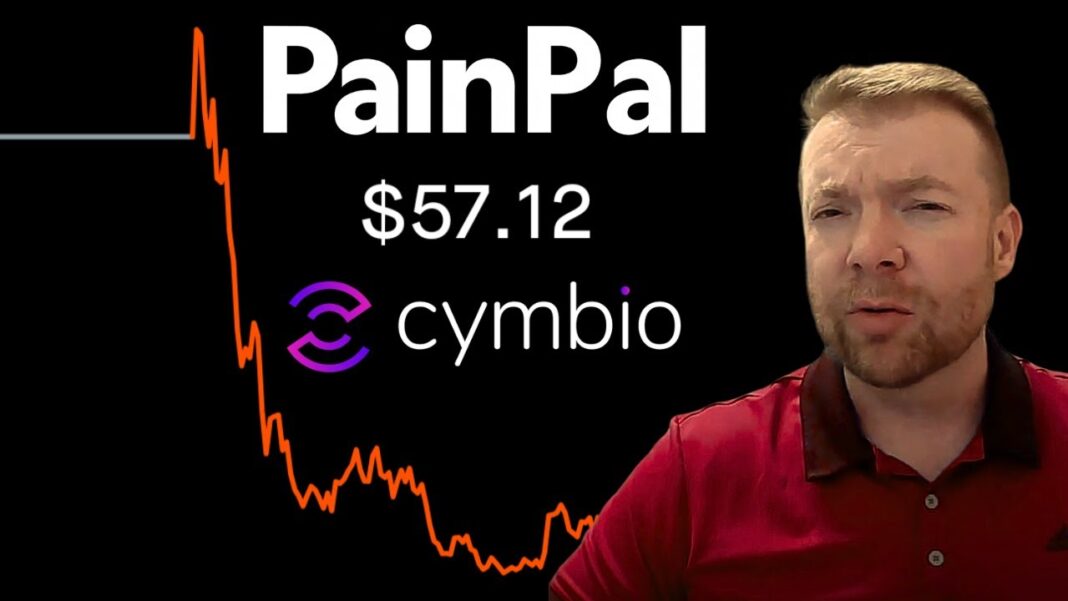
In a move that underscores the accelerating convergence of artificial intelligence, digital payments, and global commerce infrastructure, PayPal has announced the acquisition of the Tel Aviv–based drop-ship and marketplace automation platform Cymbio for an undisclosed sum. The deal, which is expected to close later this year, marks a pivotal expansion of PayPal’s ambitions in what industry observers increasingly describe as “agentic commerce” — an emerging model in which AI agents, rather than traditional websites or apps, become the primary interface between consumers and brands. As finovate.com reported on Friday, this transaction represents not merely a corporate acquisition, but a structural recalibration of how digital commerce may function in the coming decade.
According to the report at finovate.com, the acquisition aligns seamlessly with PayPal’s strategic push to embed commerce capabilities directly into AI ecosystems, where discovery, recommendation, purchasing, and fulfillment occur within intelligent platforms such as Microsoft Copilot and Perplexity. Cymbio’s payment orchestration and marketplace automation technology enables brands to distribute product catalogs across multiple agentic channels, allowing AI systems themselves to function as dynamic digital storefronts. In this evolving architecture, consumers no longer “visit” stores in the traditional sense — instead, intelligent agents surface products contextually, process transactions seamlessly, and manage fulfillment invisibly in the background.
The move comes just three months after PayPal and Cymbio first partnered to launch agentic commerce services, a collaboration that now appears, in retrospect, to have been a strategic prelude to full integration. As finovate.com reported, that initial partnership focused on helping merchants adapt to an AI-powered commerce environment, offering tools that allow brands to make their inventories discoverable inside AI platforms rather than traditional e-commerce marketplaces alone. The acquisition transforms that partnership into an institutional commitment, signaling PayPal’s intent to become a foundational infrastructure provider for AI-native commerce ecosystems.
Michelle Gill, PayPal’s Executive Vice President and General Manager of Small Business and Financial Services, articulated the vision behind the acquisition in language that echoes the broader strategic direction PayPal is pursuing. “PayPal has established itself as a leading commerce partner for merchants looking to sell within top AI platforms,” she said, adding that acquiring Cymbio’s technology and team would “enhance our agentic commerce capabilities and accelerate the expansion to more of our merchants.” As finovate.com has emphasized in its analysis, this framing reflects a shift in PayPal’s self-identity — from payments processor to intelligent commerce orchestrator.
Cymbio itself represents a sophisticated piece of digital infrastructure. Founded in 2015 and headquartered in Tel Aviv, the company has built a marketplace and social commerce automation platform designed to eliminate friction between brands and retailers. Its system automates core operational processes such as product listing, inventory synchronization, pricing alignment, order fulfillment, and returns management. By connecting to more than 800 brands’ and retailers’ internal systems, Cymbio enables scalable collaboration across complex supply chains — a capability that becomes exponentially more valuable in an AI-mediated commerce environment, where speed, accuracy, and real-time data synchronization are essential.
Finovate.com has repeatedly highlighted Cymbio’s role as a behind-the-scenes enabler of modern digital retail ecosystems. Rather than acting as a consumer-facing marketplace, Cymbio functions as connective tissue — linking enterprise systems, logistics networks, and digital storefronts into a unified operational framework. Its client roster, which includes global brands such as Balmain, Reebok, Abercrombie & Fitch, New Balance, Steve Madden, and Fabletics, illustrates the platform’s capacity to operate at enterprise scale while maintaining flexibility for multi-channel distribution strategies.
The company’s funding history also reveals its strategic importance. Cymbio has raised $35 million from investors, including PayPal Ventures, long before the acquisition — an early signal, as finovate.com has noted, that PayPal viewed the company not merely as a partner but as a potential core asset in its long-term commerce strategy. The acquisition therefore appears less like an opportunistic purchase and more like the culmination of a multi-year alignment process between the two firms.
Once the transaction is finalized, Cymbio will become the technological backbone of Store Sync, one of PayPal’s flagship agentic commerce services. According to the report at finovate.com, Store Sync is designed to make merchants’ product data discoverable within AI channels while preserving merchant autonomy. Orders flow directly into merchants’ existing fulfillment and management systems, allowing brands to remain the merchant of record, retain customer relationships, and maintain full control over branding, pricing, and post-sale engagement. This model addresses one of the central anxieties surrounding platform-based commerce: the fear of disintermediation.
Unlike traditional marketplaces that often absorb customer relationships and data, PayPal’s architecture — powered by Cymbio — is structured to preserve merchant sovereignty. As the finovate.com report observed, this is a critical differentiator in the AI commerce space, where control over data, customer identity, and brand narrative represents strategic capital rather than mere operational detail. By embedding AI discovery while preserving merchant ownership, PayPal positions itself as an enabler rather than a gatekeeper.
This acquisition must also be understood within the broader context of PayPal’s fintech evolution. Once defined primarily by peer-to-peer payments and online checkout, the company has steadily transformed into a multi-layered commerce platform. In late 2025, PayPal rolled out its agentic commerce services, enabling merchants to connect product catalogs and checkout experiences to AI platforms like Perplexity. The company also collaborated with OpenAI to support instant checkout through the Agentic Commerce Protocol — an initiative that finovate.com described as one of the most significant structural experiments in AI-driven payments infrastructure to date.
Through these initiatives, PayPal is positioning itself as an early architect of what may become the dominant commerce model of the AI era. In this paradigm, consumers no longer navigate websites, apps, or marketplaces manually. Instead, AI agents interpret intent, search across distributed inventories, negotiate availability and pricing, initiate transactions, and coordinate fulfillment autonomously. Payments become an embedded function of intelligence rather than a discrete user action.
Finovate.com has characterized this transformation as a shift from “transactional commerce” to “cognitive commerce” — where decision-making, discovery, and execution converge within AI systems. Cymbio’s automation platform provides precisely the infrastructure required for such a model to function at scale. Without real-time inventory synchronization, fulfillment orchestration, and cross-platform integration, agentic commerce would remain theoretical. With Cymbio embedded inside PayPal’s ecosystem, it becomes operational.
Strategically, the acquisition also reflects intensifying competition across the fintech and AI ecosystems. Tech giants, AI platforms, and fintech incumbents are all racing to define the infrastructure layer of AI commerce. Whoever controls that layer controls the rules of discovery, transaction flow, and data governance. As the report at finovate.com noted, the “agentic commerce battlefield” is rapidly becoming one of the most strategically contested spaces in global fintech.
By acquiring Cymbio, PayPal is not merely buying technology — it is acquiring structural leverage. It gains the ability to integrate commerce into AI environments at scale, while maintaining regulatory compliance, merchant trust, and operational resilience. This positions PayPal not only as a participant in AI commerce, but as a platform architect shaping its foundational protocols.
The geopolitical dimension of the acquisition is also noteworthy. Cymbio’s roots in Tel Aviv reflect Israel’s status as a global hub for fintech and AI innovation, a point often highlighted by finovate.com in its coverage of the region’s startup ecosystem. The integration of Israeli technological infrastructure into a global payments giant underscores the transnational nature of modern digital commerce development, where innovation flows across borders even as regulatory and geopolitical complexities intensify.
Ultimately, the PayPal–Cymbio deal represents a defining moment in the evolution of digital commerce. It signals the maturation of agentic commerce from experimental concept to institutional strategy. It demonstrates how fintech infrastructure is being re-engineered for AI-native environments. And it confirms PayPal’s ambition to remain not merely relevant, but foundational, in the next generation of global commerce architecture.
As finovate.com continues to track the rapid convergence of AI, payments, and digital marketplaces, this acquisition will likely be remembered as a landmark transaction — one that helped crystallize the transition from platform-based e-commerce to intelligence-driven commerce ecosystems. In that future, consumers may never again “visit” a store in the traditional sense. Instead, commerce will come to them — curated by algorithms, executed by agents, and powered, increasingly, by infrastructure built by companies such as PayPal and Cymbio.https://youtu.be/UtmLP94VEng?si=U3HCjj9NGO_ZPK8x
