



|
Getting your Trinity Audio player ready...
|
By: Fern Sidman
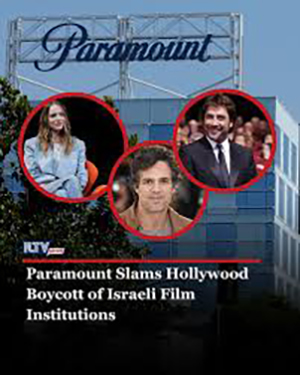
In a move that shines a spotlight on both the volatility of cultural politics and the shifting fault lines of Hollywood power, Paramount Pictures — now under the ownership of David Ellison — became the first major studio to publicly denounce the growing boycott of Israeli film institutions, a campaign supported by thousands of actors, directors, and industry professionals.
The studio’s intervention, as The New York Times reported on Saturday, comes just as the boycott movement known as Film Workers for Palestine has swelled to more than 4,000 signatories. Initially endorsed by a thousand artists, including figures like Olivia Colman, Ava Du Vernay, Mark Ruffalo, and Ayo Edebiri, the campaign explicitly targets Israel’s film institutions, not individual creatives. But the optics of such a movement — particularly in a polarized global climate — have cast its net wider than organizers may have intended.
Paramount’s statement, released late Friday, carried a tone of gravity that suggested the studio understood both the cultural weight of its intervention and the inevitable backlash it would draw.
“We believe in the power of storytelling to connect and inspire people, promote mutual understanding and preserve the moments, ideas and events that shape the world we share,” the statement read. “Silencing individual creative artists based on their nationality does not promote better understanding or advance the cause of peace. We need more engagement and communication — not less.”
The choice of words reflects a deliberate positioning. By highlighting storytelling and connection, Paramount aligned itself with a vision of cultural diplomacy — the idea that art is not a battlefield but a bridge. This is a view that resonates with much of the mainstream American audience but sits increasingly uneasily alongside the fervent, activist energy surging within international arts communities.
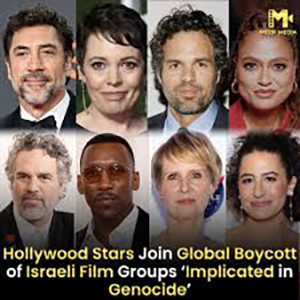
As The New York Times report noted, Paramount’s stand is remarkable because it departs from the caution that has characterized the responses of other major studios, many of which have stayed silent in the face of mounting demands from advocacy groups.
Film Workers for Palestine, the group leading the boycott campaign, insists that Paramount and other critics are misunderstanding — or misrepresenting — the aims of the pledge.
In a counterstatement on Friday, the group said: “We hope the studio is not intentionally misrepresenting the pledge in an attempt to silence our colleagues in the film industry.” The group maintains that its boycott targets only institutions, not individuals, though its sweeping language has been interpreted as implicating nearly all Israeli film structures.
According to its organizers, “a vast majority of Israel’s film production and distribution companies, sales agents, cinemas, and other film institutions have never endorsed the full, internationally recognized rights of the Palestinian people.”
Their message, as reported by The New York Times, is clear: cultural institutions are complicit in what they call the perpetuation of injustice in Gaza, and disengagement is the only effective moral stance.
But Paramount’s argument rests on a counter-principle: that disengagement entrenches division rather than fostering dialogue. The competing narratives — boycott versus engagement — expose how cultural diplomacy itself has become a contested battlefield.
The optics of Paramount’s stance are complicated by its new ownership structure. David Ellison, the 41-year-old media executive who orchestrated Skydance’s $8 billion merger with Paramount, is the son of Larry Ellison, the tech billionaire known for his close ties to Israeli Prime Minister Benjamin Netanyahu.
As The New York Times report observed, Film Workers for Palestine wasted no time in highlighting this connection, framing Paramount’s denunciation of the boycott as an extension of familial political allegiance. They pointed to filings with the Federal Communications Commission that show Larry Ellison retains significant control over the studio.
Whether Paramount’s statement reflects the younger Ellison’s ideological convictions, his father’s political loyalties, or a calculated business decision to align with mainstream American sentiment, its implications are sweeping. In an industry where silence often equates to complicity, Paramount’s decision to speak has set it apart.
The Times also placed Paramount’s announcement within the broader context of its perceived rightward shift since the Skydance merger. Last month, CBS News, a Paramount property, appointed Kenneth R. Weinstein, a longtime conservative policy figure, as its ombudsman — a move widely interpreted as an effort to appease the Trump administration, which had conditioned its approval of the Skydance-Paramount merger on certain concessions.
That merger was shadowed by controversy. Paramount agreed to pay President Trump $16 million to settle a lawsuit concerning the editing of a 60 Minutes interview with former Vice President Kamala Harris. Legal experts dismissed the suit as frivolous, but the settlement signaled an extraordinary concession to a sitting president.
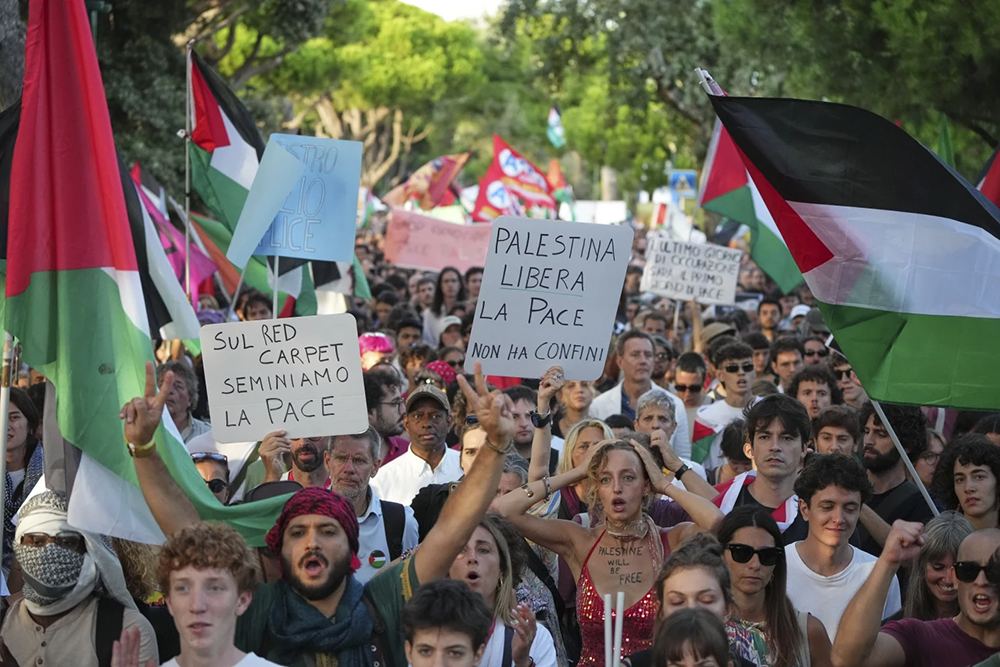
Against this backdrop, Paramount’s defense of Israeli filmmakers reads not only as a cultural stance but also as a political statement, one bound up in questions of corporate survival, regulatory approval, and ideological alignment.
The boycott has emerged in the shadow of one of the bloodiest conflicts in recent memory. It has been nearly two years since Hamas’s October 7, 2023 attack on Israel, which killed 1,200 people.
Last month, the International Association of Genocide Scholars, an academic consortium, declared that Israel’s actions in Gaza met the legal definition of genocide. As The New York Times reported, Israeli officials rejected the claim outright, calling it a “Hamas campaign of lies.”
Yet in the court of public opinion, particularly within creative communities, the label has had profound resonance. Artists, often at the vanguard of social critique, have found in the Gaza war a cause that fits under the umbrella of “social justice” but in reality is a smokescreen for anti-Israel animus and visceral Jew hatred.
Thus, Paramount’s statement does more than defend Israeli filmmakers — it positions the studio within the broader geopolitical argument over Gaza and the legitimacy of Israel’s war.
The cultural fallout is not confined to film. As The New York Times observed, several European countries have pledged to boycott the Eurovision Song Contest if Israel participates, underscoring how deeply cultural institutions are implicated in the war.
In this light, the film boycott appears less an isolated campaign than part of a coordinated global trend: the use of cultural platforms to exert political pressure. That Paramount has chosen to resist this trend puts it at odds with much of Europe and with significant segments of the artistic community in the United States.
The decision carries significant risks. By opposing the boycott, Paramount opens itself to charges of insensitivity, complicity, or even political opportunism. Activists have already framed its statement as an effort to protect Israeli institutions at the expense of Palestinian suffering.
But there are potential rewards. In an era where consumers are fractured along political lines, Paramount may find that its refusal to support cultural boycotts appeals to audiences who view such measures as censorship or performative politics. And in the long term, positioning itself as a defender of artistic expression — however selective — may bolster its brand as a global storyteller.
What Paramount has done is unusual not because of the content of its statement — many in Hollywood share its sentiment privately — but because it said it at all. In breaking the silence, Paramount has transformed itself into a proxy in the cultural debate over Gaza and Israel, placing storytelling itself at the heart of a war of narratives.
As The New York Times report indicated, the conflict over Israel’s war in Gaza is not merely geopolitical but cultural, shaping who gets heard, who gets silenced, and which institutions are seen as legitimate.
Paramount has chosen engagement over boycott, dialogue over silence. Whether that choice proves visionary or catastrophic will depend not only on the trajectory of the war but on how Hollywood — and its audiences — navigate the fraught intersection of art, politics, and morality in the months ahead.
