




|
Getting your Trinity Audio player ready...
|
By: Fern Sidman
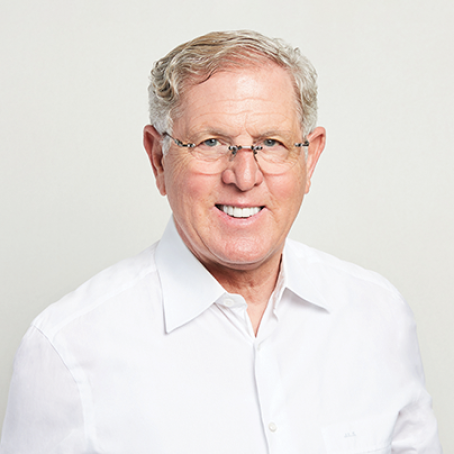
By any measure of contemporary American business leadership, Jay Schottenstein occupies a singular space. At once a hard-driving executive who has steered American Eagle Outfitters through volatile markets and culture wars, and a philanthropic titan whose name graces Jewish institutions across the globe, Schottenstein is far more than a retail magnate. He is emblematic of the resilience, entrepreneurial spirit, and moral conscience that the descendants of Holocaust survivors carry into modern American life.
Jay Schottenstein’s story cannot be disentangled from the harrowing legacy of the Holocaust that shaped his family. His mother-in-law lived through Nazi Germany’s descent into barbarism, watching synagogues burn in Kristallnacht’s inferno and living with the permanent scars of persecution. Schottenstein himself has long remarked, as reported on Tuesday in The New York Post, that such experiences seared into his family a consciousness of fragility and responsibility.
It is not lost on him that his position of wealth and influence carries obligations. “I’m very conscious of that term,” he said when rejecting accusations that American Eagle’s Sydney Sweeney campaign contained racist overtones. To invoke “eugenics,” he explained, was unthinkable for someone whose family had witnessed firsthand the ideological poisons that nearly destroyed European Jewry. This awareness is not incidental — it is foundational. It underscores why his philanthropy has consistently emphasized Jewish continuity, education, and remembrance.
For all his gravitas as a philanthropist, Jay Schottenstein’s reputation as a business leader has only grown in recent years. When The New York Post reported on the firestorm surrounding American Eagle’s Sydney Sweeney campaign — with critics lobbing accusations of racism and sexism — it was Schottenstein who refused to bend. “You can’t run from fear,” he told The Wall Street Journal, a sentiment repeated by The New York Post in its business pages.
The risk paid off spectacularly. American Eagle added nearly a million new customers between July and September, according to market reports, while the Sweeney Cinched Waist denim jacket sold out within 24 hours and the Sydney Jean disappeared from shelves within a week. Wall Street responded with enthusiasm; shares surged, cementing the campaign not as a liability but as one of the year’s breakout retail successes.
As The New York Post report noted, Schottenstein’s willingness to “stick to his guns” set him apart from brands such as Bud Light and Target, which retreated in the face of social media outrage. In contrast, American Eagle turned controversy into capital, affirming Schottenstein’s reputation as a steady hand in turbulent cultural waters.
Born in Columbus, Ohio, into the renowned Schottenstein family, Jay was heir to a legacy of both entrepreneurship and philanthropy. The Schottensteins built fortunes in retail and real estate, but always with a keen sense of communal duty. The family’s influence in Columbus is legendary: the Schottenstein Center at Ohio State University, where NBA superstar LeBron James once played state championship games, bears their name.
But Jay’s contributions extend far beyond midwestern landmarks. As The New York Post report highlighted, his reach spans the Jewish world. His leadership has guided American Eagle into global markets, but his heart remains tied to Jewish continuity, Torah study, and the fight against antisemitism.
Perhaps nothing encapsulates Schottenstein’s commitment to Jewish life more vividly than the publication of the monumental Schottenstein Edition of the Talmud by ArtScroll. This multi-volume project, unprecedented in scope, placed the foundational text of rabbinic Judaism into the hands of English-speaking Jews worldwide. For generations of students, rabbis, and lay learners, the Schottenstein Talmud became a gateway to Torah study, democratizing access to Jewish scholarship.
The project was not a vanity exercise; it was, as those close to Schottenstein explain, an act of spiritual responsibility. In the wake of a century in which Jewish learning was decimated by Nazi destruction, he saw the Talmud edition as a form of rebuilding — a symbolic answer to the Holocaust’s attempt to silence Jewish voices.
Such contributions have ripple effects that extend far beyond their immediate beneficiaries. In the case of the Schottenstein Talmud, entire communities have been elevated, their capacity for Jewish learning enriched for decades to come.
Schottenstein’s philanthropy has consistently aligned with combating antisemitism and strengthening Jewish identity. Whether through endowments to yeshivas, funding of communal institutions, or direct support for Israel, his giving reflects a worldview shaped by history: that Jewish survival requires vigilance, pride, and investment.
It is telling that in the wake of the Sydney Sweeney campaign controversy, when critics accused American Eagle of racial insensitivity, Schottenstein’s rebuttal drew on Holocaust memory. He contextualized his company’s decisions against a backdrop of Jewish suffering, reminding detractors that accusations of eugenics were particularly offensive to a man whose family bore witness to Nazism.
This instinct — to ground corporate defense in moral clarity rooted in Jewish history — reflects a philanthropic mindset as much as a business one.
American Eagle’s recent campaigns reveal Schottenstein’s deft ability to navigate the intersection of pop culture and corporate responsibility. From leveraging Sydney Sweeney’s star power to launching a marketing blitz featuring Kansas City Chiefs tight end Travis Kelce alongside Taylor Swift’s global fanbase, Schottenstein has shown an uncanny ability to harness celebrity while holding firm to principle.
As The New York Post reported, unlike brands such as Target or Anheuser-Busch that stumbled when accused of going “woke,” American Eagle thrived because it trusted its instincts — and its leader’s refusal to panic.
But for all the headlines about denim and celebrities, Schottenstein’s legacy will ultimately be judged less by quarterly returns and more by the permanence of his philanthropic footprint.
The Schottenstein Talmud alone would be enough to secure Jay Schottenstein’s place in Jewish history. Yet his giving extends into countless other realms: scholarships for Jewish day schools, funding for Israeli hospitals, support for Holocaust remembrance projects, and endowments for institutions of higher learning both Jewish and secular.
The New York Post has described him as one of the rare executives whose philanthropy rivals his business success. Indeed, in many Jewish circles, Schottenstein is known less as the CEO of American Eagle and more as a benefactor whose generosity has shaped communal life across continents.
It is not hyperbole to suggest that his contributions to Jewish learning stand alongside those of 20th-century titans like Samuel Bronfman or Edmond Safra. He has helped ensure that a new generation, scattered across a free and often assimilated diaspora, can remain connected to its spiritual roots.
For Jay Schottenstein, the Holocaust is not ancient history. It is the family story that hangs over every decision, the silent backdrop against which success is measured and obligations are defined. His mother-in-law’s memories of Nazi Germany are not anecdotal but existential: reminders that Jewish survival cannot be taken for granted, that prosperity must be harnessed to secure continuity.
Thus, when he speaks of “putting a pair of jeans on every tuchis in the United States,” as he joked to The New York Post, he is not merely indulging in humor. He is drawing a line between cultural ubiquity and communal strength, between corporate ambition and historical consciousness.
In Jay Schottenstein, one sees the rare confluence of worlds: the pragmatism of a retailer who refuses to bend to the gusts of social media outrage, and the soul of a philanthropist whose family history demands that success be shared with a people who endured unimaginable loss.
As The New York Post report observed, his story is not merely about fashion campaigns or stock surges. It is about a man who turned Holocaust memory into an engine of generosity, who transformed corporate leadership into a platform for Jewish continuity, and who ensured that the name Schottenstein would forever be associated with learning, survival, and resilience.
For American Eagle’s shareholders, he is the steady executive who delivered growth in the face of controversy. For the Jewish people, he is something far greater: a benefactor, a guardian of memory, and a builder of futures.
