



|
Getting your Trinity Audio player ready...
|
By: Fern Sidman
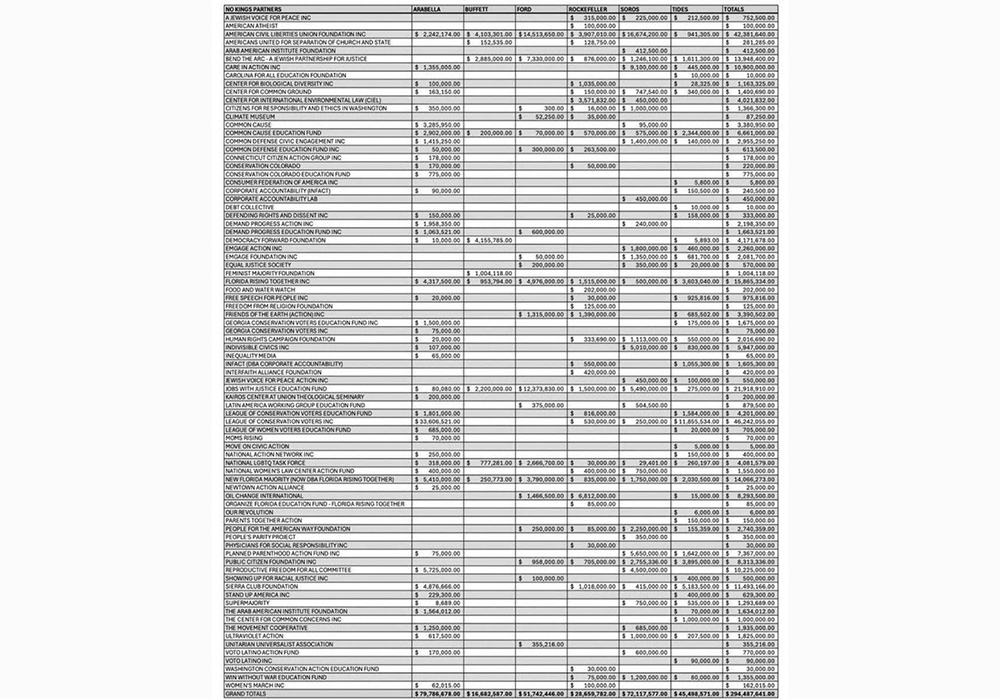
A recently circulated document has shed light on a complex web of international funding networks that connect protest movements across the United States and Israel, raising serious questions about how philanthropic powerhouses and ideologically driven NGOs shape political discourse in both countries. According to the table, which outlines the flow of money behind the American protest movement known as “No Kings,” several of the key financial channels mirror those that have been linked to protest activity in Israel. The primary conduits: the Tides Foundation, Open Society Foundations (George Soros), and the Rockefeller Brothers Fund—each long associated with progressive causes and left-wing activism around the world.
While these foundations publicly present their missions as promoting “social justice,” “equity,” and “human rights,” their critics argue that the practical outcomes of their grantmaking often serve to destabilize traditional political institutions, amplify radical anti-capitalist narratives, and, increasingly, embolden anti-Israel activism under the veneer of humanitarianism.
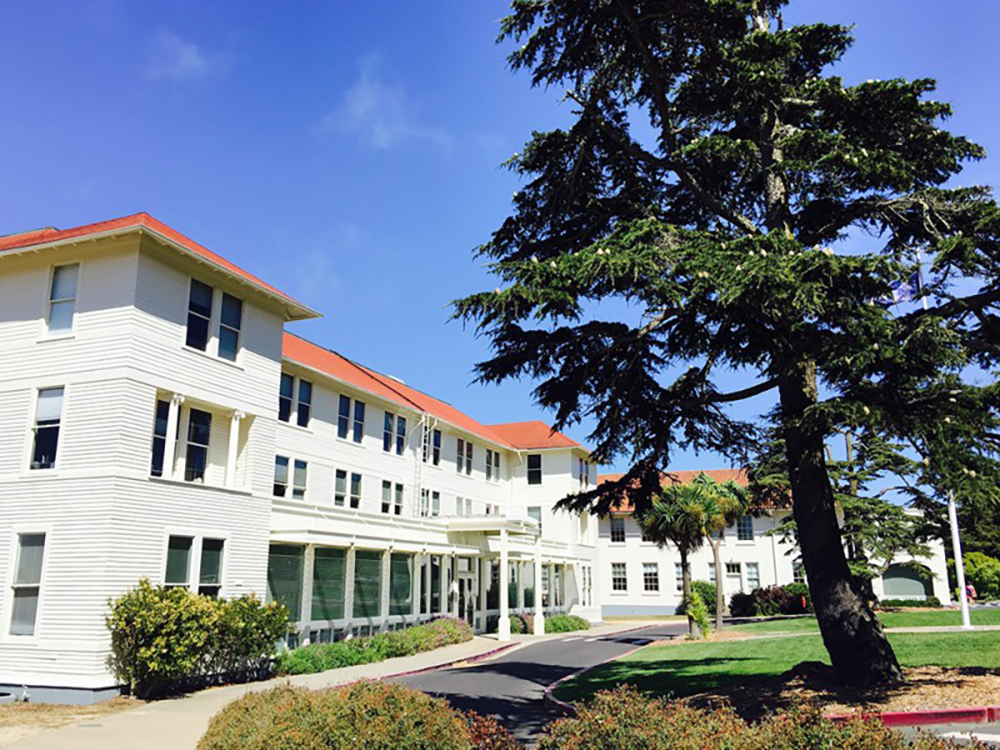
The Tides Foundation, based in San Francisco, has become one of the world’s most influential donor-advised funds—a vehicle that allows wealthy contributors to anonymously funnel money to activist organizations. Over the years, it has financed a wide range of left-wing movements, from environmental campaigns and anti-police protests to groups advocating the boycott of Israel. The Rockefeller Brothers Fund, for its part, has also drawn criticism for underwriting organizations that challenge Israel’s legitimacy in the international arena.
George Soros’s Open Society Foundations represent perhaps the most visible node in this transnational web. With billions of dollars invested in shaping progressive movements worldwide, the Open Society network has played a decisive role in advancing causes that range from immigration reform and gender activism to campaigns critical of Israel’s security policies. In Israel itself, Soros-funded organizations have been accused by Israeli officials and advocacy groups of advancing narratives that undermine the state’s sovereignty and military legitimacy under the guise of human rights monitoring.
As the funding data reportedly shows, the same financial entities—Tides, Soros, and Rockefeller—are now underwriting “No Kings” and a range of aligned activist groups in the United States. The movement, which has adopted anti-capitalist and anti-establishment slogans, has been staging high-visibility protests in major American cities, calling for systemic economic redistribution and a radical restructuring of democratic governance.
Observers have noted striking parallels between these American protest networks and the organizations driving large-scale demonstrations in Israel over the past year. Many of the Israeli groups opposing the government’s judicial reforms and broader national policies received significant backing from donor channels connected to the same foundations now appearing in the U.S. protest funding map.
In both contexts, the financing strategy follows a familiar pattern: donor-advised funds route contributions through intermediary NGOs, which then allocate grants to grassroots activist groups. This structure creates layers of financial opacity, shielding ultimate benefactors from scrutiny while allowing movements to present themselves as spontaneous, “people-powered” uprisings.
According to policy experts, this pattern represents a “soft power” form of influence—where ideological capital flows from a small circle of global philanthropists into local politics, reshaping national narratives from within.
Perhaps the most revealing aspect of the document is the inclusion of A Jewish Voice for Peace (JVP) among the organizations receiving or channeling funds linked to the Tides and Rockefeller foundations. Founded in the late 1990s, JVP has evolved from a small activist network into one of the most visible Jewish-led anti-Zionist movements in the world.
Publicly, JVP describes itself as a “grassroots movement inspired by Jewish values” that seeks “freedom, equality, and dignity for all people.” Yet its actual record, as noted by watchdog organizations such as NGO Monitor, shows consistent alignment with the Boycott, Divestment and Sanctions (BDS) campaign—a global movement aimed at economically and culturally isolating Israel.
JVP’s rhetoric often blurs the line between criticism of Israeli policies and delegitimization of Israel’s existence as a Jewish state. The group regularly accuses Israel of “apartheid” and “ethnic cleansing,” and it played a central role in organizing anti-Israel demonstrations on American campuses following the October 7, 2023 Hamas massacre, often framing Israeli self-defense as “genocidal aggression.”
The group’s participation in the funding network revealed by the new table underscores how deeply embedded anti-Zionist activism has become within the broader infrastructure of progressive philanthropy. What makes this particularly significant, as the document notes, is that these same foundations are channeling resources into movements both in Israel and abroad—suggesting a unified ideological agenda that transcends national borders.
Analysts familiar with the operations of these foundations describe their strategy as one of “narrative engineering.” Instead of direct political intervention, they cultivate ecosystems of advocacy groups, journalists, academics, and artists who collectively reframe public debates. By funding hundreds of interlinked organizations, they create an echo chamber capable of amplifying select moral and political messages—particularly those aligning with a post-national, globalist worldview that views nationalism and religious identity with suspicion.
In Israel, this has manifested in sustained efforts to portray Zionism as a colonial enterprise rather than a liberation movement. In the United States, similar logic appears in campaigns that conflate capitalism, systemic racism, and Western democracy itself as forms of oppression. The ideological through-line between both settings, critics argue, is unmistakable: the deconstruction of Western democratic identity in favor of borderless, transnational activism.
For Jewish communities worldwide, the inclusion of JVP within this ecosystem raises profound moral and political concerns. To equate Zionism—the national self-determination movement of the Jewish people—with racism or colonialism, as JVP and its allies often do, is to invert historical reality. Zionism emerged as a response to the very antisemitism that culminated in the Holocaust; to weaponize Holocaust memory or anti-racist rhetoric against the Jewish state represents a profound act of moral distortion.
Israeli commentators have warned that such rhetoric not only fuels antisemitic sentiment abroad but also emboldens movements within Israel that seek to erode the Jewish character of the state. “When major international donors fund organizations that deny Israel’s right to exist,” one editorial noted, “they are not promoting peace—they are funding the slow erosion of Jewish self-determination.”
The revelations from this funding table highlight the urgent need for transparency in the global NGO sector. While philanthropy remains a cornerstone of civil society, its unchecked use as a tool for ideological warfare threatens both democracy and community cohesion. Governments, including Israel’s, have begun implementing stricter disclosure laws for foreign-funded organizations—but as these networks become more sophisticated and transnational, tracing the flow of influence grows increasingly difficult.
What emerges from the data is a picture of a globalized protest economy, where well-resourced intermediaries fuel parallel movements across continents, united by an anti-establishment ethos and, too often, by hostility toward the Jewish state. The presence of groups like A Jewish Voice for Peace at the intersection of these funding streams underscores how the language of social justice can be co-opted to mask the perpetuation of antisemitic narratives.
As the U.S. and Israel both face escalating waves of protest and polarization, the question is no longer whether these movements are connected—but to what extent they are coordinated through shared networks of funding and ideology. The names—Tides, Soros, Rockefeller, and JVP—have become shorthand for a new global paradigm of activism, one that blurs the boundary between philanthropy and politics.
Whether this alignment represents an organic convergence of progressive values or a deliberate strategy of influence, the outcome is clear: a coordinated challenge to the moral and national foundations of Western democracy—and to the legitimacy of the Jewish state itself.