



|
Getting your Trinity Audio player ready...
|
By: Carl Schwartzbaum
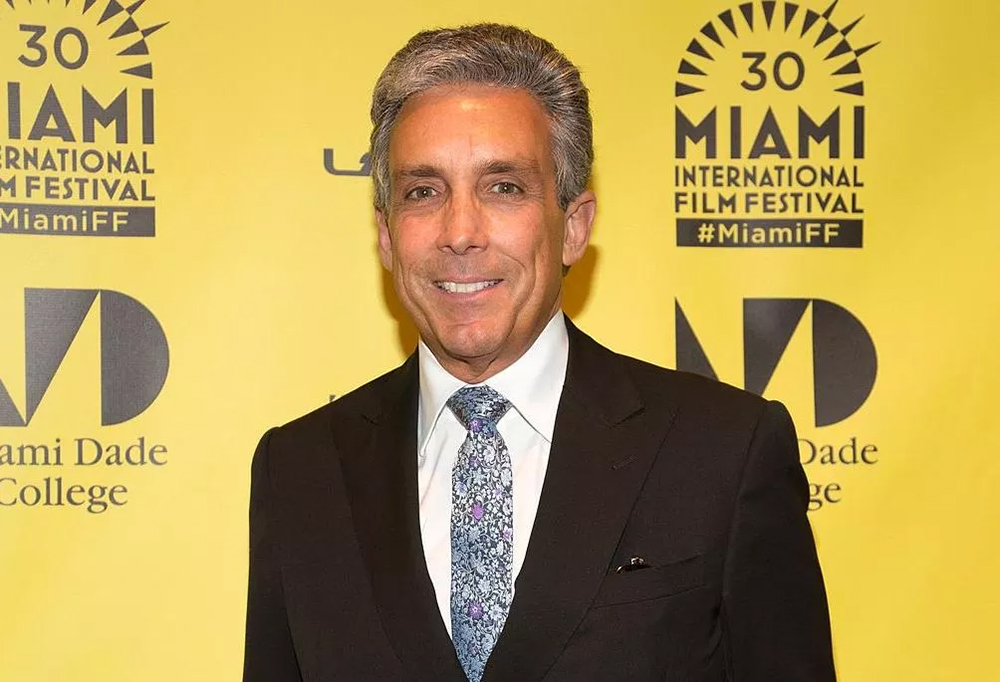
When a group of men entered the gates of Château de Chausse, a sprawling 138-acre vineyard and estate in Provence, the scene had the appearance of an organized burglary. Priceless artworks were removed from the walls, furniture loaded onto trucks, and the cellar emptied of its rare vintages. Yet, as The Wall Street Journal reported last week, the men were not thieves. They were court officers acting on behalf of Fortress Investment Group, executing a ruling that permitted the seizure of personal belongings from billionaire developer Charles Cohen, one of New York’s most recognizable real estate figures.
The operation in France was not an isolated episode, but rather a dramatic flashpoint in an escalating international dispute between Cohen and Fortress. At stake is the future of a real estate empire built over decades, a personal fortune of nearly $2 billion, and the fate of some of the most conspicuous trophies of modern wealth–yachts, châteaus, supercars, and luxury residences across the globe.
According to the information provided in the WSJ report, this bitter conflict arises from a $535 million loan Fortress extended in 2022 to Cohen Realty Enterprises. That financing, designed to consolidate previous debts, carried a crucial stipulation: Cohen personally guaranteed $187.2 million of the loan. This “recourse” provision empowered Fortress to pursue Cohen’s personal assets if the business defaulted. Today, that clause sits at the center of one of the most bruising legal fights in the commercial real estate sector in years.
In 2022, Fortress positioned itself as Cohen’s indispensable financial partner. Commercial real estate was still reeling from the pandemic, with office vacancies climbing and lenders wary of refinancing large towers. Fortress stepped in with a massive $535 million loan, consolidating Cohen’s prior obligations.
As the WSJ report recounted, the deal included collateral ranging from a Manhattan office tower to the Le Méridien Dania Beach hotel in Florida. But the most consequential feature was Cohen’s personal guarantee. At the time, Cohen may have viewed the move as a pragmatic choice: he had weathered downturns before, and by pledging his personal wealth, he could access financing that others might have been denied.
The gamble backfired. By early 2024, Cohen’s properties were underperforming, particularly his office holdings, which failed to recover after the pandemic. His movie theater portfolio also suffered, as audience attendance lagged behind pre-2020 levels. Despite repeated restructuring agreements, the WSJ report noted that the Fortress loan was modified four times–Cohen defaulted in March 2024.
Fortress’s response was immediate and uncompromising. The firm moved to seize collateral, but also pursued Cohen’s personal assets under the recourse agreement. The WSJ report documented how Fortress initiated legal proceedings in multiple jurisdictions:
In France, officials seized artworks, furnishings, and wine collections from Château de Chausse.
In Italy, a court prohibited Cohen’s 220-foot superyacht, valued at $49.6 million, from leaving the Port of Loano without judicial approval. Cohen had transferred ownership of the yacht to his wife the previous year, which Fortress argued was an improper attempt to shield assets.
In the United States, Fortress sought control of Cohen’s Greenwich, Connecticut estate, valued at $20 million, and imposed restrictions on brokerage accounts belonging not only to Cohen but also to his mother and sister.
The firm also targeted Cohen’s collection of 25 luxury cars, including Ferraris, as part of its sweeping enforcement effort.
“Fortress is left with no choice but to begin enforcing its judgment against Cohen’s assets,” the firm said in court filings cited in the WSJ report.
For Cohen, the enforcement actions amount to harassment. His attorneys argue that the asset transfers–to his wife and family members–were legitimate estate and tax-planning measures. In France, a court has already ruled in his favor on the question of Château de Chausse’s ownership, shielding the property itself from Fortress’s claims, though its contents remain in dispute.
Cohen himself has insisted that he is actively selling properties to meet his obligations. In an interview with The Wall Street Journal, he acknowledged the gravity of his situation but asked for time to complete complex transactions.
“They keep pecking at us, like a bird would peck at something,” Cohen said in a February deposition. “Enough was never enough.”
His attorney, Christopher Caffarone, has gone further, accusing Fortress of destabilizing Cohen’s family life by targeting relatives with subpoenas and depositions. At a May hearing, Caffarone told the court: “His family’s lives are being disrupted. They are getting subpoenaed. They are getting deposed.”
Fortress countered that the family members are central to the case because they received asset transfers and have roles in Cohen-affiliated businesses.
Fortress Investment Group, which manages tens of billions of dollars in assets, is no ordinary creditor. As the WSJ report highlighted, the firm is owned in part by Mubadala Capital, an arm of Abu Dhabi’s sovereign wealth fund. Fortress emphasizes that its investors include retirement and pension funds, and it has a fiduciary duty to recover what it is owed.
This sense of obligation has driven Fortress to employ aggressive strategies, drawing on its history as a player in distressed debt markets. It is a firm with deep experience in turning defaults into opportunities for asset seizures and restructuring deals on its own terms. Cohen’s case is simply its most high-profile confrontation in years.
The Cohen-Fortress saga also sheds light on the dangers of personal recourse in commercial real estate. Developers have long turned to personal guarantees to secure financing that would otherwise be inaccessible. But when downturns strike, these guarantees can destroy fortunes.
The WSJ has traced the history of recourse loans in the industry, from Donald Trump’s near collapse in the early 1990 s to Harry Macklowe’s $1.2 billion debacle during the 2008 financial crisis. Trump himself once said that, in 1991, he pointed at a homeless man and remarked that the man was “worth $900 million more than I am.”
Cohen is now facing his own moment of reckoning. Though he insists he can rebound through property sales, Fortress’s legal barrage suggests that time may not be on his side.
Cohen’s fall is especially striking given his stature in New York real estate. His father and uncles transformed modest car-selling businesses into a significant development company during the mid-20 th century, building towers on Manhattan’s Third Avenue. When Cohen took over in 1983, he expanded the enterprise threefold, presiding over 12 million square feet of real estate.
Known for his meticulously tailored suits and stainless-steel glasses, Cohen cultivated an image of refined taste. He also invested heavily in film, through his production and distribution company, supporting more than 100 films, including “The Salesman,” which won the Academy Award for Best Foreign Language Film in 2017. Cohen purchased theaters in the U.S. and Europe, broadening his portfolio beyond property.
Yet the very diversification that once symbolized his ambition has become a liability. The pandemic devastated both commercial real estate and cinema chains, leaving Cohen doubly exposed.
Ironically, Fortress and Cohen were long-standing partners before their relationship soured. The investment firm financed many of his deals in the years before Covid-19, providing the kind of high-risk capital that traditional banks often eschewed.
But as the WSJ report observed, the pandemic altered everything. Cohen resisted surrendering properties that had been in his family for generations, hoping to ride out the downturn. Fortress initially agreed to restructurings but eventually lost patience. By 2024, when Cohen defaulted, Fortress shifted from ally to adversary, determined to enforce its rights under the personal guarantee.
The legal battle is being closely watched across the commercial real estate sector. Personal guarantees remain common, but Cohen’s predicament illustrates how quickly such arrangements can spiral into personal catastrophe. Lenders, meanwhile, may feel emboldened to pursue borrowers more aggressively, citing Fortress’s example.
As the WSJ report noted, the case also raises broader questions about the balance of power between investment firms and family-owned real estate dynasties. Cohen has argued that Fortress is engaging in “improper harassment,” but the courts so far have sided with the investment giant.
For now, Cohen is scrambling to liquidate assets. He insists he will meet his obligations if given time, but Fortress shows no sign of slowing its campaign. With courts in France, Italy, and the United States already involved, the case may stretch on for years.
“I’ve always been good at hanging on,” Cohen told the WSJ. “That’s what we’ve always done and we will continue to do that.”
Whether resilience will be enough this time remains uncertain. The outcome will not only determine Cohen’s legacy but may also set a precedent for how far creditors can go in pursuing personal wealth tied to commercial real estate loans.
