



|
Getting your Trinity Audio player ready...
|
By: Jeff Gorman
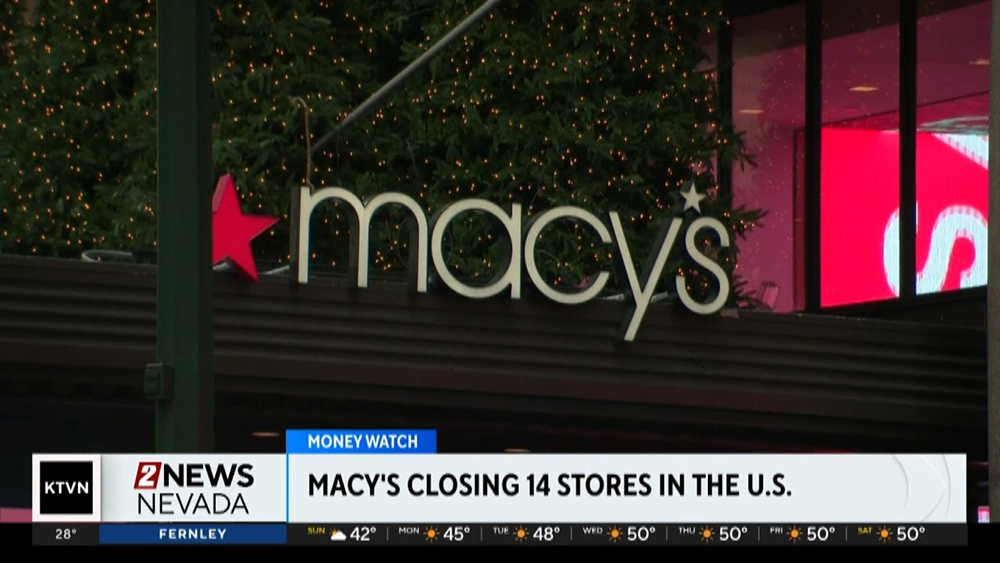
For more than a century, Macy’s has functioned as both a retail institution and a cultural barometer—its sprawling floor plates mirroring the rise of the American mall, its annual Thanksgiving parade a televised emblem of middle-class abundance. Yet, as Women’s Wear Daily reported on Saturday, the department store titan now finds itself confronting a profoundly altered consumer ecosystem. The company’s decision to shutter 14 stores across 12 states in early 2026 is not merely a retrenchment; it is the latest chapter in a sweeping corporate reconfiguration that Macy’s executives have aptly branded their “Bold New Chapter.”
According to the information provided in the Women’s Wear Daily (WWD) report, the closures will be accompanied by clearance sales beginning in mid-January 2026, with final shutdowns following soon thereafter. These 14 locations represent the vanguard of a far larger transformation: Macy’s intends to close approximately 150 underperforming stores by the end of 2026, while reinvesting in some 350 higher-performing properties and accelerating the rollout of smaller-format concepts designed to meet consumers where they now shop.
The announcement, obtained in an internal memo by WWD, was delivered with corporate sobriety by chairman and CEO Tony Spring. “These decisions are not made lightly,” Spring wrote to employees. “We communicated directly with affected colleagues first and are providing support, including transfer opportunities where available, as well as severance and outplacement resources where applicable. We thank all those colleagues for their dedication and service to the company.” The language, while carefully calibrated, underscores the human cost embedded within what might otherwise be viewed as a purely financial maneuver.
The geographic scope of the closures reads like a cross-section of suburban America, from California to Washington State, reflecting the breadth of Macy’s historical footprint and the challenges confronting the mall-anchored retail model.
As detailed by Women’s Wear Daily, the stores slated for closure include:
California: Grossmont Center in La Mesa and West Valley Mall in Tracy
Georgia: Northlake Mall in Atlanta
Maryland: Marley Station in Glen Burnie
Michigan: Rivertown Crossings in Grandville
Minnesota: Crossroads Center in Saint Cloud
New Hampshire: Fox Run in Newington
New Jersey: Livingston Mall in Livingston and Interstate Shopping Center in Ramsey
New York: Boulevard Mall in Amherst
North Carolina: Triangle Town Center in Raleigh
Pennsylvania: Galleria at Pittsburgh Mills in Tarentum
Texas: South Park Mall in San Antonio
Washington: Bellis Fair in Bellingham
Each closure represents more than a line item on a balance sheet. For many communities, these Macy’s locations have long served as commercial anchors—places where generations bought prom dresses, wedding gifts, and back-to-school wardrobes. Yet, as WWD has documented, traffic at mid-tier malls has eroded steadily over the past decade, leaving large-format department stores struggling to justify their square footage.
To understand the rationale behind Macy’s “Bold New Chapter,” one must situate it within the broader upheaval of American retail. E-commerce, once a peripheral channel, has become the dominant artery of consumer spending. Digital-native brands, frictionless logistics, and algorithm-driven personalization have recalibrated expectations around convenience and immediacy.
Women’s Wear Daily has repeatedly highlighted how Macy’s sales have become increasingly concentrated in a smaller number of high-performing locations—often urban flagships or malls with affluent catchment areas. In these markets, customers still value the experiential dimensions of physical retail: curated assortments, in-store services, omnichannel integration. Elsewhere, the economics simply no longer work.
This bifurcation has compelled Macy’s to pursue a two-track strategy. On one hand, it is pruning stores that fail to meet profitability thresholds. On the other, it is channeling capital into upgrades—refreshed interiors, expanded luxury assortments, and enhanced digital capabilities—at its most resilient locations. WWD reported that the company is also expanding its portfolio of smaller-format stores, which offer edited merchandise mixes in more accessible, neighborhood-scale footprints.
Perhaps the most emblematic feature of Macy’s reinvention is its embrace of the small-format concept, a trend WWD has tracked across the sector. These stores, typically a fraction of the size of traditional department stores, are designed to function as hybrid spaces—part showroom, part fulfillment hub, part community touchpoint.
By leveraging data analytics to tailor assortments to local preferences, Macy’s hopes to transcend the one-size-fits-all approach that once defined department store retailing. The goal, as articulated in WWD’s coverage, is to embed Macy’s within the rhythms of everyday life rather than confining it to the fading architecture of the regional mall.
Still, the transformation carries palpable human repercussions. As the WWD report noted, Tony Spring’s memo emphasized severance packages, transfer opportunities, and outplacement services. Yet even with these safeguards, the closure of 14 stores in one tranche represents hundreds of displaced workers—many of whom have spent decades with the company.
For them, Macy’s “Bold New Chapter” may feel less like a strategic refresh than a personal reckoning with the decline of a retail paradigm they helped sustain.
Macy’s is hardly alone in this reckoning. WWD has chronicled similar retrenchments across the sector, from Nordstrom’s experimentation with local service hubs to Kohl’s conversion of surplus space into Sephora-anchored shop-in-shops. What distinguishes Macy’s, however, is the scale of its ambition: 150 closures by the end of 2026, offset by deep reinvestment in roughly 350 stores.
This asymmetry reflects a hard-won insight: that survival in the contemporary retail environment demands focus. The days when sheer ubiquity guaranteed relevance are over. Today, relevance is earned store by store, market by market, customer by customer.
In framing this retrenchment as a “Bold New Chapter,” Macy’s executives are keenly aware of the symbolic weight of their decisions. The company is not merely closing stores; it is redrawing its own identity.
As the WWD report observed, the department store is evolving from a middle-market generalist into a more sharply defined curator of fashion, beauty, and home goods—one that must compete simultaneously with luxury boutiques, mass-market discounters, and digital platforms that operate at dizzying speed.
The challenge is formidable. Yet, if history is any guide, Macy’s has never been a stranger to reinvention. From its origins as a dry-goods emporium in 19th-century New York to its ascent as a national powerhouse in the postwar boom, the brand has repeatedly adapted to shifting consumer mores.
