



|
Getting your Trinity Audio player ready...
|
By: Ariella Haviv
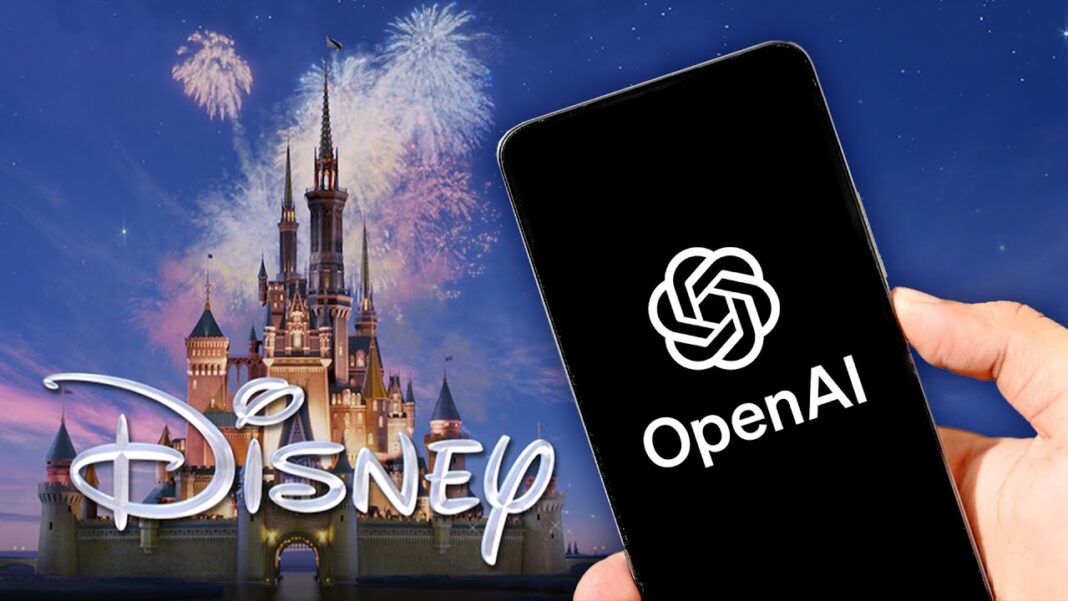
In a landmark move that could redefine the architecture of modern entertainment, The Walt Disney Company announced a $1 billion investment in OpenAI and granted the artificial intelligence firm access to some of the most valuable characters in American cultural history—including those from the Star Wars, Pixar, and Marvel franchises. According to a report that appeared Thursday on Reuters, which first detailed the scope and ramifications of the partnership, the sweeping agreement positions both Disney and OpenAI at the nexus of a dramatic technological shift that promises to reshape how creative content is conceived, produced, and consumed.
The deal, revealed Thursday, is more than just a high-stakes corporate alliance. It signals Hollywood’s accelerating convergence with generative AI technologies, even as the industry remains deeply conflicted about their implications for artistic labor and intellectual property rights. Reuters noted that the announcement comes at a time when actors, writers, and talent agencies are still grappling with the existential questions raised by digital replication, algorithmic authorship, and the rapidly expanding creative capacities of machine-learning systems.
Under the terms of the agreement reported by Reuters, OpenAI’s Sora video generator and the ChatGPT Images platform will be granted unprecedented latitude to create content using licensed Disney characters beginning in early 2026. Fans will be able to request bespoke videos—ranging from short narratives to stylized animations—featuring iconic characters such as Luke Skywalker, Buzz Lightyear, and the Avengers, all rendered through OpenAI’s increasingly sophisticated generative models.
Disney’s decision to formally authorize the use of its intellectual property within Sora represents a watershed moment for Hollywood. For decades, the major studios have been vigilant in tightly controlling access to their character libraries, brand imagery, and narrative universes. This partnership, however, suggests a growing corporate recognition that AI will play a central role in tomorrow’s entertainment ecosystem—and that it is strategically perilous to remain on the sidelines while the technology advances.
Executives, according to the report on Reuters, appear confident that integrating generative AI into Disney’s pipeline will enable the company to build new products, interactive tools, and audience experiences across virtually all of its consumer-facing platforms. The initiative is expected to extend well beyond fan-generated content, influencing how Disney animators, writers, designers, and producers conceptualize and shape future creative projects.
One of the most notable components of the partnership is the agreement to make a curated selection of AI-generated videos available on Disney+, the company’s flagship streaming service. Reuters reported that videos created by fans—using officially licensed Disney IP through Sora—will be eligible for review and potential distribution on the platform, marking the first time a major Hollywood studio will incorporate user-generated AI content directly into its commercial streaming library.
This marks a profound reversal of the industry’s traditional one-way creative model. For generations, studios determined what content audiences consumed; now, with OpenAI’s help, Disney is preparing to position its fans—and the algorithms they wield—as a new class of co-creators. Such a shift is likely to recalibrate the nature of fandom, expanding it from a passive culture of spectatorship into an active, participatory ecosystem in which viewers help shape the narratives of the characters they love.
As the Reuters report pointed out, this strategy also positions Disney to capture new forms of engagement at a time when competition for digital attention has intensified. By allowing fans to generate personalized content using legacy characters, Disney may be cultivating a new form of loyalty—a kind of algorithmic intimacy, in which viewers form deeper emotional connections by participating directly in the creative process.
In addition to granting OpenAI use of its intellectual property, Disney will also deploy ChatGPT internally across its workforce, Reuters reported. The rollout is expected to influence everything from administrative workflow to creative development, with employees gaining access to tools capable of accelerating script drafts, brainstorming sessions, visual prototyping, and digital asset creation.
For Disney, this represents a calculated bet that AI can be a force multiplier for its creative and operational capacities rather than a displacement mechanism. Yet the move is also sure to reignite long-standing anxieties within Hollywood’s talent community, many of whom fear that widespread adoption of AI tools will diminish opportunities for human writers, actors, and craft workers.
Those concerns are not unfounded. As the Reuters report noted, the entertainment industry has already undergone multiple convulsions in recent years as labor unions fought to negotiate protections around the use of AI for performance replication, facial modeling, and digital voice synthesis. While many unionized workers ultimately secured contract language restricting certain uses of AI, the technology’s rapid evolution continues to outpace the agreements designed to regulate it.
Disney’s full-scale adoption of ChatGPT may therefore have ripple effects far beyond its own corporate environment, potentially influencing labor negotiations, union expectations, and the broader cultural conversation about the future of creative employment in the age of generative algorithms.
The deal with OpenAI also arrives only months after Creative Artists Agency (CAA)—one of Hollywood’s most powerful talent agencies—publicly criticized Sora and raised alarms about the future of artistic autonomy. As Reuters reported, CAA accused OpenAI in October of exposing its clients to “significant risk” by enabling the generation of AI-created videos that could replicate performers’ likenesses, voices, or creative styles without proper authorization or compensation.
Agency executives openly questioned whether OpenAI believed that artists “deserve to be compensated and credited for the work they create,” highlighting an ongoing distrust between the talent community and Silicon Valley’s fast-moving AI labs.
The contrast between CAA’s warning and Disney’s enthusiastic embrace of the technology underscores the widening philosophical divide within Hollywood. On one side are the studios, increasingly motivated by economic pressures to adopt technologies that accelerate content production and reduce costs. On the other are talent agencies and labor unions, determined to safeguard human creativity and prevent an erosion of artistic rights.
As the Reuters report observed, Disney’s move may embolden other studios to pursue similar AI partnerships, further shifting the balance of power away from human-driven creative production and toward hybrid or AI-assisted models.
Perhaps the most legally and financially consequential dimension of the partnership is its explicit authorization of Disney’s intellectual property within OpenAI’s image and video models. In its reporting, Reuters stressed the significance of allowing generative AI systems to train on, manipulate, and publicly output content derived from Disney’s iconic character library—a universe that has generated billions of dollars in revenue and remains one of the most tightly protected asset portfolios in the world.
For decades, Disney has aggressively defended its copyrights, repeatedly lobbying Congress to strengthen intellectual property protections and expanding the duration of character rights to unprecedented lengths. That the company is now voluntarily opening its vault to an AI developer represents a dramatic realignment of its strategic priorities.
Legal scholars consulted by Reuters suggested that this deal may become a reference case for future negotiations between studios and AI companies. It establishes a clear precedent: AI platforms can access copyrighted creative assets—but only under a formal licensing framework negotiated with the rights holders. This will likely increase pressure on other AI firms to enter similar agreements if they wish to remain competitive.
Disney’s $1 billion investment is more than a financial transaction. It is a symbolic declaration that the worlds of studio filmmaking and artificial intelligence are no longer parallel spheres—they are converging. As Reuters explained, Hollywood now stands at a crossroads, torn between fears of creative obsolescence and the commercial imperative to harness disruptive technologies before rivals do.
The gravitational pull of generative AI has already begun reshaping the entertainment sector’s economic terrain. Studios see AI as a mechanism for accelerating production timelines, reducing labor costs, and cultivating hyper-personalized audience experiences. Talent groups, by contrast, fear a future in which the unique narratives, performances, and artistic instincts of human creators are overshadowed by the recombinant dexterity of algorithmic systems.
Disney’s OpenAI partnership sits precisely at the center of this fault line. It offers unprecedented creative possibilities—and unprecedented cultural risks.
As the industry absorbs the implications of the partnership, one conclusion emerges with clarity: Disney has thrown its weight behind the belief that AI will not merely influence the future of entertainment—it will define it. And by aligning with one of the most advanced AI companies in the world, the studio is signaling that it intends not to be disrupted by this technological revolution but to lead it.
Whether the result is a renaissance of creativity or a reconfiguration of the artistic landscape remains to be seen. But as Reuters has repeatedly emphasized, the deal represents one of the most consequential inflection points in Hollywood’s modern history—an unmistakable sign that the boundaries of storytelling, authorship, and intellectual property have entered a new and uncharted era.