



|
Getting your Trinity Audio player ready...
|
By: Fern Sidman
The latest controversy surrounding Ben & Jerry’s has once again laid bare the deep ideological divide between its co-founder, Ben Cohen, and parent company Unilever, as the veteran ice cream mogul announced plans to create a “pro-Palestinian” flavor that Unilever had reportedly refused to authorize. The announcement, first reported by the BBC, has reignited longstanding criticism of the Vermont-based brand’s politicization of the Israeli-Palestinian conflict — and its consistent willingness to wade into territory many see as openly hostile to the Jewish state.
In a video posted to Instagram on Tuesday, Cohen declared that he would move forward independently with the project, launching a new watermelon-flavored sorbet under his personal label, Ben’s Best, as a tribute to what he called “peace in Palestine.” According to the BBC report, the choice of flavor was no accident. The watermelon — its red, green, black, and white hues mirroring the colors of the Palestinian flag — has become an increasingly charged political symbol of anti-Israel activism.
“I’m doing what they couldn’t,” Cohen announced in the video, referring to his former company. “I’m making a watermelon-flavored ice cream that calls for permanent peace in Palestine and for repairing the damage that was done there.”
The BBC reported that Cohen accused Unilever of “unlawfully blocking” Ben & Jerry’s from pursuing projects that reflected its self-proclaimed “social mission.” The dispute underscores a long-simmering tension between the multinational conglomerate and the Vermont brand, which Unilever purchased in 2000 under an agreement intended to preserve Ben & Jerry’s independence in areas of social advocacy.
Cohen’s decision to proceed independently — outside the corporate framework of Unilever and his co-founder Jerry Greenfield — represents the culmination of years of escalating discord. Greenfield, who recently departed the company after 47 years, also told the BBC that he believed the brand’s freedom “to speak its conscience” had been steadily eroded since Unilever’s acquisition.
Cohen’s new venture, Ben’s Best, is not new in concept but now carries sharper ideological intent. Founded in 2016 to promote then-presidential candidate Bernie Sanders, the project was originally designed to merge progressive activism with confectionary branding. But as the BBC report noted, its new incarnation veers into far more controversial terrain: the intersection of commerce, propaganda, and the anti-Israel boycott movement.
The symbolism of Cohen’s “peace flavor” is unmistakable. As the BBC report highlighted, the watermelon has become a cultural shorthand for Palestinian solidarity, often displayed at protests, rallies, and online campaigns where flags bearing Hamas or Palestinian Authority insignia are restricted. Critics argue that the fruit’s appropriation as a political icon blurs the line between calls for peace and calls for Israel’s dissolution.
By embracing this imagery, Cohen’s project risks positioning itself — and by extension, the Ben & Jerry’s legacy — in alignment with a movement that many Jewish organizations, including the Anti-Defamation League, regard as a cover for antisemitic sentiment and anti-Israel extremism.
“The use of symbols like the watermelon has become a proxy for promoting one-sided political narratives that vilify Israel while ignoring terrorism,” one analyst told the BBC, referencing the ongoing fallout from the October 7 Hamas attacks and the broader propaganda war that followed.
Cohen’s framing of the flavor as a call for “peace in Palestine” thus rings hollow to critics who note his silence on Hamas atrocities, kidnappings, and the continued targeting of Israeli civilians. As the BBC report observed, Cohen’s messaging follows a familiar pattern: moral posturing cloaked in humanitarian rhetoric, but selectively applied.
Cohen’s announcement is the latest chapter in a controversy that has dogged Ben & Jerry’s since 2021, when the company announced its decision to end sales in what it called “Israeli-occupied territories.” The move — immediately condemned by the Israeli government, Jewish groups worldwide, and major American political figures — was widely seen as an endorsement of the Boycott, Divestment, and Sanctions (BDS) movement, a campaign that seeks to isolate Israel economically and culturally.
The BBC reported at the time that Unilever scrambled to contain the fallout, eventually selling the company’s Israeli operations to a local licensee to ensure continued sales across Israel, including in Judea and Samaria (the biblical regions Ben & Jerry’s refers to as “occupied”). The compromise allowed Unilever to maintain its contractual commitment to Ben & Jerry’s social mission while safeguarding its global business interests — though critics saw it as a hollow gesture that did little to repair the damage.
The episode cemented Ben & Jerry’s reputation as an outlier among corporate brands, one that conflates activism with partisanship. As the BBC wrote in a 2022 retrospective, “Few consumer companies have so persistently intertwined their product identity with progressive politics — and few have so often courted backlash for doing so.”
In this latest dispute, Unilever’s refusal to greenlight the pro-Palestinian flavor may represent a long-overdue acknowledgment that Ben & Jerry’s activism has strayed too far from acceptable corporate conduct. The BBC cited Unilever sources who described Cohen’s initiative as a “personal project” unrelated to the company and reiterated that Unilever’s ice cream division — soon to be spun off into a separate business — will adhere strictly to “global legal and ethical standards.”
For Unilever, which has faced shareholder unrest and state-level divestments from U.S. pension funds over its subsidiary’s anti-Israel stance, Cohen’s defiance is both a reputational and financial hazard. As the BBC reported, at least seven U.S. states — including Texas, New York, and Florida — had moved to divest from Unilever or reconsider contracts in the wake of Ben & Jerry’s 2021 announcement.
In response to Cohen’s watermelon-flavor announcement, one Unilever insider told the BBC, “We have no intention of allowing the Ben & Jerry’s brand to be used as a political platform for extremist agendas.”
Cohen insists that his goal is “peace” — but, as the BBC noted, that peace appears to be conditional. His video makes no mention of Hamas’s attacks on Israel, its use of human shields, or the plight of Israeli hostages still held in Gaza. Instead, the narrative he advances echoes the one-sided talking points that have become familiar among pro-Palestinian activists in the West.
Critics argue that this selective moral vision — one that portrays Israel as the aggressor and Palestinians solely as victims — is a defining feature of Ben & Jerry’s activism. “For a company that preaches equality and compassion,” the BBC observed in a 2021 feature, “its silence on violence against Israelis has been conspicuous.”
Moreover, Cohen’s assertion that Unilever “unlawfully blocked” his efforts suggests a deep misunderstanding of the limits of corporate free speech. The BBC analysis pointed out that multinational corporations are bound by fiduciary and legal responsibilities to shareholders — not the personal ideologies of their founders. Unilever’s restrictions, therefore, are less acts of suppression than of corporate prudence.
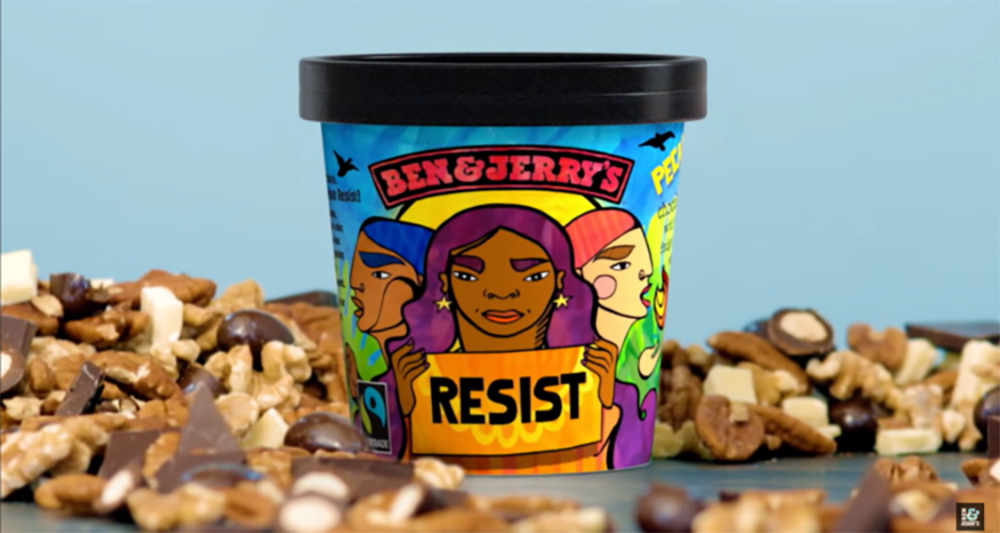
Beyond the politics, Cohen’s move highlights a broader and more cynical trend: the commodification of protest. Turning social causes into consumer products has long been Ben & Jerry’s signature, from “Pecan Resist” to “Save Our Swirled.” But as the BBC noted, this model risks trivializing complex geopolitical conflicts by reducing them to marketing slogans and flavors.
By branding political ideologies as desserts, Cohen effectively invites consumers to perform activism through purchase — a form of virtue signaling that benefits the brand far more than the cause. “It’s performative politics disguised as empathy,” one cultural critic told the BBC. “And in the case of Israel, it’s deeply irresponsible.”
Cohen’s partner and co-founder, Jerry Greenfield, has made clear that he no longer shares his colleague’s direction. According to the information provided in the BBC report, Greenfield resigned earlier this year, citing frustration with the company’s politicization. “The independence we had to speak on social issues has been lost,” he said — though critics suggest Greenfield’s departure may also reflect discomfort with Cohen’s increasingly radical activism.
Meanwhile, Cohen insists that he remains motivated by the brand’s founding principles. “My heart leads me to keep working within the company to advocate for its independence,” he told the BBC, adding that his mission is to “continue to live up to [Ben & Jerry’s] founding values and social mission of more than 40 years.”
Yet, for many former supporters, those values have curdled into ideology. Once synonymous with social conscience and community engagement, Ben & Jerry’s now finds itself defined by polarizing politics and moral hypocrisy — more closely associated with boycotts than benevolence.
As the BBC has reported across years of coverage, the saga of Ben & Jerry’s encapsulates a cautionary tale of what happens when corporate activism eclipses ethical responsibility. In its zeal to appear morally virtuous, the company has alienated millions of consumers, provoked diplomatic backlash, and undermined its credibility as a global brand.
Cohen’s watermelon-flavored “tribute to Palestine” may find an eager audience among anti-Israel activists, but for most observers, it represents the final stage of a long decline — a transformation from socially conscious enterprise to ideological soapbox.
In the end, what began as a company devoted to “peace, love, and ice cream” has melted into something far colder: a brand that confuses politics for morality, and propaganda for compassion.
