



|
Getting your Trinity Audio player ready...
|
By: Jerome Brookshire
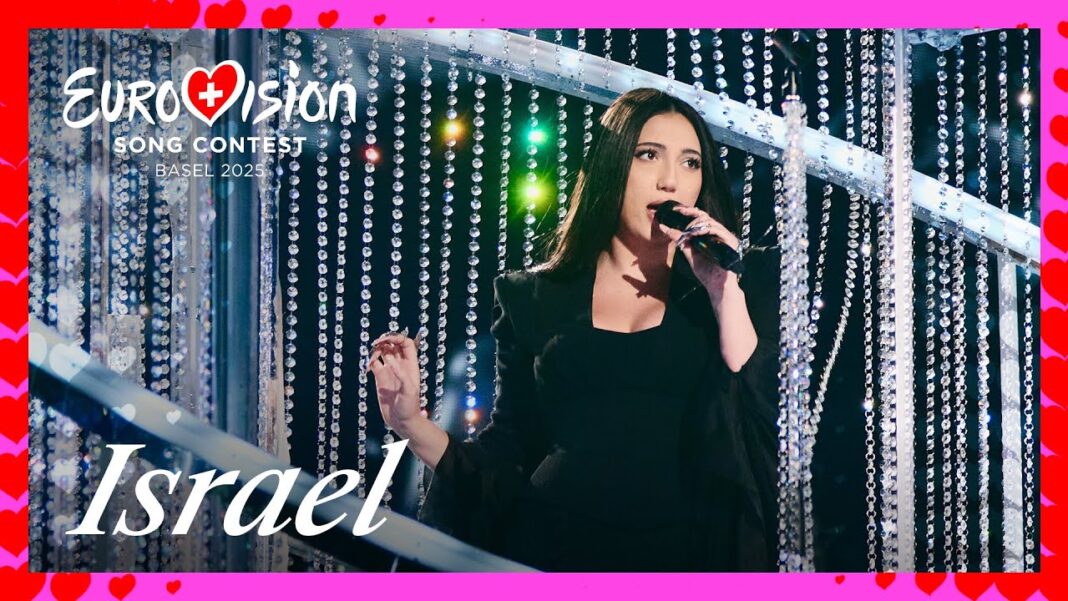
In a night that blended raw emotion, national pride, and artistic excellence, Israel’s Yuval Raphael emerged as the overwhelming favorite of the European public, placing second overall at the 2025 Eurovision Song Contest held in Basel, Switzerland, and securing the coveted top spot in the public vote. Her ballad, “New Day Will Rise,” captured the hearts of millions, earning 297 points from televoters and offering a stirring symbol of resilience for a nation still in mourning and at war.
As reported by The Times of Israel, Raphael’s Eurovision journey was never just about music—it was a profoundly personal mission of remembrance, strength, and hope. Speaking just moments after the results were announced, an emotional Raphael wrapped herself in the Israeli flag and told Kan public broadcaster, “I feel like we’ve won at life.” With a laugh that masked months of trauma and healing, she added, “I don’t know how to explain it. I’ll be grateful for this situation every day of my life.”
Raphael, 24, is not just a singer but a survivor of the October 7, 2023, Hamas massacre at the Nova music festival—an event that has become a national trauma for Israel. According to The Times of Israel, Raphael hid under a pile of bodies in a bomb shelter for hours after playing dead, her leg pierced by shrapnel. Her voice, her song, and her stage presence at Eurovision were thus steeped in lived experience and hard-won survival, something that clearly resonated with audiences across Europe.
“I’ve never felt so victorious before in my life,” she said, eyes welling with tears as she spoke with Kan. “All I wanted to do was bring honor and pride to this country, to make them proud, to give them a small second of peace amid all the madness.”
Her sentiment, echoed throughout Israeli media, was that the real victory would only come when the remaining 58 hostages—still held in Gaza since the October 7 assault—are safely returned home. “There is no real victory like the victory that Israel will experience when the hostages return,” she stated poignantly.
The Times of Israel report highlighted how the Israeli delegation, deeply moved and draped in national flags, reacted with unrestrained pride as point after point rolled in from the public vote, catapulting Raphael into a symbolic figurehead of national perseverance. While Austria’s operatic entry “Wasted Love” by JJ won the competition with a strong showing in both the jury and public votes, Raphael’s song topped the public tally by a significant margin, a clear message of solidarity and admiration from viewers across the continent.
Despite finishing 14th in the jury vote—an outcome that prompted criticism from many in Israel who saw it as politically motivated—Raphael graciously praised the Austrian winner. “He has incredible vocals. He worked extremely hard, I’m very proud of him,” she said, speaking with a poise far beyond her years. “He deserves it.”
Back in Israel, celebrations erupted among fans who viewed Raphael not merely as an artist but as a symbol of their collective strength and longing for peace. Social media flooded with messages congratulating her, many pointing out that her performance had done more to unify and uplift than any recent political speech. “She didn’t just sing,” one viral post read, “she sang for us all.”
According to the information provided in The Times of Israel report, Eurovision has always held a unique place in Israeli culture—as both an entertainment event and a vehicle for national expression on the world stage. For many Israelis, Raphael’s second-place finish—and the landslide win in the public vote—felt like a moral victory that transcended the scoreboard.
Her song, “New Day Will Rise,” which fuses classical ballad elements with modern orchestration, spoke of trauma, endurance, and the promise of redemption. “This wasn’t just a song, it was a prayer,” said a columnist in The Times of Israel, noting the lyrical references to “rising from ashes” and “a light from the shadows.”
As for Raphael, the days ahead will be devoted to celebration—and reflection. “We’re going to celebrate and we’re going to breathe,” she told Kan, her voice light yet full of intent. “Honestly, I just want to return to Israel. I want to get off the plane and stand on Israeli soil. I just want to hug my friends.”
That sentiment, The Times of Israel observed, has become emblematic of a country desperate for moments of peace, unity, and human connection amid the ongoing war in Gaza. Raphael’s performance and her story offered precisely that—a brief but powerful reprieve from grief and a reminder of the creative spirit that endures even in the darkest of times.
With Eurovision now behind her, Raphael is likely to be embraced not only as a national star but also as a symbol of the country’s ongoing journey—from tragedy to resilience, from silence to song. And for millions who watched her, in Israel and across Europe, her message was loud and clear: hope is still alive, and it sings.
