



|
Getting your Trinity Audio player ready...
|
By: Justin Winograd
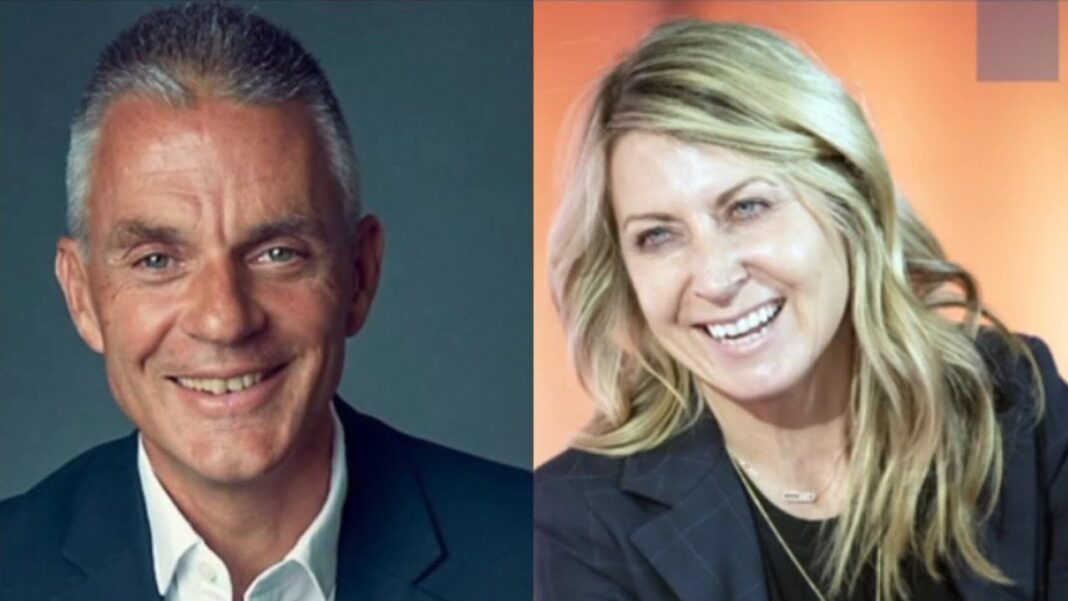
When two of the BBC’s most senior executives — Director-General Tim Davie and BBC News CEO Deborah Turness — abruptly resigned last week, it was more than a scandal; it was an earthquake. As The Telegraph and The New York Times both noted, few resignations in British media history have carried such moral and institutional weight. The resignations came in the wake of a damning revelation: that the BBC’s flagship program Panorama had deceptively edited footage of a speech by President Donald Trump, manipulating his words to make it appear that he had incited violence during the 2020 Capitol unrest.
For internationally renowned British columnist and political commentator Melanie Phillips, the episode represents “a moral nadir” in the BBC’s century-long history — a moment not of bias, but of journalistic fraud. In her searing column “Defund the BBC,” published this week, Phillips declared: “The revelation that the BBC doctored comments made by President Donald Trump to make it appear falsely that he promoted the attack on the Capitol takes this onto a very different level.”
Her words cut to the core of a larger crisis — not just at the BBC, but within the Western media establishment that once prided itself on impartiality.
The controversy erupted when an internal memo surfaced — written by Michael Prescott, until recently an independent adviser to the BBC’s Editorial Guidelines and Standards Committee (EGSC). In that memo, Prescott accused senior BBC staff of systematically misleading viewers and burying internal complaints about bias. The most explosive charge centered on Panorama’s January 2025 episode on American democracy, in which Trump’s remarks from his rally were cut and spliced in a way that reversed their meaning.
The Panorama segment presented Trump saying: “We’re gonna walk down to the Capitol and I’ll be with you and we fight. We fight like hell, and if you don’t fight like hell, you’re not gonna have a country anymore.”
In reality, Trump’s speech was quite different. What he actually said — nearly an hour earlier — was:
“We are gonna walk down to the Capitol and I’ll be with you. I know that everyone here will soon be marching over to the Capitol building to peacefully and patriotically make your voices heard.”
The now-infamous phrase “We fight like hell” occurred 54 minutes later, in a separate section of the speech. Worse still, Panorama followed the edited clip with footage of the Proud Boys marching toward Congress — even though, as internal BBC records confirmed, the Proud Boys had departed before Trump began speaking.
As Phillips observed, this was not editing for clarity; it was editing for narrative manipulation. “Editors often splice for brevity,” she wrote. “But it is never normal practice to do so in a way that distorts or reverses meaning.”
When BBC News Global Director Jonathan Munro attempted to defend the decision as “standard editorial practice,” public outrage mounted. The statement, Phillips wrote, was “a marmalade-dropper” — a phrase the British press reserves for moments of national disbelief.
The Prescott memo, published in excerpts by The Telegraph and widely cited by Phillips, describes an institutional rot that extended well beyond the Panorama edit. Prescott — a respected former political editor at The Sunday Times — accused BBC management of repeatedly ignoring internal reports detailing misconduct, bias, and deliberate misrepresentation.
He documented evidence of egregious distortions within BBC Arabic, the broadcaster’s international arm, which serves audiences across the Middle East and North Africa. According to Prescott, BBC Arabic routinely downplayed terrorism, minimized Israeli suffering, and amplified Hamas propaganda during the Gaza war coverage.
In one case, BBC Arabic contributor Ahmed Qannan, who publicly described a Palestinian gunman who killed five Israelis as a “hero,” appeared 217 times on air between February 2024 and April 2025 — always introduced as a “journalist.” Another regular contributor, Ahmed Alagha, who had referred to Jews as “devils” and Israelis as “less than human,” appeared 522 times during the same period.
“Imagine the BBC platforming an extremist who referred to any other ethnic or religious group as ‘devils,’” Phillips wrote. “There would be outrage — and rightly so. Yet when the hatred is directed at Jews, it is recast as political commentary.”
Perhaps the most chilling example of what Phillips called “journalistic malevolence” concerned BBC reports on the mass graves in Gaza. In April and June 2024, BBC correspondents published stories alleging that Israeli soldiers had buried hundreds of Palestinian bodies at Al Nasser and Al Shifa hospitals before withdrawing. The source for both stories was the Hamas-controlled Gaza Civil Defense Agency, a fact that the BBC did not disclose in its coverage.
Internal reviews later found no independent corroboration of these claims. One BBC article even implied that a UN official had confirmed the allegations of summary executions — a claim the UN itself denied. Ironically, as Phillips and Prescott both noted, the same BBC journalists had earlier reported that Palestinians were digging graves at those exact hospitals weeks before Israel’s ground operations.
“How could the BBC forget its own reporting?” Phillips asked pointedly. “How could it recycle Hamas propaganda as if it were evidence of Israeli war crimes? This is not bias. This is evil masquerading as journalism.”
According to Prescott’s testimony, the BBC’s editorial leadership did not simply fail to correct these violations — it actively resisted acknowledging them. He recounted instances in which BBC executives brushed aside complaints, failed to discipline offenders, and refused to implement reform.
“I have never, in my professional life,” Prescott wrote, “witnessed what I did at the BBC with regard to how management dealt with (or failed to deal with) serious recurrent problems.”
For Phillips, this speaks to a moral and epistemic collapse within the institution. “BBC executives believe their left-wing worldview is the center ground,” she argued. “Anyone who challenges that worldview is automatically cast as an extremist. The result is a hermetically sealed thought system — impervious to truth, insulated from accountability.”
The collapse, she says, is not ideological alone but civilizational. “The BBC once defined Britain’s moral voice in the world. It now peddles propaganda with the arrogance of a priesthood convinced of its own sainthood.”
The political fallout has been seismic. In London, the scandal has forced Prime Minister Keir Starmer’s government into crisis management mode. As Phillips noted, Downing Street fears the affair could strain U.S.–U.K. relations just as President Trump prepares for a possible return to office in 2025. The BBC’s doctored footage, which appeared to portray Trump as inciting insurrection, has reportedly “infuriated” the former president. Legal action against the broadcaster is said to be under consideration.
BBC Chairman Samir Shah is expected to deliver a formal apology to the House of Commons Culture Committee this week, though Phillips dismissed such gestures as “performative damage control.”
“This is not a problem that can be resolved by two resignations or a committee apology,” she wrote. “It is structural, spiritual, and endemic.”
Phillips further argued that the Panorama scandal fits a long-standing pattern of activist journalism disguised as objectivity. She cited previous BBC debacles: the “Verify” unit’s false report suggesting racial bias in car insurance pricing; the infiltration of newsroom coverage by ideologically driven LGBT+ staffers; and the broadcaster’s recent misreporting of climate and energy policy — now subject to yet another internal review.
But it is the BBC’s handling of Israel, Phillips maintains, that reveals something darker than bias. “The BBC’s coverage of the Jewish state,” she wrote, “reflects not mere political slant but deep-seated animus — a reflexive hostility rooted in cultural contempt and moral relativism.”
By presenting Israel’s self-defense as aggression while humanizing terror groups like Hamas, the BBC, she argues, “has become a global amplifier of antisemitic narratives.”
In one particularly damning passage, Phillips declared: “As producers of Britain’s cultural mood music, the BBC has been drip-feeding poison about Israel into the nation’s psyche for years. It is directly responsible for the tsunami of Jew-hatred now engulfing British campuses and streets — and for stoking the hatred of Jews in the Muslim world. The BBC has Jewish blood on its hands.”
Phillips’s solution is both radical and, in her view, inevitable: defund the BBC.
She argues that the broadcaster’s Royal Charter — which mandates impartiality, fairness, and truth — has been “irretrievably violated.” With public trust shattered and the institution’s moral compass broken, continued taxpayer funding has become “an affront to democracy itself.”
“An organization that deceives the public while claiming to serve it is no longer a public service,” she wrote. “It is a parasite on the body politic.”
Already, calls for defunding are gaining traction. Conservative MPs have demanded a parliamentary inquiry into the BBC’s governance, while free-speech advocates argue that its license fee model — which forces every household with a television to pay an annual levy — is anachronistic in the digital age.
As Phillips emphasized, “A taxpayer-funded broadcaster cannot also be a partisan political actor. The BBC must choose: journalism or activism. It cannot be both.”
To her credit, Phillips does not treat the BBC’s corruption as a uniquely British problem. Instead, she places it within the wider collapse of Western media ethics — a decline marked by groupthink, ideological censorship, and contempt for dissent.
“Across the Atlantic,” she wrote, “American networks like CNN and MSNBC long ago traded journalism for activism. The contagion has spread.”
Indeed, the BBC’s manipulation of Trump’s speech mirrors the very disinformation it once accused others of spreading. “In attempting to frame Trump as an enemy of democracy,” Phillips observed, “the BBC became the very thing it claimed to oppose.”
As the dust settles, the resignations of Davie and Turness will not suffice to restore credibility. The rot, as Phillips insists, runs far deeper — into the DNA of a corporation that has forgotten what truth sounds like.
For decades, the BBC was the gold standard of broadcasting, its name synonymous with integrity and restraint. Foreign audiences tuned in not because they agreed with Britain, but because they trusted it. That trust, Phillips warns, is gone.
“What we are witnessing,” she concluded, “is not merely the fall of a media empire but the death of moral seriousness in Western journalism. Truth has become negotiable, and reality itself a matter of editorial taste.”
The BBC’s Panorama scandal is not an isolated misstep. It is the culmination of decades of unchecked bias, ideological capture, and moral cowardice. And as Melanie Phillips so powerfully contends, it demands not apology but accountability — not reform, but reckoning.
In the end, this crisis may yet serve as a turning point — not just for the BBC, but for journalism itself. As Phillips reminds her readers, “Truth is not a political weapon. It is the foundation of civilization.”
And if Britain’s most revered broadcaster can no longer tell it, then perhaps, at long last, the world must stop paying for its lies.
All this is shocking enough, but add into it the sex scandals over the years within the corporation and it is clear that the BBC is focussed only on controlling the narrative in the UK and protecting itself and ‘the talent’ it employs at public expense.
I would almost find this humorous. In the movie “Casablanca” Captain Renault exclaims: “I’m shocked, shocked to find that there is gambling going on here!” The NY Times and BBC have always been brazenly evil lying (nazi) antisemites. To pretend otherwise is simply silly. There is no such thing as a “damning revelation” when it comes to these depraved evil lying “fake news” scum!
Melanie Phillips is incredibly silly in complaining that this standard practice for the fake news represents “a moral nadir”. Their entire existence is a “moral nadir”.
I can’t think of anyone alive whoever “trusted” the fake news BBC. What a quaint notion!