



|
Getting your Trinity Audio player ready...
|
By: Fern Sidman
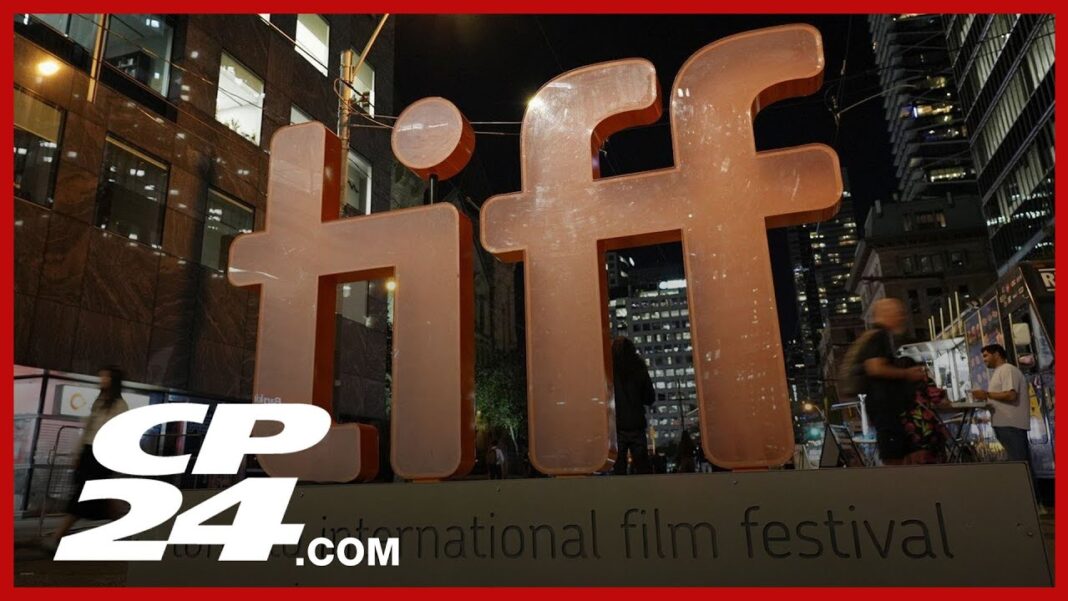
The Toronto International Film Festival (TIFF) has become the center of a growing international controversy after it was revealed that a documentary chronicling a dramatic rescue mission during the Hamas-led Oct. 7, 2023, terrorist attack in Israel was removed from its official lineup. As The Algemeiner reported on Thursday, festival CEO Bailey Cameron is now insisting that efforts are underway to ensure the film, The Road Between Us: The Ultimate Rescue, will be screened — even as accusations of censorship, political pressure, and insensitivity to Jewish audiences mount.
The dispute, which has drawn condemnation from prominent Jewish organizations, entertainment industry figures, and even the Israeli foreign minister, underscores the intense political sensitivities surrounding the portrayal of Hamas’s atrocities on the international cultural stage. At stake is not only the reputation of TIFF — one of the world’s most prestigious film festivals — but also the broader question of how filmmakers can depict the events of Oct. 7, in which Hamas terrorists killed 1,200 people, abducted 251 hostages, and committed what Israel and numerous human rights experts have described as war crimes and crimes against humanity.
Directed by Canadian filmmaker Barry Avrich, The Road Between Us tells the story of retired Israel Defense Forces Maj. Gen. Noam Tibon, who, on Oct. 7, 2023, raced from his home in central Israel to the Gaza border community of Nahal Oz after learning that Hamas gunmen had invaded his son’s home. As The Algemeiner report noted, Tibon’s mission was both personal and extraordinary: to rescue his family — including his two young granddaughters — from terrorists who had already begun murdering civilians in their neighborhood.
Tibon not only succeeded in saving his family but also helped evacuate survivors of the Nova Music Festival massacre, assisted wounded soldiers, and took part in neutralizing attackers. His actions earned widespread praise, including a feature segment on 60 Minutes and the interest of Fauda creators Avi Issacharoff and Lior Raz, who announced they were scripting a dramatic adaptation of his rescue. Tibon himself has contributed opinion essays to The Algemeiner and remains a respected voice in Israeli security discourse.
The film’s footage includes not only interviews and reconstructions but also real-time visuals captured during the chaos — some of which, according to TIFF, originate from GoPro cameras worn by Hamas terrorists themselves as they carried out murders, kidnappings, and acts of torture. These images, as festival officials would later argue, present unique legal and security challenges.
On Tuesday, entertainment industry outlet Deadline reported that The Road Between Us had been removed from TIFF’s 2025 program because the filmmakers had failed to secure “legal clearance” for certain footage.
In a statement to Deadline, festival organizers said: “The film was withdrawn by TIFF because general requirements for inclusion in the festival, and conditions that were requested when the film was initially invited, were not met, including legal clearance of all footage. The purpose of the requested conditions was to protect TIFF from legal implications and to allow TIFF to manage and mitigate anticipated and known risks around the screening of a film about highly sensitive subject matter, including potential threat of significant disruption.”
The statement did not elaborate on what “legal clearance” could mean in the context of images produced by a terrorist organization — a point that quickly became central to the public backlash.
Noam Tibon, the film’s central figure, wasted no time in responding. Speaking to media outlets, he called TIFF’s decision “absurd and bizarre” and accused the festival of “succumbing to pressure and threats” in an effort to suppress the truth of what happened on Oct. 7. “The atrocities committed by Hamas cannot be erased or denied,” Tibon said, in remarks cited by The Algemeiner.
The film’s production team issued an equally sharp statement to Variety, saying: “We are shocked and saddened that a venerable film festival has defied its mission and censored its own programming by refusing this film.”
Prominent Jewish advocacy groups quickly rallied to the film’s defense. StandWithUs Canada, the Canadian Centre for Jewish and Israeli Affairs, the Combat Antisemitism Movement, Friends of Simon Wiesenthal Center, and Creative Community for Peace all condemned the removal, warning that suppressing such content plays into the hands of those seeking to whitewash or deny Hamas’s atrocities.
Perhaps the most pointed rebuke came from Israeli Foreign Minister Gideon Sa’ar, who lambasted the idea that TIFF might require “legal clearance” from Hamas for its own propaganda and atrocity footage. Writing on X, Sa’ar declared: “This festival would have asked Hitler or Goebbels for copyright on Auschwitz footage. This vicious and sickening decision must be cancelled immediately!”
His statement, widely shared by Israeli and pro-Israel accounts, crystallized the view that TIFF’s legal explanation was either an act of bad faith or a bureaucratic rationalization for yielding to political intimidation.
Late Wednesday, TIFF CEO Bailey Cameron issued a formal statement to clarify the festival’s position and deny accusations of political censorship.
“I want to be clear: Claims that the film was rejected due to censorship are unequivocally false,” Cameron said, as quoted by The Algemeiner. “I remain committed to working with the filmmaker to meet TIFF’s screening requirements to allow the film to be screened at this year’s festival. I have asked our legal team to work with the filmmaker on considering all options available.”
Cameron acknowledged that the dispute had caused “pain” in the Jewish community and beyond, and apologized for any offense.
“It was never my intention to offend or alienate anyone,” he said. “At TIFF, we believe in the transformative power of film to foster understanding and dialogue, especially during challenging times.”
He stressed that the film was initially invited to the festival and that he still hoped it could be shown during the September 4–14 event.
Cameron’s statement pointed to TIFF’s obligation to “manage and mitigate anticipated and known risks” when screening a film dealing with “highly sensitive subject matter.” While he did not specify what those risks were, The Algemeiner report noted that the festival’s caution likely reflects both potential legal claims from rights holders — however improbable in the case of Hamas — and concerns about protests, disruptions, or even security incidents surrounding the screening.
Pro-Palestinian activist groups have in recent years targeted cultural events featuring Israeli artists or Israel-related subject matter, sometimes successfully pressuring venues to cancel screenings or performances. TIFF’s decision to remove The Road Between Us from its official lineup — even temporarily — may have been influenced by fears of such disruption.
Still, as critics have observed, these are precisely the pressures that make the festival’s stance appear political, regardless of its legal rationale.
The clash over The Road Between Us is part of a larger pattern in which artistic institutions in the West are grappling with — and often stumbling over — how to present work related to the Oct. 7 massacre and the ensuing war in Gaza. The Algemeiner has reported on cases in which artists, curators, and film festivals have faced public campaigns to remove works seen as sympathetic to Israel, while works perceived as hostile to the Jewish state have often been showcased without comparable scrutiny.
The controversy also touches on the ethics of using perpetrator-produced footage in documentary storytelling. The GoPro videos filmed by Hamas fighters on Oct. 7 are among the most direct and damning pieces of evidence of the group’s crimes. Israeli authorities have used them in closed-door briefings to journalists and foreign officials to counter disinformation. But the footage’s graphic nature — and the potential legal ambiguities surrounding its use — present unique challenges for public exhibition.
For TIFF, the situation is a test of its credibility as an institution committed to artistic freedom. By insisting that the issue is one of legal and procedural compliance, the festival is attempting to frame the dispute in apolitical terms. Yet, as The Algemeiner report emphasized, in the current polarized climate, any restriction on a film dealing with Oct. 7 will be read by many as a political act — especially when the film’s subject is an unambiguously heroic figure such as Tibon, whose rescue efforts have been documented and celebrated internationally.
Cameron concluded his Wednesday statement with an appeal for “patience and understanding as we navigate this complex landscape.” He emphasized that TIFF is “not a political organization” but will strive to present its programming “in a safe, inclusive environment” and to include “stories that resonate both here at home and around the world.”
As of this writing, The Road Between Us remains absent from TIFF’s official program. The festival’s legal team is reportedly in discussions with the filmmakers to resolve the clearance issues, though it remains unclear whether that process will conclude in time for a festival screening.
For Tibon and his supporters, the controversy has already amplified the film’s profile — and hardened their view that cultural institutions must resist any effort, real or perceived, to obscure the truth of Oct. 7.
The stakes are more than symbolic: with 50 hostages still held in Gaza nearly a year after the massacre, the documentary is not just a historical record but part of an ongoing struggle to keep global attention on the victims and survivors of Hamas’s crimes.
As The Algemeiner report highlighted, the question is not merely whether this one film will be shown at TIFF, but whether the world’s leading cultural platforms will uphold their professed commitment to telling difficult stories — even when those stories confront audiences with the unvarnished brutality of terrorism.

So leftist Nazis are getting their way? Anyone surprised?