



|
Getting your Trinity Audio player ready...
|
By: Arthur Popowitz
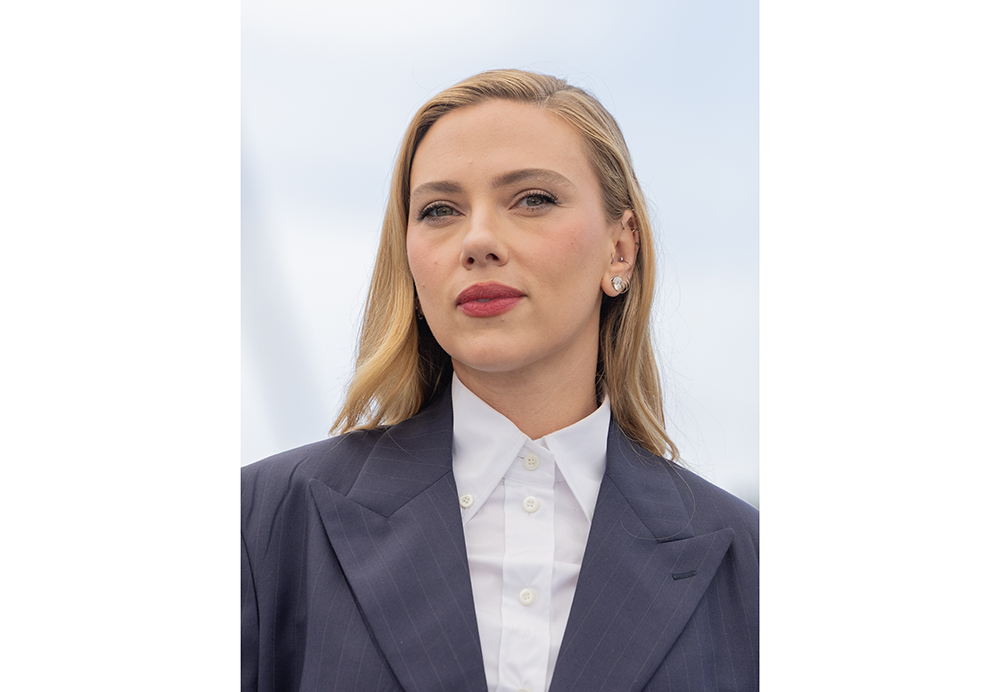
Scarlett Johansson, one of Hollywood’s most recognizable stars, has made an extraordinary choice for her first foray behind the camera. In her feature directorial debut, Eleanor the Great, the actress-turned-director cast Holocaust survivors to appear in the film—an artistic decision rooted in authenticity, memory, and her own Jewish identity. According to a report that appeared on Friday at The Jewish News Syndicate (JNS), Johansson’s film not only introduces audiences to a poignant narrative about loss and renewal but also intertwines cinema with the lived testimony of those who survived the darkest chapter in Jewish history.
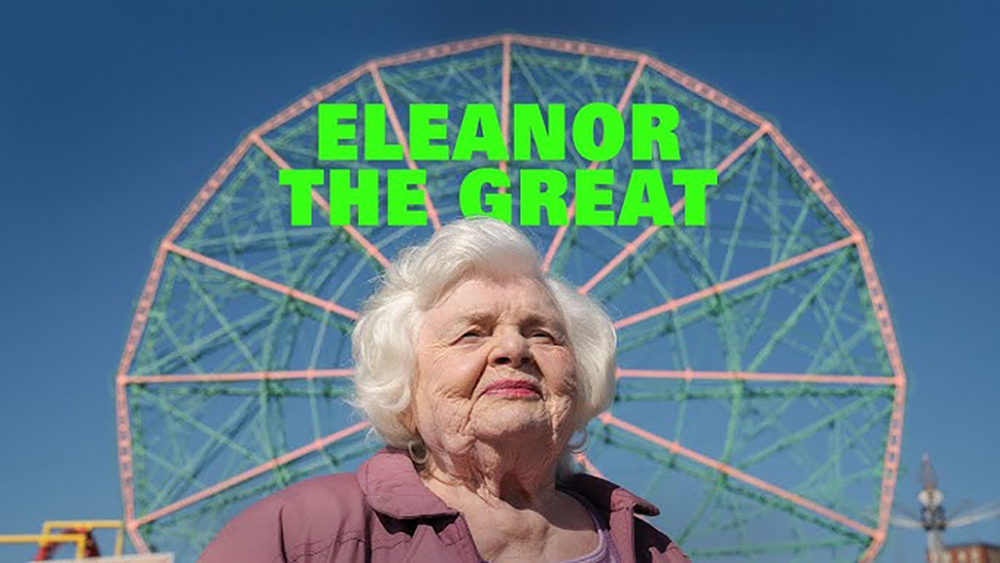
The film, written by Tory Kamen, follows Eleanor, a 94-year-old woman portrayed by June Squibb, who relocates to New York City after a personal loss. The narrative is less about grand dramatic twists than it is about the quieter reckonings of aging, grief, and rediscovery. Yet Johansson’s creative decision to involve Holocaust survivors elevates the project into a work that is not just cinematic but historical, turning the movie into a living document of memory.
As reported by JNS, Johansson collaborated with actress Jessica Hecht and the USC Shoah Foundation to locate survivors willing to participate. The choice was deliberate: “It wasn’t really ever a question of whether we would cast real survivors,” Johansson told People. “It was more of how can we identify people that would want to participate, could participate.”
Her words reflect the urgency of the moment. With the number of Holocaust survivors dwindling each year—fewer than a quarter of a million remain alive worldwide—Johansson’s film becomes part of a race against time. As she noted, “Every time we would find someone who could participate, it was like, ‘Yes, we got another survivor.’”
Johansson emphasized that the survivors she worked with had little or no prior film experience. What they brought was something infinitely more valuable: their presence, their stories, and their willingness to engage with a new generation of storytellers.
“Nobody in the group had really done a film like that before. They really were just engaged and listening,” Johansson explained. Their eagerness to share reflected what JNS has often described as the survivors’ unrelenting commitment to memory—a refusal to allow silence to obscure the enormity of what they endured.
On set, their presence served as both inspiration and moral anchor. For Squibb, Hecht, Chiwetel Ejiofor, and Erin Kellyman—actors with long and accomplished careers—the survivors’ participation was a reminder that their craft was being conducted in service of something far larger than fiction.
Johansson, who has long acknowledged her Jewish heritage, described how the script resonated with her own life and identity. She told People that when she first read the screenplay, she recognized elements that were intimately familiar: the Jewish intergenerational relationships, the rhythm of New York as a character itself, and the subtle ways in which Jewish identity informed the narrative.
“That was something very appealing to me,” she said. “It had so many elements that I felt very connected to. I felt I could film it. ‘Actually, I think I can direct this.’”
As JNS frequently underscores, the visibility of Jewish voices in Hollywood—especially in a cultural climate where antisemitism has become increasingly normalized—is of no small consequence. Johansson’s project stands as both a cultural contribution and a statement: Jewish identity, Holocaust memory, and the vibrancy of Jewish life remain inseparable threads in contemporary storytelling.
Eleanor the Great premiered at the Cannes Film Festival in May, where it reportedly received a five-minute standing ovation. The response was not just for the performances but for the project’s ethos: a blending of narrative cinema with testimonial history.
At the Toronto International Film Festival, where Johansson spoke about the film ahead of its North American debut, she reiterated the importance of amplifying the voices of survivors while they are still with us. As JNS reported, she framed the film not as a nostalgic tribute but as a necessary act of cultural continuity.
The movie will reach American theaters on September 26, giving wider audiences the chance to witness both a story of late-life resilience and the living presence of Holocaust survivors.
Johansson’s timing is significant. As antisemitism rises globally and Holocaust denial gains traction in digital spaces, projects that engage directly with survivor testimony are more urgent than ever. The Jewish News Syndicate has covered extensively how antisemitic incidents in the United States and Europe are at historic highs, while surveys show declining knowledge about the Holocaust among younger generations.
By integrating survivors into her film, Johansson ensures that their voices are heard not only in the archives of institutions like the USC Shoah Foundation but in mainstream culture, where narratives of resilience and Jewish identity reach diverse audiences.
Her decision also comes in the wake of her own public battles against antisemitic imagery. Earlier this year, as JNS and other outlets reported, Johansson sued to block the unauthorized use of her AI-generated likeness in a video that included deep fakes of Jewish celebrities targeting rapper Kanye West for his antisemitic remarks. The episode highlighted both the vulnerability of Jewish figures in the public eye and Johansson’s willingness to assertively defend her identity.
Her choice to place Holocaust survivors in her directorial debut is thus not only artistic but deeply personal—a response to the contemporary landscape where Jewish voices must again insist on their place in the public conversation.
For the survivors themselves, participation in Eleanor the Great was an act of legacy. Each appearance represents not only an individual story but also a collective reminder that behind every statistic is a human being who lived, endured, and rebuilt.
As Johansson remarked, the survivors were not performers but participants, offering authenticity that no actor could replicate. Their presence transforms the film into a hybrid of art and testimony, where the fictional narrative of Eleanor is infused with the lived history of those who survived Auschwitz, Dachau, Bergen-Belsen, and other sites of horror.
JNS has long chronicled how survivors continue to shape cultural and political discourse—from speaking in schools to participating in digital testimony projects. Johansson’s film places them in a new medium, ensuring their stories are heard by audiences that may not otherwise encounter them.
For Johansson, Eleanor the Great represents a milestone. Known globally for her performances in blockbuster franchises and acclaimed indie films alike, she is now positioning herself as a director whose work is rooted in cultural and moral seriousness.
By choosing to cast Holocaust survivors, she has declared that her filmmaking will not only entertain but also bear witness. As JNS emphasized in its reporting, this debut is as much a cultural intervention as a cinematic one. It situates Johansson in a lineage of Jewish artists who view creativity not as an escape from history but as a vehicle for engaging with it.
When Eleanor the Great premieres in U. S. theaters later this month, audiences will encounter more than a tender story of a nonagenarian starting anew in New York. They will also encounter the voices and faces of Holocaust survivors, preserved not in textbooks or museums but in the living medium of film.
Scarlett Johansson’s directorial debut is a reminder of cinema’s power to bridge generations, cultures, and histories. In an era when antisemitism proliferates and memory erodes, Johansson has made her choice clear: to stand with survivors, to honor Jewish identity, and to ensure that stories which must never be forgotten are carried into the future.