



|
Getting your Trinity Audio player ready...
|
“Rich Men North of Richmond” Crooner Oliver Anthony Turns Down $8M Record Deal & Rakes in $40K Per Day
Edited by: TJVNews.com
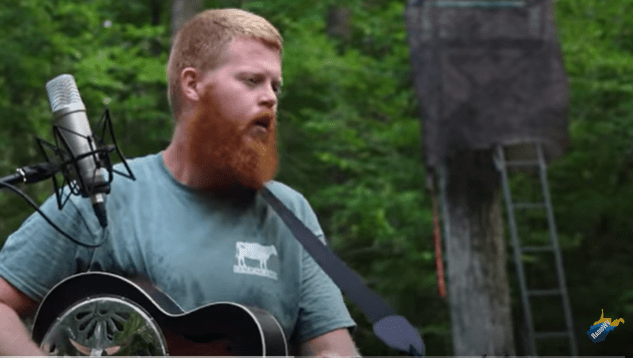
Oliver Anthony, 31, the country singer whose poignant song “Rich Men North of Richmond” resonated with blue-collar workers, has reportedly chosen to remain independent, turning down an $8 million record deal, as was reported by the New York Post. Instead, he’s self-released the hit song and is now making an estimated $40,000 per day from its success.
The viral track, which delves into the struggles of a man grappling with inflation, high taxes, and elitism while working hard, has quickly climbed music charts since its release on August 11th, the Post reported. Anthony’s earnings have primarily come from downloads on platforms like iTunes and streaming sites like Spotify, according to music industry trade magazine Hits.
During its first week, “Rich Men North of Richmond” achieved 147,000 downloads on iTunes, translating to roughly $102,000 considering iTunes pays up to 70 cents per download. The Post report said that the rest of Anthony’s daily earnings, which make up the $40,000 figure, stem from streams on platforms like Spotify. Although exact figures on Spotify’s royalty payments remain somewhat unclear, the song has been streamed around 2 million times per day, the Post report added.
Ross Michaels, co-president and founder of Park Avenue Artists, explained that an artist generally needs about 10 million daily streams to earn $40,000. This aligns with the industry’s general rule of thumb, where around $5,000 is earned for every million streams if the artist owns all the rights, according to the Post report. However, due to platform fees and shared revenues, artists usually take about 70% of these funds.
Michaels, whose New York- based label reps the likes of Josh Bell and Grammy award-winning band Time for Three, told the Post that, “The general rule of thumb is that every million streams is about $5,000 if you own all the rights.”
While the specifics of Anthony’s earnings from merchandising and platforms like Bandcamp and Patreon are unclear, his refusal of the $8 million record deal speaks volumes about his vision for his career. On his Bandcamp profile, Anthony sells tracks for $1 per download or stream. And on Patreon, fans can pay $1 or $3 monthly for early access to Anthony’s content, but it’s unclear how many downloads he’s sold on either of these platforms, as was reported by the Post.
The Post report said that Anthony has been upfront about his desire to stay true to his musical roots and maintain his independence. He currently resides in a $750 camper he bought on Craigslist and values his creative authenticity above financial gain.
“Rich Men North of Richmond” surpassed industry heavyweights like Taylor Swift and Luke Combs on Billboard’s Hot 100 chart, reaching the number one spot, according to the Post report. Anthony’s resolute decision to remain independent suggests that he’s found a unique path in a music industry increasingly shaped by corporate interests.
In a recent Facebook post, Anthony shared his life story that he turned down a record label deal because “I don’t want 6 tour busses, 15 tractor trailers and a jet. I don’t want to play stadium shows, I don’t want to be in the spotlight,” as was reported by the Post.
The country crooner added as was reported by the Post: “I wrote the music I wrote because I was suffering with mental health and depression. No editing, no agent, no bulls–t. Just some idiot and his guitar. The style of music that we should have never gotten away from in the first place.”
Titled “I Want to Go Home,” the red-bearded artist’s latest track touches on war, religion and trees being torn down and replaced with “concrete growin’ around.”
It comes as no surprise to Michaels that Anthony has been approached by record labels, and thinks that he can leverage his newfound stardom to negotiate a better deal, according to the Post report.
Michaels told the Post that the industry standard “is hard to quote but there’s a lot of 50/50 deals out there” between artists and labels.
“He could probably negotiate the money split even further down where a record label will give him money up front to continue recording and an advance to go towards a marketing budget,” Michaels added.
There’s also times where artists are “offered a singles deal where you’re paid a ton of money for just a single and you can continue to be independent.”
By leveraging his viral success and maintaining creative control, Anthony is poised to continue carving his own lane in the world of music, as was indicated in the Post report. His choice reflects a growing sentiment among artists who are embracing independence and authenticity over the traditional trappings of fame. As the music landscape evolves, Oliver Anthony’s story could inspire other artists to pursue their passion on their own terms.
