



|
Getting your Trinity Audio player ready...
|
By: Helen Cherlovsky – Jewish Voice News
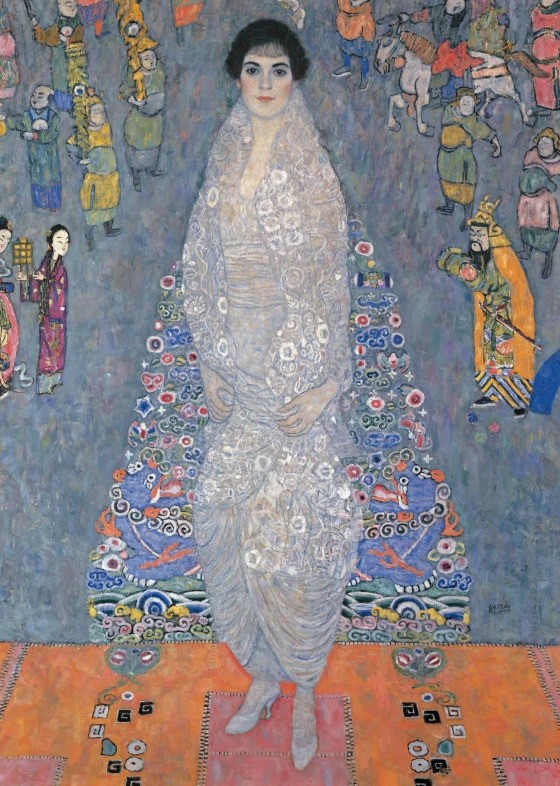
A long-lost painting by Austrian modernist Gustav Klimt rewrote the record books on Tuesday night, becoming the most expensive work of modern art ever to sell at auction. In a dramatic evening that drew global attention, Sotheby’s confirmed that Portrait of Elizabeth Lederer — a 1916 canvas rescued from the ruins of an Austrian castle during World War II — achieved a staggering $236.4 million, eclipsing previous auction records and signaling renewed fervor at the highest end of the global art market. As The New York Post reported on Wednesday, the historic sale surpassed expectations and ignited fierce bidding among elite collectors from around the world.
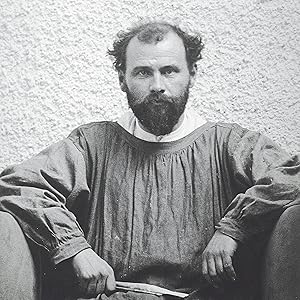
The painting, known in German as Bildnis Elisabeth Lederer, represents one of the most coveted works by Klimt, whose gilded, symbolist masterpieces defined Vienna’s avant-garde in the early 20th century. Klimt, celebrated for his lush ornamentation and haunting portraiture, rarely produced works of this scale and intimacy in the final decade of his life. According to the information provided in The New York Post report, the painting depicts the artist’s young daughter, making it an especially personal entry in his oeuvre — and one long sought by scholars and collectors alike.
According to a report on Wednesday at the notorious-mag.com website, Elisabeth Lederer was born into the dazzling cultural world of early 20th-century Vienna, a city where aesthetic experimentation, intellectual daring, and immense industrial wealth collided. The Lederer family stood at the pinnacle of that society. As one of Austria’s wealthiest dynasties—surpassed only by the Rothschilds—they shaped not only the economic landscape but also the cultural fabric of the empire’s capital.
Serena Lederer, Elisabeth’s mother, was part of Gustav Klimt’s inner artistic orbit. She belonged to the same elite social circles as Alma Mahler, where avant-garde ideas flowed as readily as the salon music that scored Viennese evenings. Their home was more than a residence; it functioned as a cultural incubator, drawing leading artists, musicians, and intellectuals into its rooms.
It was this environment that made Klimt, the leading figure of the Vienna Secession, practically a family intimate. He painted several members of the Lederer family, but Elisabeth’s full-length portrait—draped in ethereal fabrics that shimmered with the era’s fin-de-siècle mystique—possessed a singular force. Completed as the First World War ravaged Europe, it was a striking depiction of beauty suspended on the edge of catastrophe.
As the report at notorious-mag.com recounted, the Anschluss of 1938 abruptly and violently dismantled the world the Lederers had built. Their wealth, their social standing, even their cultural contributions became irrelevant under Nazi racial laws. The family’s art collection—one of the greatest private troves of Klimt’s works—was systematically looted.
Yet in a chilling twist, Nazi officials rejected many of the family portraits, including Elisabeth’s, deeming them “too Jewish to be worth stealing,” according to archival assessments cited by the National Gallery of Canada. In that cruel calculus, even the mechanisms of plunder were shaped by antisemitism.
As deportations and arrests escalated, Elisabeth faced a choice few could imagine. In a desperate act of self-preservation, she declared Gustav Klimt—dead since 1918—to be her biological father. The claim, however improbable, was buttressed by a bureaucratic intervention from a former brother-in-law inside the Nazi administrative apparatus. With this, she was reclassified as “half-Jewish,” a fragile but decisive shift that protected her from immediate deportation.
This bureaucratic loophole, as chronicled by notorious-mag.com, granted her a narrow margin of survival. It allowed her to remain in Vienna, though under constant threat, until she died from illness in 1944. In a city consumed by fascist violence, the distinction between living and vanishing could hinge on a single line of racial classification.
Elisabeth’s portrait did not escape the fate of the family’s broader collection. It was seized and delivered to Schloss Immendorf, a castle the Nazis transformed into a storage site for looted masterpieces. As the war drew to a chaotic close, the castle was engulfed in flames. Many works perished. Klimt’s paintings were assumed lost.
But the portrait of Elisabeth somehow survived—its escape as inexplicable as it was improbable. In 1948, after years of dislocation, the work was restituted to Elisabeth’s brother, Erich Lederer.
Decades later, the portrait found its way into the legendary art collection of Leonard A. Lauder, the Estée Lauder heir whose acquisitions reshaped American museums and whose holdings eventually exceeded $400 million in value. For Lauder, Klimt’s portrait of Elisabeth became one of the crown jewels in a collection already renowned for its historic depth and modernist sophistication.

When Lauder died in 2025 at the age of 92, the portrait entered the auction market. What followed was a bidding battle that underscored the enduring power of the work—and the magnetic draw of the history embedded within it.
It should be noted that Lauder’s second wife, Judy Glickman Lauder, is a photographer in her own right. She currently has an exhibition of her work at The Museum of Jewish Heritage in lower Manhattan titled, “The Danish Exception” that complements the Museum’s exhibition called “Courage to Act: Rescue in Denmark.”
Made in 1993, the photographs on view features striking portraits of both rescuers and survivors, alongside shadowy interiors where Jewish people and cultural heritage found refuge. The photographs are accompanied by text excerpts from Glickman Lauder’s interviews and first-hand research.
As the notorious-mag.com report noted, on Tuesday, the painting sold for a staggering $236.4 million, becoming one of the most expensive modern artworks ever sold. The sale shattered the previous record held by Andy Warhol’s “Shot Sage Blue Marilyn,” which had fetched $195 million at Christie’s in 2022.
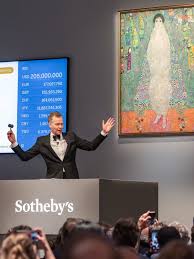
The auction, held at Sotheby’s, unfolded over twenty intense minutes. According to one attendee, a representative from the auction house remarked that Elisabeth had “Aryanized” herself in order to survive—a stark reminder of the personal sacrifices embedded in the painting’s history. Art dealer Rachel Hafif added that the sale’s timing was deeply symbolic: “It’s amazing that the subject of the painting had to survive through horrific times of antisemitism, and how the painting fetched so much money in this current time where antisemitism is still so prevalent.”
The resonance between past and present, Hafif noted, was impossible to ignore.
Elisabeth Lederer’s biography might have faded into the margins of history were it not for the survival of her portrait and the extraordinary path it traveled—from Viennese salons to Nazi loot depots to the vaults of one of America’s most influential collectors.
As the notorious-mag.com report emphasized, the painting’s survival reflects not only the endurance of art but also the persistence of memory. The elegance Klimt captured was inseparable from the violence that later overtook her life. Its value today is measured not only in dollars but in the weight of the story it carries.
As The New York Post report described, the competition at the auction intensified with each incremental increase, culminating in a decisive phone bid placed through Sotheby’s Vice Chairman and Head of Impressionist and Modern Art, Julian Dawes. The anonymous buyer, whose identity Sotheby’s declined to reveal, ultimately secured the portrait at a price that obliterated the existing record for modern art at auction.
Until Tuesday night, the highest price ever paid for a modern artwork was the $195 million achieved in 2022 for Andy Warhol’s Shot Sage Blue Marilyn at Christie’s, acquired for the collection of Leonard A. Lauder, the billionaire philanthropist and Estee Lauder heir. Klimt’s Portrait of Elizabeth Lederer now decisively surpasses that landmark figure, setting a new benchmark for 20th-century art and for the market’s appetite for rediscovered masterpieces.
Charles Stewart, CEO of Sotheby’s, hailed the evening as a watershed moment. “Our evening sales were a resounding success and send a strong signal for the art market,” Stewart told CNBC. For Sotheby’s, the result represents not only triumph in a fiercely competitive auction landscape but also renewed investor confidence at the uppermost tier of the global art economy.
What distinguishes Portrait of Elizabeth Lederer from other Klimt works is not merely its provenance but its extraordinary wartime survival. As documented by The New York Post, the painting was saved from a fire that engulfed an Austrian castle during World War II — one of many cultural treasures imperiled by conflict across Europe. Its rediscovery decades later added a potent aura of rarity and resilience, deepening its significance for historians and collectors alike.
Klimt is known for masterworks such as The Kiss, Portrait of Adele Bloch-Bauer, and Judith and the Head of Holofernes, his legacy is defined by a sensuous, psychologically complex aesthetic that continues to influence contemporary culture. As The New York Post report emphasized, paintings from Klimt’s later period — particularly those created in the years just before his death in 1918 — are among the rarest and most sought-after works to come to market.
While Klimt’s painting commanded the night’s most electrifying attention, it was far from the only remarkable sale. As The New York Post reported, the evening began with an early surge of competitive enthusiasm when a sculpture by Alexander Calder soared to nearly three times its estimated value, ultimately fetching $889,000 after heated bidding among nine participants. Calder’s market has been steadily strengthening, and Tuesday’s result further affirmed his enduring appeal among collectors of American modernism.
Another headline-grabbing sale involved a highly unconventional piece: a fully functional gold toilet crafted by Italian conceptual artist Maurizio Cattelan. Known for provocative, satirical works — including his infamous banana duct-taped to a gallery wall — Cattelan produced only two of the golden commodes in 2016. The New York Post report noted that the gleaming fixture achieved a staggering $12.1 million, underscoring the persistent, if at times bewildering, demand for bold contemporary statements within the blue-chip art world.
Together, these sales formed a composite portrait of a market that remains animated, unpredictable, and deeply influenced by the intersecting forces of rarity, provenance, and cultural relevance. Analysts quoted by The New York Post observed that Sotheby’s strong results contradict earlier predictions of a softening market amid global economic uncertainty.
The extraordinary outcome for Portrait of Elizabeth Lederer reverberates far beyond Sotheby’s auction room, signaling an inflection point for the valuation of early 20th-century European art. Klimt, already a monumental figure, now presides over a new threshold — one that recalibrates expectations for future sales of museum-quality modern masterpieces.
Experts cited by The New York Post point to several factors driving the surge: the rarity of late-period Klimt portraits, the painting’s dramatic provenance, and intensifying international demand for verified masterworks with impeccable historical documentation. Buyers seeking long-term stores of cultural and financial value continue to gravitate toward iconic works by artists whose reputations are both globally recognized and deeply enshrined in art-historical scholarship.
The sale also highlights an expanding global base of ultra-high-net-worth collectors, many of whom participate anonymously through international advisors or via telephone bidding, as was the case with Tuesday night’s purchaser. Sotheby’s, Christie’s, and Phillips have all observed an increase in bidding activity from Asia, the Middle East, and digital-era first-time collectors — a trend strongly noted in The New York Post report.
Tuesday’s auction bolsters Sotheby’s standing at a moment of fierce competition among global auction houses. Christie’s recent high-profile modern and contemporary sales have intensified the rivalry, but the Klimt triumph marks a resounding reversal, affirming Sotheby’s ability to secure rare consignments and draw top-tier bidders. As The New York Post chronicled, Sotheby’s leadership has invested heavily in cultivating relationships with estates, private collections, and international sellers — groundwork that yielded dramatic dividends as the hammer fell on the Klimt record.
In the wake of the historic sale, Sotheby’s Vice Chairman Julian Dawes emerged as a central figure in the auction’s narrative, guiding the anonymous bidder through the climactic final moments. Industry observers cited by The New York Post credited Dawes with orchestrating one of the most memorable victories in recent auction history.
With Portrait of Elizabeth Lederer now in private hands once more, its journey enters a new chapter — one shaped by secrecy, prestige, and the ever-rising stakes of global art acquisition. While the identity of the buyer remains undisclosed, speculation has begun to swirl across art circles. As noted in The New York Post report, collectors at this level often loan newly purchased masterworks to major museums before ultimately placing them in private collections or legacy estates.
For now, the spotlight remains fixed on the painting’s astonishing trajectory — from wartime peril to rediscovery, from private vaults to a record-shattering auction block — and on the indelible mark it has left on the global art market.