



|
Getting your Trinity Audio player ready...
|
By: Ariella Haviv
In the modern landscape of Israeli music, few names carry the same cultural weight, commercial power, and popular appeal as Omer Adam. Since first stepping into the public eye as a teenage contestant on the reality singing competition Kokhav Nolad (A Star Is Born) in 2009, Adam has risen from a young, unpolished newcomer to one of Israel’s most celebrated recording artists and live performers. Known for his distinct blend of Mizrahi music, Mizrahi pop, and mainstream pop, Adam has consistently bridged traditional Middle Eastern melodies with contemporary global pop sensibilities — a formula that has won him legions of fans not only in Israel but around the world.
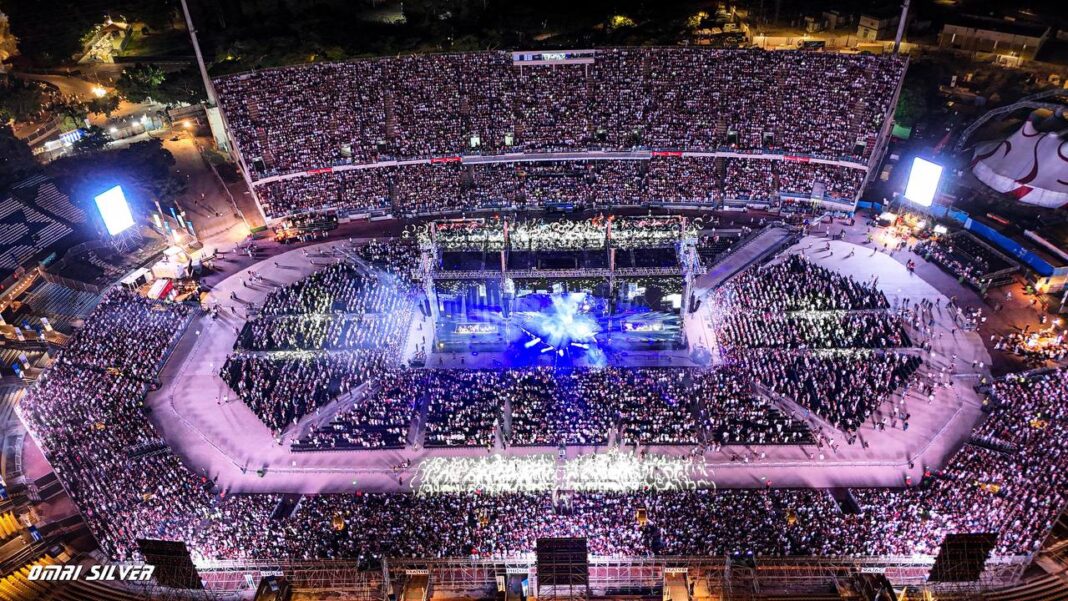
This August, that connection with his audience will be on full display when Adam takes the stage for two highly anticipated concerts in Tel Aviv, scheduled for August 12th and 13th. For longtime followers of his career, these performances will be more than just musical events; they will be another chapter in a story of determination, reinvention, and enduring stardom.
Omer Adam: Israel’s Chart Topping Sensation Set to Light Up Tel Aviv in Back-to-Back August Concerts. @therealomeradam @Israel @TelAviv @ramatgan #concerts pic.twitter.com/o9rAXsQ5Tg
— The Jewish Voice (@TJVNEWS) August 10, 2025
Born on October 22, 1993, Adam grew up steeped in the rich traditions of Mizrahi and popular Israeli music. His vocal style, marked by a distinctive timbre and an emotive delivery, was evident from a young age. In 2009, at just 15 years old, he auditioned for Kokhav Nolad, a program that had become a national phenomenon, launching the careers of numerous Israeli artists.
His entry into the competition was not without controversy. During the season, it was revealed that Adam had falsified his age on his application form. He had claimed to be 16 — the minimum age for participation — but in reality, he was only 15. The discovery led to his withdrawal from the competition, cutting short what had appeared to be a promising run.
The incident might have derailed another young artist’s aspirations. Instead, it became a footnote in what would soon prove to be a prolific and transformative career. Adam, undeterred, channeled his energy into recording and performing, making it clear that his ambitions extended far beyond the limits of a televised competition.
Following his departure from Kokhav Nolad, Adam wasted little time in releasing his debut single, Le’ehovd Ba’ruach (Lost in the Wind). The track introduced the listening public to his signature sound — an accessible yet authentic blend of Mizrahi rhythms, pop hooks, and heartfelt lyrics.
In December 2010, Adam released his debut album, Nemes Mimekh (Melting from You), a collection that quickly solidified his status as one of Israel’s most promising new talents. The title track, along with “Hopa,” became instant hits, receiving extensive radio play and dominating local music charts. His combination of traditional instrumentation and modern production allowed him to stand out in a crowded pop market, appealing to both older audiences who valued classic Mizrahi influences and younger listeners drawn to contemporary pop stylings.
Omer Adam: Israel’s Chart Topping Sensation Set to Light Up Tel Aviv in Back-to-Back August Concerts. @omeradamOfficia @Israel @TelAviv @ramatgan pic.twitter.com/KFiVb2gbrq
— The Jewish Voice (@TJVNEWS) August 10, 2025
Adam’s momentum continued with the release of his second album in 2012, Yeled Tov, Yeled Ra (Good Boy, Bad Boy). The record expanded his repertoire with more adventurous arrangements and further demonstrated his versatility as a vocalist. Once again, the album achieved commercial success, cementing his position as a mainstay in Israeli music.
In 2013, Adam became part of the official celebrations for Tel Aviv Pride Week — a significant cultural moment that aligned him with the city’s dynamic and diverse artistic community. He released “Tel Aviv,” a track that resonated widely both in Israel and abroad. The song’s infectious energy and universal themes contributed to its success on international streaming platforms and even earned it a place in the globally popular video game Just Dance 2020.
Later that year, he released his third album, Muzika Ve’sheket (Music and Silence), further demonstrating his ability to produce work that was both commercially viable and artistically rich.
In 2015, Adam released Modeh Ani (I Give Thanks), his fourth studio album, to significant acclaim. Critics and fans alike praised the album for its production quality, thematic coherence, and emotive performances. The record featured some of his most enduring hits, including the title track, “Rak Rotzeh Lirkod” (Just Want to Dance), and “Mahapecha Shel Simcha” (Revolution of Joy). These songs became staples of his live shows and contributed to his reputation as one of Israel’s most engaging live performers.
By this point, Adam’s concerts were drawing massive crowds, and his stage presence had evolved into a finely tuned balance of showmanship and emotional authenticity. His ability to connect with audiences — whether in intimate venues or sprawling arenas — was becoming a defining element of his career.
In 2017, Adam released his fifth album, Achrei Kol Hashanim (After All the Years), which continued his streak of commercial successes. The title track, a sweeping ballad, became a chart-topping hit and reinforced his ability to craft music that resonated deeply with listeners.
The release of his sixth studio album in 2020 marked another milestone. Simply titled Omer, the album was a curated collection of Adam’s greatest hits, including “Shnei Meshuga’im” (Two Crazies), “Chaverot Shelach” (Your Friends), and “Rachok Mikulam” (Far from Everyone). This retrospective approach allowed new fans to discover his earlier work while giving long-time followers a comprehensive showcase of his career to date.
By then, Adam’s role in Israeli music had expanded beyond that of a pop singer. He had become a cultural figure, frequently appearing in media, engaging with diverse communities, and representing a vision of Israeli music that bridged heritage and innovation. His work had also begun to reach audiences outside Israel, aided by digital platforms and international performances.
Against this backdrop of sustained success, Adam’s upcoming concerts in Tel Aviv on August 12th and 13th are expected to be landmark events in his career. The shows will take place in one of Israel’s most vibrant cultural hubs, offering fans a chance to experience his music in a live setting that reflects the energy and diversity of the city.
For Adam, Tel Aviv holds particular significance. Not only is it a city where he has performed some of his most memorable concerts, but it is also a place that has embraced his music as part of its cultural soundtrack. These August performances are likely to draw a broad cross-section of fans — from those who first heard him during his Kokhav Nolad days to a younger generation introduced to his hits through streaming platforms and viral videos.
Part of Adam’s enduring appeal lies in his meticulous approach to his craft. Whether in the recording studio or on stage, he has demonstrated a consistent commitment to quality and authenticity. His collaborations with top producers, songwriters, and arrangers have helped him refine his sound while keeping it relevant in a rapidly changing musical landscape.
Adam’s repertoire showcases his ability to navigate multiple genres without losing his distinctive voice. From upbeat dance tracks to tender ballads, he maintains a balance that keeps his work fresh while preserving the core elements that define his music.
Omer Adam’s career is also notable for its cultural resonance. As the child of Mizrahi heritage growing up in a diverse Israel, his music reflects the blending of traditions and contemporary influences that define the nation’s cultural identity. His incorporation of Middle Eastern scales, rhythms, and instrumentation alongside Western pop structures serves as a testament to the evolving nature of Israeli popular music.
Moreover, Adam’s visibility and success have made him a role model for aspiring artists navigating the complexities of the modern music industry. His journey — from a disqualified teenage contestant to a chart-topping artist — underscores the value of resilience, adaptability, and a clear artistic vision.
As he prepares for his Tel Aviv concerts, Adam’s trajectory shows no signs of slowing. The shows will not only celebrate his past achievements but also serve as a platform for introducing new material, hinting at future directions for his music. For fans and industry observers alike, these performances will be an opportunity to witness an artist at the height of his powers, still driven by the same passion that first propelled him onto the national stage more than a decade ago.
In an industry where trends shift quickly and public attention can be fleeting, Omer Adam has built a career rooted in consistency, authenticity, and a deep connection to his audience. As his music continues to evolve, one thing remains certain: his voice — both literally and figuratively — will remain a defining presence in Israeli popular culture for years to come.