



|
Getting your Trinity Audio player ready...
|
New Documentary Claims Oct. 7 Hamas Attacks Laid Bare Decades of Alarming Issues Within UNRWA
By: Fern Sidman
As Israeli bulldozers moved through the former UNRWA compound in Jerusalem this week, leveling structures that once symbolized the presence of the United Nations Relief and Works Agency, the physical destruction of buildings became a potent metaphor for a far broader political and moral reckoning now engulfing the controversial organization. According to an exclusive report that appeared on Sunday at Fox News Digital, the demolition followed Israel’s enactment of legislation last year formally banning UNRWA’s operations on Israeli territory — a dramatic step that reflects the profound collapse of trust between the Jewish state and the U.N. agency long tasked with caring for Palestinian refugees.
The timing of the demolition is particularly significant. It coincides with the release of a new documentary, UNraveling UNRWA, which casts an unflinching spotlight on the agency’s internal culture, political entanglements, and proximity to Hamas. The exclusive Fox News Digital report situates these developments within a broader international controversy that has been simmering for years but exploded into the open after the Hamas-led October 7, 2023 massacre in Israel.
UNRWA Commissioner-General Philippe Lazzarini denounced the demolition as a violation of international law, framing the Israeli action as an attack on humanitarian infrastructure. Israeli officials, however, insisted the compound had not been in active use and emphasized that the demolition was conducted in accordance with Israeli law. This clash of narratives, reported in detail by Fox News Digital, reflects the deepening divide between Israel and international institutions over the legitimacy and future of UNRWA itself.
The confrontation comes just weeks after the United Nations General Assembly voted to renew UNRWA’s mandate through 2029 — a decision that passed despite growing Western skepticism and a notable rise in abstentions and opposition votes. As the Fox News Digital report noted, this renewal occurred in the shadow of grave allegations that UNRWA employees participated directly in the October 7 massacre. Israeli authorities released video evidence purporting to show agency staff involved in the attacks, triggering internal investigations and the dismissal of several UNRWA employees. Although these allegations remain under review, their political impact has been seismic.
Throughout the Gaza war, Israeli forces have also reported the discovery of Hamas weapons caches, tunnel shafts, and military infrastructure embedded within UNRWA facilities, including schools. These findings have fueled Israeli claims that the agency’s infrastructure has been systematically exploited by terrorist organizations — not incidentally, but structurally.
The Fox News Digital report further revealed that UNRWA USA has acknowledged internal discussions within the Trump administration regarding the possibility of designating UNRWA as a foreign terrorist organization. According to that reporting, UNRWA officials actively lobbied congressional staffers to oppose such a designation, underscoring the seriousness with which the agency views the political threat now confronting it.
This policy posture is not new. In October, Secretary of State Marco Rubio, speaking in Israel, articulated the administration’s position with stark clarity. “We’re willing to work with [the U.N.] if they can make it work,” he said, “but not UNRWA. UNRWA became a subsidiary of Hamas.” That statement encapsulates the perception within segments of the U.S. government that UNRWA is no longer a neutral humanitarian actor, but a compromised institution entangled in extremist networks.
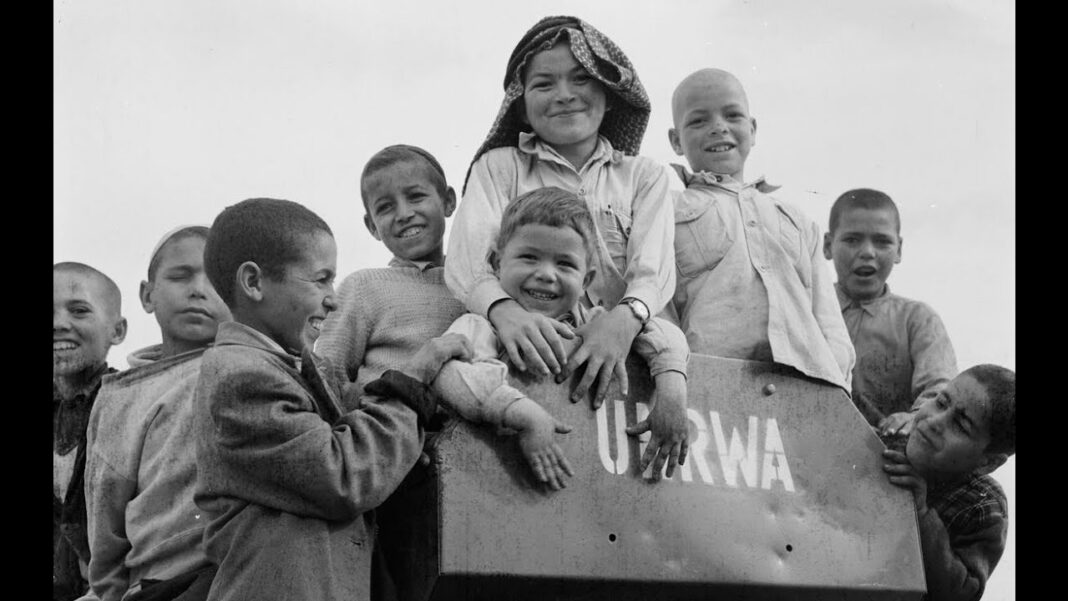
Against this backdrop, UNraveling UNRWA emerges not merely as a documentary, but as a political intervention. The film traces the agency’s evolution from its founding in 1949 to its current global operations, weaving together interviews with refugees, Arab and Israeli voices, and former UNRWA officials. Central to its narrative is the argument that UNRWA has institutionalized refugeehood rather than resolved it, perpetuating a political identity rooted in grievance and perpetual displacement.
The documentary devotes particular attention to UN General Assembly Resolution 194 — a 1948 measure that Palestinians interpret as guaranteeing a “right of return” not only for refugees but for their descendants. According to the information provided in the Fox News Digital report, the film argues that UNRWA’s promotion of this interpretation has entrenched a political mythology that sustains conflict rather than reconciliation.
Zlatko Zigic, former director of the U.N. migration agency, appears in the film delivering one of its most searing critiques. He describes UNRWA’s core problem as “the concept of endless struggle of Palestinians to return,” arguing that the maintenance of an absolute right of return has “become a tool to perpetuate the conflict.” This analysis frames UNRWA not simply as a humanitarian institution, but as a political actor shaping historical consciousness.
Perhaps most disturbing are the documentary’s scenes filmed inside UNRWA schools. In footage cited in the Fox News Digital report, children are taught that they will one day return to land inside Israel. In one classroom, Jews are referred to as “the wolves,” and students are asked, “What did the Jews do to us?” before being told that Jews expelled and deported them, killed their families, and that they should be grateful to UNRWA for building refugee camps. These scenes, if accurately represented, suggest not neutral education, but ideological conditioning.
James Lindsay, former UNRWA legal adviser, provides the documentary’s most detailed insider critique. In an interview with Fox News Digital, Lindsay described what he sees as a systemic failure of oversight rooted in the agency’s relationship with local authorities — particularly Hamas in Gaza. “The people who work for UNRWA are subject to UNRWA,” he said, “but they are even more importantly subject to the local authorities.” In Gaza, he explained, that authority is Hamas.
Lindsay emphasized that while donor governments may receive meticulous reports and compliance documentation, the operational reality on the ground often diverges sharply. According to the information contained in the Fox News Digital report, he stated bluntly that UNRWA leadership historically made no serious effort to exclude Hamas members from employment, viewing the group as part of Palestinian political life rather than a terrorist organization.
“If Hamas comes to you and says, ‘We want 5% of the concrete you’re using,’ or ‘We want you to report more food distributed than actually was,’ you’re not going to say no,” Lindsay said in remarks cited by Fox News Digital. “If you don’t do what Hamas says, you’re not going to get fired — you’re going to have very bad things happen to you.” His testimony paints a portrait of coercion, fear, and structural dependency that makes genuine neutrality virtually impossible.
Lindsay also described a phenomenon the U.S. State Department refers to as “clientitis” — a psychological and institutional drift in which humanitarian organizations begin to politically identify with the populations they serve. In Gaza, he argued, this has meant identifying with Hamas as the dominant political force. Over time, he concluded, UNRWA ceased to be a neutral humanitarian agency and became embedded within a specific political ecosystem.
Initially, Lindsay believed reform was possible. He later reversed that view. “It can’t be reformed,” he said in the Fox News Digital report, “because it’s not allowed to reform by the governmental people in charge.” The combination of political pressure, ideological alignment, and local coercion, he argued, has rendered meaningful institutional change structurally impossible.
The recent renewal of UNRWA’s mandate illustrates the political complexity of the agency’s survival. While opposition and abstentions are growing, the organization still commands broad support within the U.N. General Assembly. However, as Lindsay noted in the exclusive Fox News Digital report, those votes do not equate to financial sustainability. UNRWA’s funding model relies overwhelmingly on voluntary donations, primarily from Western nations — the very countries now growing increasingly uneasy about the agency’s credibility.
“In 2022, there was one vote against renewing the mandate and 10 abstentions,” Lindsay observed. “Most recently, there were 10 votes against and 18 abstentions.” The trend, he argued, signals a slow but meaningful shift in international sentiment, driven largely by revelations since October 7, 2023.
The Fox News Digital report underscores a crucial geopolitical reality: while many U.N. member states remain reflexively pro-UNRWA, they are not the agency’s primary financial backers. Western donors — increasingly skeptical, politically constrained, and domestically accountable — hold the real leverage. If donor confidence collapses, UNRWA’s operational viability collapses with it.
Thus, the demolition of UNRWA buildings in Jerusalem, the release of UNraveling UNRWA, the renewal of the agency’s mandate, and the growing calls for terrorist designation are not isolated events. They are interconnected signals of a historic reckoning over the legitimacy, function, and future of one of the world’s most powerful humanitarian institutions.
The UNRWA controversy is no longer confined to diplomatic corridors or policy papers. It now occupies the terrain of public opinion, documentary filmmaking, congressional debate, and military policy. What began in 1949 as an emergency relief agency has evolved into a global institution whose very existence has become a symbol of unresolved conflict, contested narratives, and competing moral frameworks.
In this context, the rubble of the UNRWA compound in Jerusalem is more than debris. It is a visual manifestation of a collapsing consensus — a reminder that institutions, like conflicts, can endure for decades, but legitimacy, once lost, is far harder to restore.