




|
Getting your Trinity Audio player ready...
|
By: Jerome Brookshire – Jewish Voice News
Even in the city that has seen it all, New York’s art world finds itself unusually breathless this week. The late Leonard A. Lauder, cosmetics magnate, philanthropist, and cultural titan, will once again dominate Manhattan’s high society headlines—this time, not from the boardroom or the Met’s marble halls, but from the auction block.
As The New York Post’s Page Six has been reporting in meticulous detail, anticipation surrounding the upcoming Sotheby’s auction of Lauder’s private art collection has reached a fever pitch. The sale, scheduled for November 18, is projected to fetch nearly half a billion dollars, an extraordinary testament not only to the late collector’s exquisite eye but to the rarefied world he helped shape over the course of a lifetime.
According to a report on Tuesday at Page Six, the excitement was palpable on Friday evening at a private dinner that doubled as both a tribute to Lauder and a christening for Sotheby’s new home at the Breuer Building—the striking Madison Avenue structure that once housed the Whitney Museum of American Art. It was here, among stone walls steeped in creative history, that curators, collectors, and cultural grandees gathered to toast the man whose taste defined an era.
“Klimts coming on the market is so rare,” one guest told Page Six, their voice tinged with awe. “This is not a normal situation.”
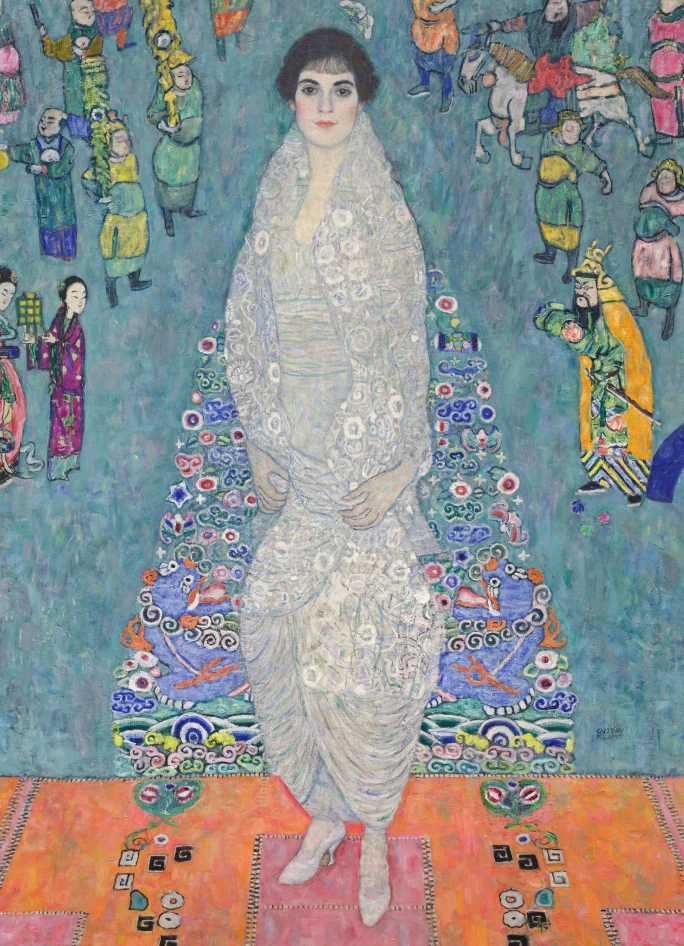
Indeed, the inclusion of three Gustav Klimt masterpieces in Lauder’s sale has electrified collectors and institutions worldwide. The marquee work, “Portrait of Elisabeth Lederer,” is expected to command more than $150 million, while the other two Klimts—described by Page Six insiders as “museum-grade rarities”—could each fetch between $70 and $80 million.
The excitement was heightened by the setting. Guests told Page Six that viewing Lauder’s collection in the old Whitney space felt “poetic,” a full-circle moment that illuminated his role as one of the city’s most devoted cultural patrons. “It’s kind of crazy to be sitting in the old Whitney space with these amazing works for sale!” said one astonished insider.
Born in 1933 to Estée and Joseph Lauder, Leonard Lauder transformed the family’s beauty empire into a global powerhouse and became one of America’s most influential arts benefactors. The New York Post’s Page Six report noted that when he died in June at age 92, he left behind a personal fortune estimated at $10 billion and one of the most significant private art collections ever assembled.
His passion for Cubism—anchored by works from Picasso, Braque, Léger, and Gris—culminated in a monumental 2013 donation of his Cubist holdings to The Metropolitan Museum of Art, a gift valued at over $1 billion that reshaped the museum’s modern art collection. But even beyond Cubism, Lauder’s tastes extended into Expressionism, Impressionism, and early modernism, revealing a collector who, in the words of Page Six, “understood both beauty and history as investments in civilization.”
“He was an enormous cultural figure,” said one longtime friend and collector to Page Six. “There’s a real reverence for his legacy.”
While art auctions in New York are not uncommon, the upcoming Sotheby’s sale has taken on the aura of a once-in-a-generation event. As Page Six reported, the collection’s total value is expected to reach close to $500 million, putting it in league with the most historic sales of the last century.
In addition to the Klimts, the auction will feature major works by Vincent van Gogh and Edvard Munch, each adding another layer of drama to an already monumental lineup. For dealers and collectors alike, the sale represents not just an opportunity to acquire rare masterpieces but to participate in a symbolic passing of the torch—from one of the 20th century’s great collectors to a new generation of global buyers.
“This is not just about the art,” one Sotheby’s insider told Page Six. “It’s about New York’s cultural soul—about the city’s relationship with beauty, power, and philanthropy.”
The sale’s location—Sotheby’s new Breuer headquarters—underscores this symbolic transition. The Breuer Building, designed in 1966 by Marcel Breuer as a fortress for modern art, was once home to the Whitney and later the Met Breuer. To see Lauder’s paintings displayed there is to witness a dialogue between New York’s past and its future, a conversation between institutions that he helped nurture.
As the Page Six report observed, the auction’s central drama revolves around the three Klimt works—an unprecedented offering that has already attracted global attention. Klimt, whose gilded visions of fin-de-siècle Vienna continue to mesmerize collectors, rarely appears on the open market.
The centerpiece, “Portrait of Elisabeth Lederer,” was painted in the early 20th century, part of the artist’s famed series of society portraits that celebrated the intellectual and cultural blossoming of Vienna’s Jewish elite. The painting’s estimated $150 million price tag may well prove conservative, given recent market surges and the scarcity of comparable works.
“Collectors are calling from everywhere,” one source told Page Six. “These paintings don’t just belong to art history—they define art history.”
To those who knew him, Leonard Lauder was far more than a businessman or collector; he was a bridge between commerce and culture, between luxury and learning. His philanthropy extended across the arts, education, medicine, and Jewish heritage initiatives. At the Metropolitan Museum of Art, his generosity was so transformative that an entire wing bears his family’s name.
As the Page Six report pointed out, Lauder’s devotion to New York’s cultural ecosystem was unmatched. He chaired the Whitney Museum’s board, served as a trustee of the Met, and was known for his meticulous attention to detail—often personally overseeing the placement of works within museum galleries. His dual identity as both donor and curator set him apart in the rarefied world of American art patronage.
“Leonard understood that art is a public trust,” said an art historian quoted by Page Six. “He believed that collecting came with an obligation—to educate, to inspire, and to preserve.”
For New Yorkers, the sale carries emotional resonance beyond the art world’s gilded walls. Lauder’s philanthropy, elegance, and civic devotion embodied an older vision of Manhattan—an age when patrons saw the arts as a civic duty rather than a social accessory.
As the Page Six report noted, the Friday night dinner at Sotheby’s Breuer building had the atmosphere of both a celebration and a farewell. The city’s most discerning collectors, museum directors, and cultural leaders dined beneath the glow of Klimt’s gold and Van Gogh’s feverish brushstrokes, acutely aware that they were witnessing the closing of a chapter in New York’s cultural narrative.
“He helped shape the city’s art identity,” one attendee told Page Six. “To see his collection dispersed is bittersweet. But it’s also poetic—his works are returning to the world he loved.”
In the end, Leonard Lauder’s sale is not merely an auction—it is a meditation on legacy. As The New York Post’s Page Six has so vividly chronicled, the event captures the intersection of glamour, intellect, and humanity that defined both the man and the milieu he helped sustain.
From Estée Lauder’s beauty counters to the marble staircases of the Met, from the perfumed salons of Fifth Avenue to the concrete brutalism of Breuer’s architecture, Leonard Lauder’s story is inextricably woven into the fabric of New York itself. His art collection—like his philanthropy—was less about ownership than about stewardship: the idea that beauty belongs not to one person but to the civilization that cherishes it.
As the gavel falls at Sotheby’s next week, half a billion dollars’ worth of art will change hands. But for New York, the value of Leonard Lauder’s contribution cannot be measured in dollars, however astronomical. It is measured in vision—in the imagination of a man who believed that culture was the truest currency of all.
And as Page Six so elegantly put it, “In a city built on reinvention, Leonard Lauder’s collection reminds us what endures: beauty, generosity, and the art of living well.”