



|
Getting your Trinity Audio player ready...
|
By: Fern Sidman
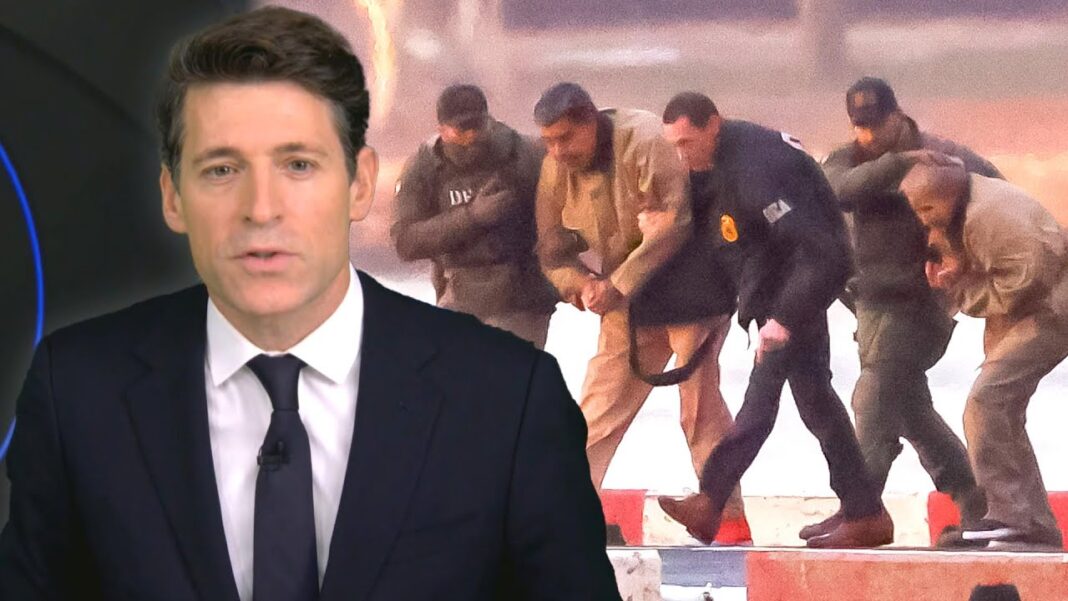
For more than a decade, the American nightly newscast has been a slow-motion obituary for the network television era. Fragmented audiences, ideological fatigue, and a growing distrust of legacy media have eroded what once stood as the nation’s most authoritative daily ritual. Yet in a week when most critics were sharpening knives for Tony Dokoupil, the newly appointed anchor of CBS Evening News, something unexpected happened: the audience came back.
According to a report on Wednesday in The New York Post, Dokoupil’s debut on Monday pulled in a formidable 4.4 million viewers — a staggering half-million increase over what the program had been averaging under former co-anchors John Dickerson and Maurice DuBois. The numbers did not merely edge upward; they announced a rupture with the recent past, signaling that viewers may be hungry again for a brand of journalism that privileges clarity over catechism, facts over fashionable grievance, and reportage over ideological performance.
To many industry insiders, this is not merely a ratings blip but the opening salvo in what could become the most consequential recalibration of evening news in a generation.
As The New York Post has meticulously documented, the 596,000 viewers Dokoupil attracted in the coveted 25-to-54 demographic represents a seismic leap for a program that had been bleeding relevance. CBS itself conceded that Monday’s broadcast was up 9% in total viewers and an astonishing 20% in the demo compared to the season’s average.
That improvement followed a calamitous year in which the show hemorrhaged over a million viewers under Dickerson and DuBois, whose on-air chemistry was frequently derided as “stodgy” and anesthetized. The Post’s sources were unsparing, describing the duo as emblematic of an era in which network news mistook ideological affirmation for journalistic authority.
Tony Dokoupil is not that man.
To his admirers, he represents a cultural counter-revolution — an anchor who resists the gravitational pull of performative outrage, who reports without genuflecting to the orthodoxies of the day. In an industry where viewers have learned to expect moral sermonizing thinly disguised as reportage, Dokoupil’s insistence on neutrality feels almost subversive.
What makes Dokoupil uniquely resonant is not merely his telegenic presence or conversational cadence, but his refusal to inject a woke, left-wing agenda into the bloodstream of the broadcast. As The New York Post report emphasized, viewers are not abandoning network news because they have lost interest in current events; they are fleeing because the events are filtered through a partisan sieve.
Dokoupil’s approach is conspicuously different. His first broadcast featured heavyweight guests — Venezuelan opposition leader María Corina Machado, Defense Secretary Pete Hegseth, and Homeland Security Secretary Kristi Noem — bookings that one CBS insider credited with fueling the ratings rebound.
But more than the bookings, it is the tone. Dokoupil’s questions are pointed without being prosecutorial, skeptical without being cynical. He does not smuggle moral conclusions into the premises of his reporting. In an era when journalists are trained to “locate themselves” within the story, Dokoupil seems almost defiantly committed to disappearing behind it.
This is not nostalgia. It is rebellion.
The Post has been equally forthright in chronicling Dokoupil’s missteps. His teleprompter stumble — confusing Minnesota Governor Tim Walz with Senator Mark Kelly and narrating the error live on air — was undeniably awkward. “First day, first day, big problems here,” he said, as four seconds of dead air rippled across the broadcast.
Yet, perversely, that moment of unvarnished humanity may have endeared him to viewers who are exhausted by the hyper-managed artificiality of cable news. The same goes for his Miami-based segment saluting Secretary of State Marco Rubio — derided by critics for its lighthearted tone, but embraced by audiences who found it refreshingly unpretentious.
Even the bizarre montage of AI-generated images — Rubio as the shah of Iran, governor of Minnesota, and “the new Michelin Man” — underscored Dokoupil’s willingness to acknowledge the absurdity of the digital age without surrendering to it.
Dokoupil’s promotion was the brainchild of Bari Weiss, CBS News’s editor-in-chief, whose tenure has been marked by a quiet but unmistakable campaign to detoxify the newsroom. As The New York Post has reported, Weiss tapped Dokoupil precisely because he does not sound like a faculty lounge manifesto.
Weiss understands something her predecessors ignored: the credibility crisis facing American journalism is not rooted in technology, but theology — the unspoken belief that the newsroom must function as an instrument of social transformation. Dokoupil is her apostate.
To be sure, Dokoupil’s 4.4 million viewers still pale beside the giants. ABC World News Tonight with David Muir commanded 8.1 million viewers on the same night, while NBC Nightly News with Tom Llamas pulled in 7.2 million. As one CBS insider predicted to the Post, curiosity spikes often collapse into apathy.
But ratings history is not destiny.
When Katie Couric debuted in 2006, she enjoyed a gargantuan spike — 14 million viewers — only to see it crater within days. The difference is that Couric arrived at the twilight of the anchor era; Dokoupil is emerging in its potential rebirth.
What Tony Dokoupil has achieved in a single week is not just a numerical gain but a philosophical rupture. He has demonstrated that neutrality is not obsolete, that professionalism need not be anesthetized, and that the audience — far from craving ideological affirmation — is starving for competence.
As The New York Post report observed, one cannot escape the sense that Dokoupil is becoming more than a broadcaster. He is becoming a symbol — the avatar of a post-woke newsroom, where facts are not instruments of ideology but ends in themselves.
If the trend holds, CBS Evening News may yet reclaim its stature — not by shouting louder, but by finally remembering how to speak plainly.
And in a media ecosystem bloated with sanctimony, that quiet act of rebellion may prove revolutionary.