



|
Getting your Trinity Audio player ready...
|
By: Fern Sidman
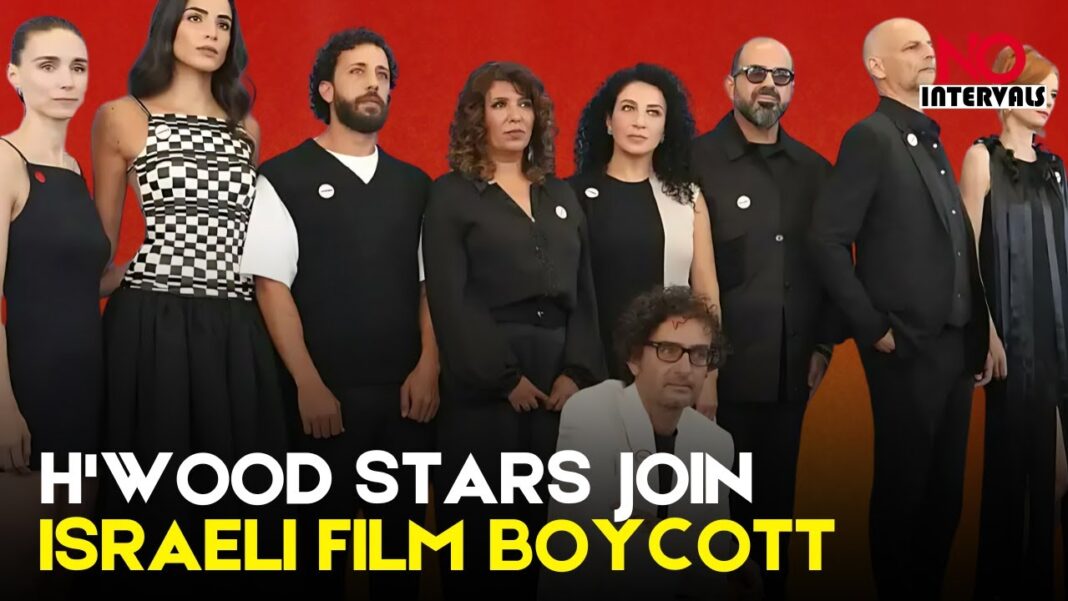
Over 1,000 Hollywood actors, directors, and film professionals—including Oscar winners Emma Stone and Olivia Colman, alongside progressive activists like Mark Ruffalo and Susan Sarandon—have signed onto a sweeping pledge to boycott Israeli film institutions, a move that has ignited intense criticism both within the entertainment industry and beyond. According to a report that appeared on Tuesday at Fox News Digital, the pledge, organized by the advocacy group Film Workers for Palestine, accuses Israeli cultural institutions of complicity in “genocide and apartheid” against the Palestinian people.
The statement of boycott, which has quickly circulated through Hollywood’s left-leaning creative circles, explicitly invokes the legacy of cultural boycotts against apartheid-era South Africa. The report on Fox News Digital noted that the signatories committed “not to screen films, appear at, or otherwise work with Israeli film institutions — including festivals, cinemas, broadcasters, and production companies — that are implicated in genocide and apartheid.”
Actors Peter Sarsgaard, Lily Gladstone, Tilda Swinton, and Susan Sarandon joined Emma Stone, Colman, and Ruffalo in endorsing the initiative, along with producers James Wilson, Robyn Slovo, and Tracey Seaward. Supporters have argued that the film industry has an obligation to take a stand against Israel’s military campaign in Gaza, which began after Hamas’s brutal terrorist assault on October 7, 2023, left 1,200 Israelis dead and more than 250 taken hostage.
Film Workers for Palestine justified the boycott by pointing to Palestinian filmmakers’ call for global solidarity, saying the international film industry must “refuse silence, racism, and dehumanization, as well as do everything humanly possible to end complicity in their oppression.” The pledge has been positioned as an act of conscience, but its sweeping nature—targeting Israeli film festivals, broadcasters, and even production companies—has raised serious concerns about silencing dialogue and punishing Israeli artists.
The backlash was swift. The Israeli Film and TV Producers Association released a sharply worded statement, calling the boycott “profoundly misguided.” As Fox News Digital reported, Israeli producers emphasized that artists, writers, and filmmakers inside Israel have been among the most prominent critics of state policy, often providing platforms for Palestinian voices and narratives.
“For decades, we Israeli artists, storytellers, and creators have been the primary voices allowing audiences to hear and witness the complexity of the conflict, including Palestinian narratives and criticism of Israeli state policies,” the association stated.
The association also highlighted its ongoing collaborations with Palestinian creators, stressing that art has historically served as a rare bridge between communities otherwise torn apart by conflict. Boycotts of Israeli cultural institutions, they argued, would only deepen divisions, sever dialogue, and penalize those already working to promote coexistence.
While the list of signatories spans multiple generations and genres of filmmaking, much of the spotlight has fallen on Mark Ruffalo, the Oscar-nominated actor known for his outspoken progressive activism. Ruffalo has consistently positioned himself as a critic of U.S. foreign and domestic policy. Fox News Digital recalled his speech at the “No Kings” protest in June, where he railed against billionaires, castigated President Trump’s immigration policies, and described wealthy Americans and “White people” as the true source of societal injustice rather than immigrants.
“We get to see who is really making our lives unbearable and making us so desperate. It’s not the immigrants, it’s the billionaires,” Ruffalo told activists from the New York Immigration Coalition, according to the report on Fox News Digital.
Critics say Ruffalo’s decision to join a cultural boycott of Israel is consistent with his long-standing radical politics but represents a troubling willingness to align with campaigns that demonize the Jewish state while ignoring the atrocities committed by Hamas. His support for the boycott comes as antisemitism surges across the United States, with Jewish communities increasingly targeted for harassment, vandalism, and even physical attacks.
The boycott pledge reflects the ideological framework of the global Boycott, Divestment, and Sanctions (BDS) movement, which seeks to isolate Israel economically, culturally, and diplomatically. As Fox News Digital reported, BDS campaigns have increasingly targeted academic and cultural institutions, aiming to stigmatize Israel as a pariah state.
For critics, this effort represents more than symbolic protest: it undermines freedom of artistic expression, marginalizes Israeli artists who themselves may oppose government policy, and fuels antisemitic narratives that blame Jewish cultural institutions for geopolitical conflicts. The Israeli Film and TV Producers Association’s statement underscores this concern, warning that “targeting the wrong people” will achieve nothing beyond silencing critical voices.
One of the most striking aspects of the pledge, as the Fox News Digital report highlighted, is its total silence on Hamas—the group whose massacre of Israeli civilians on October 7 triggered the current war in Gaza. While Palestinian filmmakers may call for solidarity, critics argue that Hollywood’s selective outrage ignores the heinous atrocities committed by Hamas, from the sadistic rape and murder of women to the beheading of children, to the ongoing captivity of hostages.
In this light, the boycott pledge appears less like a call for peace and justice and more like a one-sided condemnation that erases Israel’s right to self-defense. Cultural boycotts, opponents contend, flatten the complexities of the conflict into simplistic binaries that serve political propaganda rather than human dignity.
The fallout of the boycott could also reverberate across Hollywood itself. As the Fox News Digital report observed, the film industry has already faced criticism for its tendency to embrace fashionable political causes without grappling with their deeper consequences. While the boycott may resonate with a segment of progressive activists, it risks alienating audiences who view the pledge as another example of Hollywood’s out-of-touch elitism.
Moreover, by aligning with a boycott that many equate with antisemitism, Hollywood risks further damaging its reputation among Jewish audiences and allies of Israel. Given the long-standing contributions of Jewish writers, directors, and producers to American cinema, critics argue that the boycott represents a betrayal of the very industry that nurtured the careers of many of the signatories.
The controversy over the Hollywood boycott comes at a time of profound cultural polarization in the United States. As Fox News Digital has reported extensively, universities, corporations, and unions have all faced internal divisions over responses to the war in Gaza. The entertainment industry’s embrace of boycotts mirrors broader trends in American life, where political activism increasingly intrudes into professional and cultural spaces.
Yet the question remains: do cultural boycotts advance peace, or do they merely entrench hostility? Critics argue that by boycotting Israeli institutions—many of which actively collaborate with Palestinian creators—Hollywood is effectively silencing dialogue and punishing the wrong targets. The risk, they say, is that art, which should serve as a vehicle for empathy and understanding, becomes just another casualty of political warfare.
The pledge signed by over 1,000 Hollywood stars, directors, and film professionals marks a dramatic escalation in the entertainment industry’s engagement with the Israeli-Palestinian conflict. While signatories such as Emma Stone, Olivia Colman, and Mark Ruffalo present the boycott as a moral imperative, critics warn that it is a profoundly misguided and counterproductive gesture.
By targeting Israeli cultural institutions, the boycott risks silencing the very voices that have long highlighted the conflict’s complexity and promoted Palestinian narratives within Israeli society. It also risks alienating Jewish audiences, fueling antisemitism, and reducing art to a blunt political weapon.
As the Fox News Digital report observed, the boycott has already sparked fierce debate, laying bare Hollywood’s growing entanglement with radical politics. Whether this campaign will achieve any of its stated goals remains doubtful. What is certain, however, is that the reputational costs to Hollywood—and the cultural rifts it deepens—will not easily be undone.

How about we do not attend any of their movies which have been terrible
They should all go to hell
HEAR HEAR!!
Mark ruffulo I knew about
I guess will have to stop watching snd tell everyone
About all the other actor directors producers
At least now will be able to cut down list of Netflix shows and other streaming service shows
I have an idea we should create an online antisemitic
Filter for each service
Or just vote with our cancellations like NY times
CNN and Late nights shows
Keep hating on us
Shine a light on you !!
This should be another wake up call for Democrat Jews.
Israel’s extreme leftists, “promot(ing) Palestinian narratives within Israeli society” are in any event antisemites none of us wants to defend.
“These ignorant trolls are the very thing they pride themselves on combating. NAZI FILTH.”
https://gellerreport.com/2025/10/over-3900-film-artists-including-some-of-hollywoods-biggest-names-sign-boycott-blacklisting-jewish-artists.html/