



|
Getting your Trinity Audio player ready...
|
Exploring the Depths of Exhibitions Presented at NYC Art Galleries This Fall
Edited by: TJVNews.com
Jay DeFeo: “Rediscovering the Visionary Through Her Photography”
CHELSEA – Jay DeFeo – Through Oct. 28, Paula Cooper Gallery, 521 West 21st St., Manhattan; 212-255-1105, paulacoopergallery.com.
In the annals of art history, the story of Jay DeFeo is one of tenacity, transformation, and an unyielding commitment to her craft. A review in the NYT indicated that while she is best known for her monumental abstract painting “The Rose,” it is her lesser-known but equally captivating photographic work that is taking center stage in a groundbreaking exhibition titled “Inventing Objects” at the Paula Cooper Gallery. Accompanied by the release of a new monograph, “Jay DeFeo: Photographic Work,” this exhibition sheds light on a facet of DeFeo’s artistry that has long been overshadowed, the NYT report said.
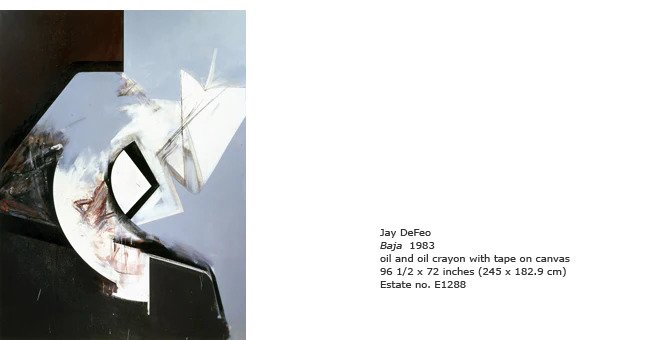
In the late 1960s, Jay DeFeo experienced a profound shift in her artistic journey. The removal of “The Rose” from her San Francisco apartment studio marked the end of an arduous eight-year-long relationship with the mammoth abstract painting. The NYT report noted that during the creation of “The Rose,” DeFeo had painstakingly applied layer upon layer of thick oil-based paint, resulting in a colossal work that weighed nearly a ton. Simultaneously, her personal life was in turmoil as her marriage was unraveling. This tumultuous period left DeFeo artistically paralyzed for several years.
However, the resilient spirit of a true artist could not be extinguished. Around 1970, DeFeo embarked on a new artistic journey that would lead her to the world of photography. This medium provided her with a fresh canvas for her creative expression. As was noted in the NYT review, despite being relatively unseen during her lifetime, DeFeo’s photographic works are now receiving the recognition they deserve in “Inventing Objects.”
In her photographic exploration, Jay DeFeo drew inspiration from visionaries like Man Ray, placing a premium on originality and artistic vision rather than strict technical proficiency. Similar to Man Ray’s experiments with cameraless photography, DeFeo used her camera to compose abstract forms, unleashing a new dimension of her creativity. While some of her photographs served as sketches for the acrylic paintings she would create after “The Rose,” most stood as independent artworks.
DeFeo’s black-and-white photographs, much like her typically monochromatic paintings, reveled in the geometric patterns she discovered in the world around her. In her work, one can discern echoes of the iconic Californian photographers of the previous generation, including Edward Weston, Ansel Adams, and particularly Imogen Cunningham. Yet, she brought her unique perspective to this legacy. For instance, she juxtaposed intricately veined tropical leaves against a greenhouse’s glazed grid, merging natural and constructed elements in a visually striking manner.
One of the hallmarks of Jay DeFeo’s photographic work was her penchant for isolating fragments. She had a knack for extracting the extraordinary from the ordinary, highlighting the beauty in the overlooked and the mundane. A simple fringed white lampshade, when isolated against a black wall, became a captivating composition. She expertly assembled torn-out images into collages, creating new narratives from disparate fragments. Broken glassware, meticulously arranged before her camera, became a testament to the allure of destruction and construction, both equally beautiful in her eyes.
The exhibition “Inventing Objects” not only showcases DeFeo’s extraordinary photographic talent but also invites viewers to explore the intricate interplay between her various artistic pursuits. It serves as a testament to her enduring creative spirit, which, even in the face of personal turmoil and artistic challenges, found new avenues of expression.
In revisiting Jay DeFeo’s photographic work, we are granted a deeper understanding of the artist’s multifaceted creativity. Her ability to bridge the realms of painting and photography, all while maintaining her distinctive artistic voice, demonstrates her profound artistic vision. While “The Rose” may remain her magnum opus, her photographic legacy is a testament to her enduring contribution to the world of art.
Jay DeFeo’s journey, marked by resilience and an unwavering commitment to artistic exploration, reminds us that great artists continually reinvent themselves, forging new paths to share their unique perspectives with the world. As we immerse ourselves in the world of “Inventing Objects,” we celebrate the rediscovery of a visionary artist whose work continues to inspire and captivate.
“Gerald Ferguson’s Black Landscapes: An Ode to Nature in the Age of Climate Crisis”
TRIBECA – Gerald Ferguson – Through Oct. 21. Canada, 61 Lispenard Street, Manhattan; 212-925-4631; canadanewyork.com.
In the realm of contemporary art, Gerald Ferguson stands as an innovative force who helped shape the conceptual art scene in the 1970s. According to a review of his works in the New York Times, as a painter and teacher, he played a pivotal role in transforming the Nova Scotia College of Art and Design in Halifax into a hub of conceptual art experimentation. While the conceptualists of his era didn’t necessarily embrace traditional painting, Ferguson embarked on a journey that would redefine his artistic process and bring him closer to nature in a way that resonates profoundly with today’s environmental concerns, the NYT review noted.
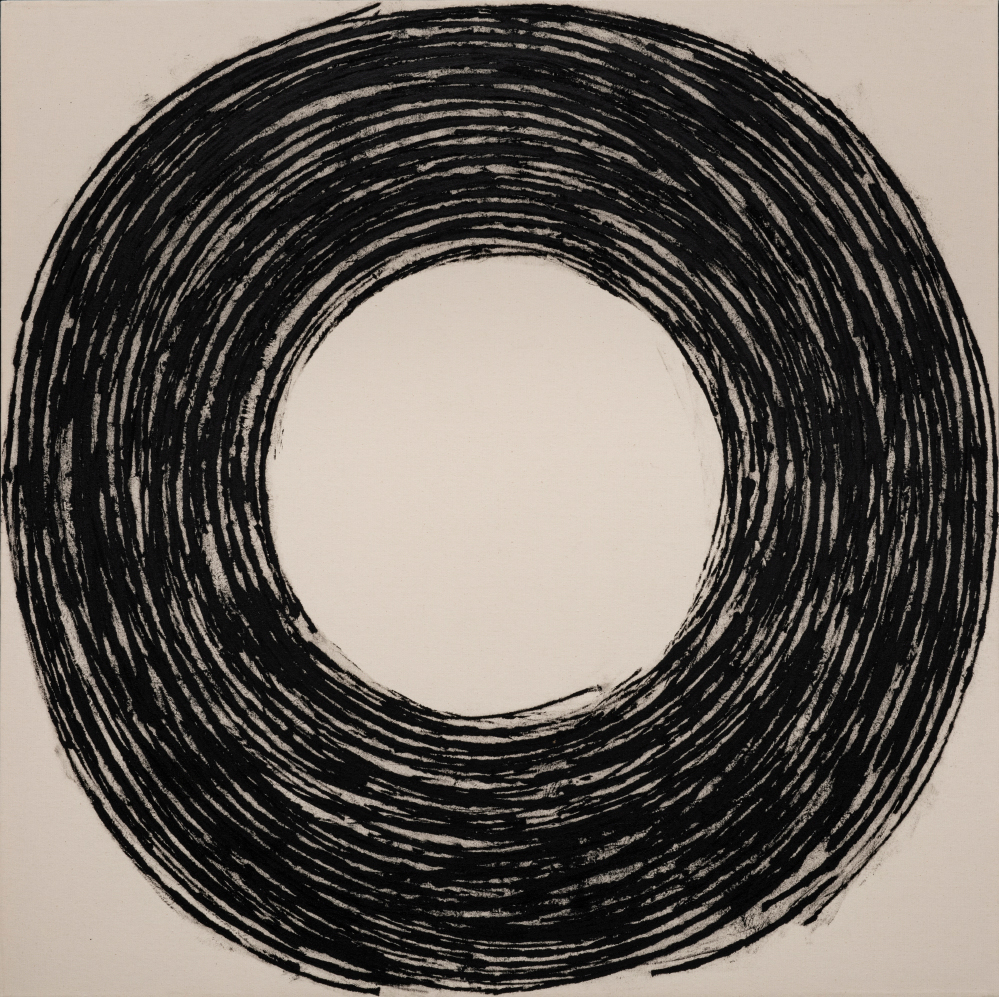
Ferguson’s departure from classical, expressive brushwork was a defining moment in his career. He introduced a strictly predetermined “process” into his art. Instead of relying on intuitive strokes, he began incorporating everyday objects—coils of rope, metal drain covers—underneath his canvases, according to the NYT report. He would then apply black enamel paint over these objects to capture their impressions. This innovative technique produced striking, textured works that challenged traditional notions of painting.
In 2008, fate intervened in Ferguson’s artistic journey. A broken arm made his signature rubbings too difficult to manage, prompting him to embrace a simpler, more unconventional approach. Undaunted by the loss of fine detail in his work, the NYT reported that he decided to paint one-handed using a hardware-store roller. This marked a radical shift in both technique and subject matter.
For this final chapter of his artistic career, Ferguson turned his attention to an unlikely subject, at least within the avant-garde circles he had navigated for years—the great Canadian landscape. As noted in the NYT report, instead of conforming to the expectations of the art world, he embarked on a journey to capture the essence of the natural world with his crude rollering technique.
The result of this profound transformation was a series of ultra-low-resolution, black-on-black depictions of nature that exude a surprising depth of emotion. According to the NYT, these black landscapes seem to emerge from the canvas as charred, otherworldly vistas, almost as though Ferguson had managed to take rubbings directly from Nova Scotia’s forests after the all-consuming fires that have become emblematic of our warming world.
What makes Ferguson’s black landscapes particularly poignant is their timeliness. In an era dominated by conversations about climate crisis and environmental degradation, these somber, textured vistas seem to resonate deeply with our collective mourning for the planet, the NYT report observed. Through the lens of his unconventional technique, Ferguson invites us to explore the intricate relationship between art and nature, drawing our attention to the fragility and resilience of our natural world.
In these black landscapes, we are confronted with a paradoxical beauty—a stark reminder of the toll our actions have taken on the environment, yet also a celebration of the enduring spirit of the natural world, the report added. Ferguson’s work encourages us to reflect on the urgency of addressing climate change while finding solace in the profound connection we share with our planet.
As we navigate the challenges of the Anthropocene, where human activities have left an indelible mark on the Earth, Ferguson’s black landscapes serve as a poignant and thought-provoking testament to the power of art to illuminate the most pressing issues of our time, as was reported in the NYT. They beckon us to contemplate our relationship with nature, encouraging us to appreciate its grandeur, mourn its losses, and ultimately, take meaningful action to protect and preserve it for generations to come.
In the artistry of Gerald Ferguson, we find not only a unique creative journey but also a profound meditation on our place within the natural world and our responsibility to safeguard its future. The NYT reported indicated that his black landscapes stand as a testament to the enduring power of art to inspire change and provoke reflection in the face of global challenges.
“Willa Nasatir: The Alchemy of Photography and Painting”
TRIBECA – Willa Nasatir – Through Oct. 21. Chapter NY, 60 Walker Street, Manhattan; 646-850-7486, chapter-ny.com.
Willa Nasatir, a New York-based artist, has made a name for herself through her distinctive approach to photography, characterized by her use of mirrors and the rephotographing technique, as was reported in a review in the New York Times. Her work often creates image-puzzles that challenge viewers to decipher spatial orientations and commonplace elements. According to the NYT report, in her latest exhibition, Nasatir continues to push the boundaries of perception with three mind-bending photographs, accompanied by five paintings that provide a fascinating glimpse into her evolving artistic journey.
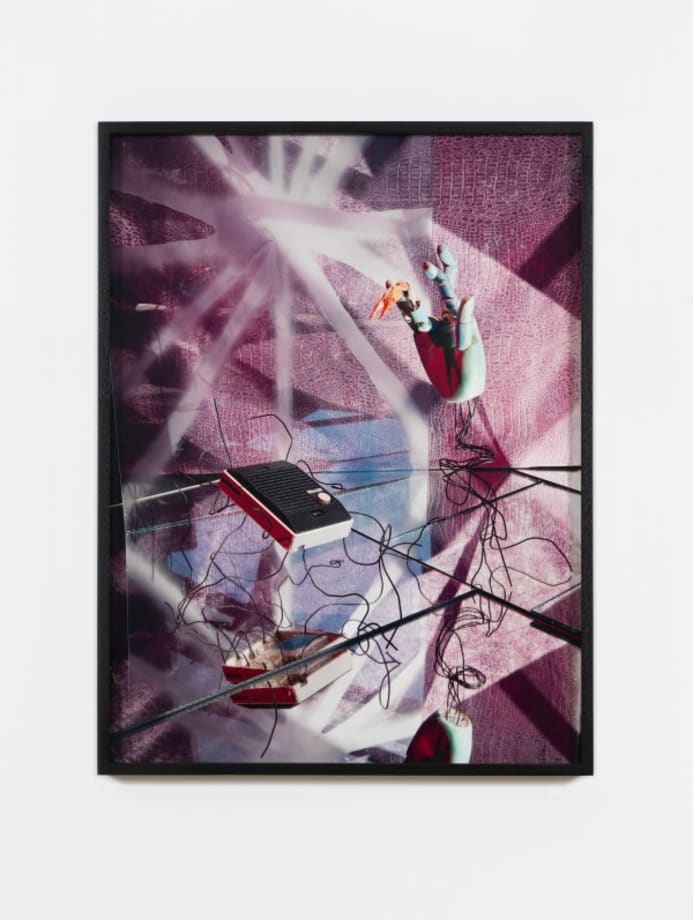
At first glance, it can be challenging to discern which works are photographs and which are paintings in Nasatir’s exhibition, the NYT review noted. This blurring of boundaries is a testament to her ability to seamlessly navigate different mediums while maintaining a consistent and intriguing artistic voice.
In one of her photographs titled “Hole” (2023), Nasatir presents a mesmerizing composition. As was reported in the NYT review, a blue paper bag adorned with the head of the Statue of Liberty appears to have been burned through its front and back, creating a surreal effect. Behind it, a magenta bag is partially visible, further complicating the visual narrative. Both bags are placed on a mirror, which not only doubles but also distorts Lady Liberty’s iconic visage. What were once simple objects, bags casually resting on a table, are transformed into a single, transfixing image that challenges our perception of reality.
In Nasatir’s photographs, real objects are often rendered as near abstractions, inviting viewers to unravel the mysteries of her spatial manipulations. As was noted in the NYT review, her approach to photography exhibits an investigative rigor that aligns with contemporary artists like B. Ingrid Olson, who explore the boundaries of perception and reality through their work.
In contrast to her photographs, Nasatir’s paintings take on a different dimension. While they maintain her signature use of abstract compositions, they often feature figurative details that emerge from the canvas, the NYT review observed. For example, in “Rest” (2023), viewers are prompted to question whether they are looking at a duck, a dog, or a fox. These paintings reflect Nasatir’s willingness to experiment with form and content, showing her capacity to evolve as an artist.
While Nasatir’s photography demonstrates a mature mastery of her chosen medium, her paintings are still in the process of refinement, as was stated in the review. However, there is no doubt that she possesses a unique talent for building up transparent layers of paint to create depth and mesmerizing chromatic effects. This observation suggests that Nasatir’s artistic journey may not be limited to the camera alone; she has the potential to make magic with a paintbrush as well.
In her photographs of everyday objects, Nasatir invites viewers to reconsider the familiar and perceive the extraordinary in the mundane. Her paintings, although a work in progress, offer a glimpse of her exploration of alchemy on canvas, according to the review in the NYT. As she continues to experiment and refine her approach, it will be intriguing to witness how Nasatir’s dual mastery of photography and painting unfolds, promising an exciting future for this talented artist.
In the realm of contemporary art, Willa Nasatir stands as a testament to the boundless possibilities of artistic exploration. Her ability to traverse the boundaries of photography and painting demonstrates a profound commitment to pushing the limits of perception and challenging conventional artistic norms. Whether through the lens or the paintbrush, Nasatir’s work captivates, intrigues, and leaves a lasting impression on all who encounter it.
“Chuquimamani-Condori Siblings: Healing the Past and Present Through Art”
Through Oct. 2 at MoMA PS1; 22-25 Jackson Avenue, Long Island City, Queens; 718-784-2084, momaps1.org.
In the heart of MoMA PS1, a project by the talented Chuquimamani-Condori siblings unfolds, shedding light on a complex historical narrative and offering a unique perspective on the intersection of art, culture, and healing, as was indicated in a New York Times review. Based in California and belonging to the Pakajaqi Nation of Aymara people, these siblings, Joshua Chuquimia Crampton and Chuquimamani-Condori, are the descendants of Francisco Tancara, their great-great-grandfather, whose story intertwines with the Indigenous Aymara community in Bolivia and the presence of Protestant Adventist missionaries on native land, the NYT review said.
The legacy of Francisco Tancara, who assisted in building schools for the Aymara community in Bolivia, serves as a critical backdrop to this thought-provoking project. According to the NYT review, the labor carried out by Tancara on behalf of the Indigenous Aymara community during the early 20th century has been invoked to justify the continued presence of the colonial church on native land. It is within this historical context that Chuquimamani-Condori and Joshua Chuquimia Crampton craft their narrative, weaving together threads of history, culture, and identity, the NYT report noted.
The installation at MoMA PS1 serves as a dynamic exploration of their ancestral history, particularly the encounters between their ancestors and representatives of the colonial church and state. The NYT report observed that at its core, this project represents an effort to shed light on the often overlooked stories of dispossession and resistance faced by Indigenous communities.
At the heart of the installation stands a colossal collagelike banner that spans two floors. This banner, the NYT review said resembles a cosmic map or something out of a sci-fi video game and is imbued with significance. It embodies an Aymaran form of writing with images known as qillqa. At its center lies a large qillqa head that breaks apart to reveal photographs of Francisco Tancara and the artists’ great-great-grandmother, Rosa Quiñones, according to the NYT review. These images serve as a visual narrative, inviting viewers to engage with the historical journey of their ancestors.
Beyond the visual elements, the project extends its reach through storytelling. As noted in the NYT review, visitors can listen to a series of narratives recounting the experiences of a family that valiantly bought back their land from colonial governments, as well as various encounters with authorities. These stories serve as a testament to the resilience and strength of Indigenous communities in the face of adversity.
What sets the work of Chuquimamani-Condori and Joshua Chuquimia Crampton apart is their framing of their art as “medicine,” specifically Aymara q’iwa and q’iwsa medicine, or “queer medicine.” This perspective transcends traditional notions of art as a mere aesthetic or commercial endeavor. Instead, the artists view their work as a means of healing old historical wounds, offering solace to communities scarred by the past, and addressing the pressing issues of our time, including the ongoing struggles of Indigenous peoples and the environment, as was indicated in the NYT report.
In a world where art often finds itself confined to galleries and exhibitions, Chuquimamani-Condori and Joshua Chuquimia Crampton’s approach is a powerful reminder of the transformative potential of art. Their work transcends the boundaries of traditional art forms, inviting viewers to engage not only with history and culture but also with the profound concept of healing. As we confront the challenges of our era, from environmental crises to social injustices, their unique perspective offers a glimpse into the role of art as a catalyst for change and renewal, bridging the gap between past and present, individual and collective, and culture and healing.