



|
Getting your Trinity Audio player ready...
|
By: Fern Sidman
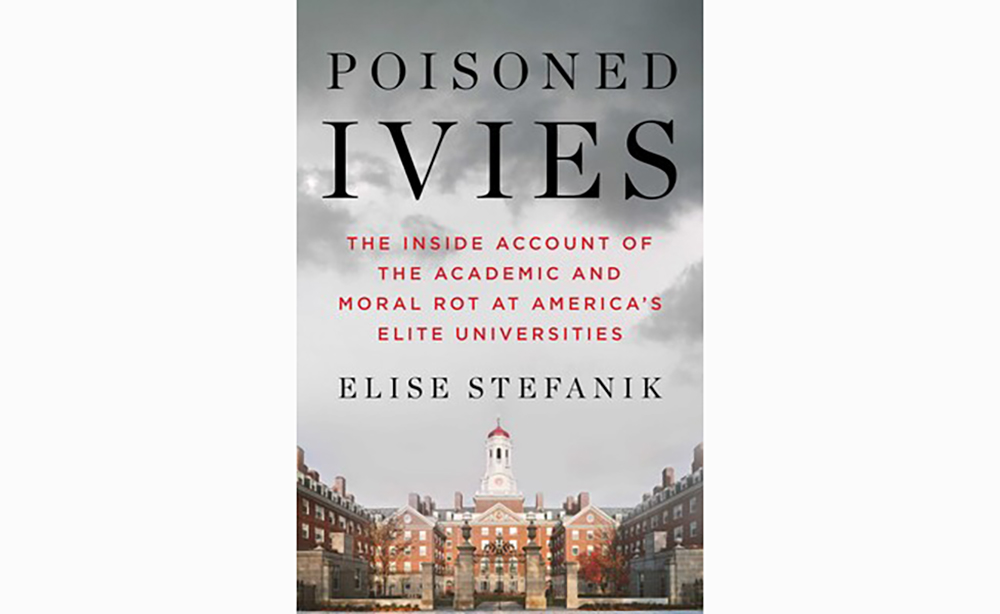
In an exclusive interview on Tuesday with The New York Post, Representative Elise Stefanik (R-NY) unveiled her forthcoming book, Poisoned Ivies: The Inside Account of the Academic and Moral Rot at America’s Elite Universities, a blistering examination of “the far-left indoctrination, division, and moral decay” that has metastasized across the nation’s most prestigious campuses.
The book—set for release in April 2026 by Threshold Editions—promises to pull back the curtain on a decades-long unraveling of academic integrity, moral clarity, and civic purpose within the Ivy League and peer institutions. But as The New York Post report noted, Stefanik’s timing could not be more charged: her revelations arrive on the eve of a pivotal New York City mayoral election in which Democratic Socialist Zohran Mamdani, a product of elite academia, stands poised to become the city’s first Muslim mayor.
“If you look at the rise of an antisemite socialist, Zohran Mamdani,” Stefanik told The Post, “you cannot have that without a direct line from these poisoned Ivy League schools—leading directly to this moral rot that is currently manifesting in what’s playing out in the mayor’s race in New York City.”
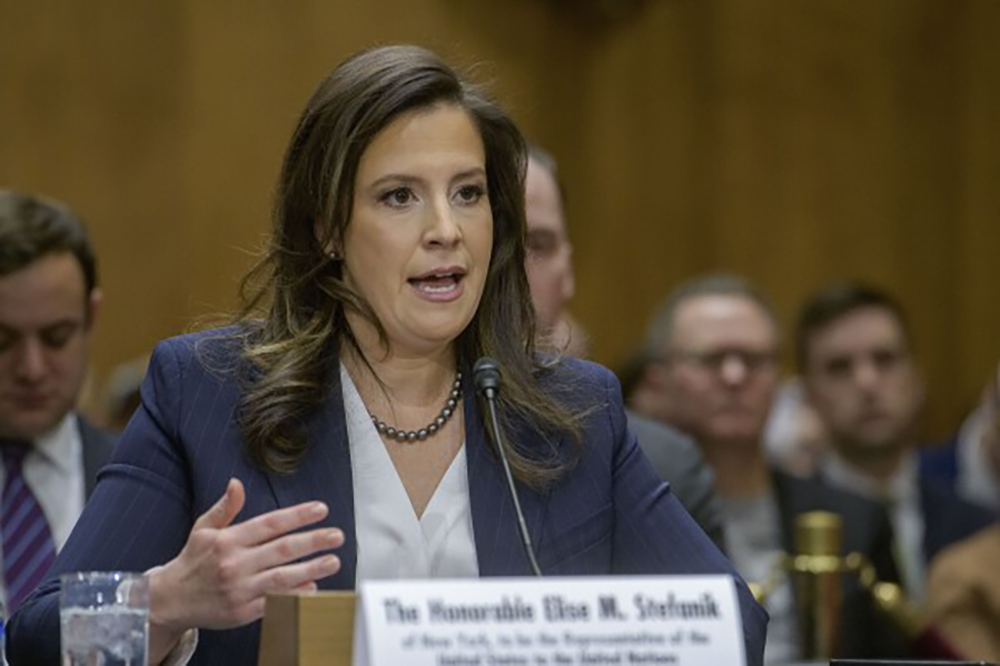
As The New York Post report observed, Stefanik draws a direct connection between campus ideology and contemporary politics: from the lecture halls of elite universities to the campaign platforms of candidates such as Mamdani, she sees a culture of entitlement, resentment, and ideological extremism that has replaced rigorous scholarship with political orthodoxy.
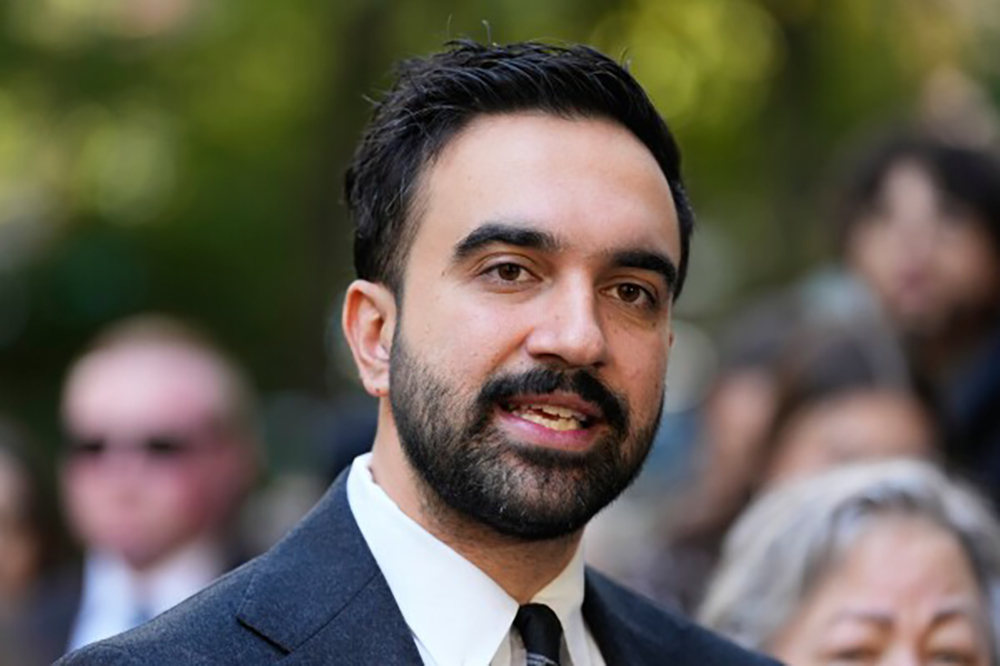
Mamdani, 34, who graduated from Bowdoin College and whose father is a professor at Columbia University, has built his campaign on the tenets of democratic socialism—calling for mass wealth redistribution, the defunding of the NYPD, and sanctions against Israel. Stefanik views this as the natural consequence of a higher-education establishment that long ago lost its moral compass.
“Antisemitism on college campuses is the canary in the coal mine of academic and moral rot that has been happening for decades,” she told The Post, pointing to Mamdani’s open hostility toward Israel and his normalization of anti-Zionist slogans as evidence of this indoctrination’s real-world effects.
Her book, she said, documents how elite universities have become “incubators of intolerance masquerading as tolerance,” institutions that shield faculty radicals while silencing dissenting voices through bureaucracies built around Diversity, Equity, and Inclusion (DEI).
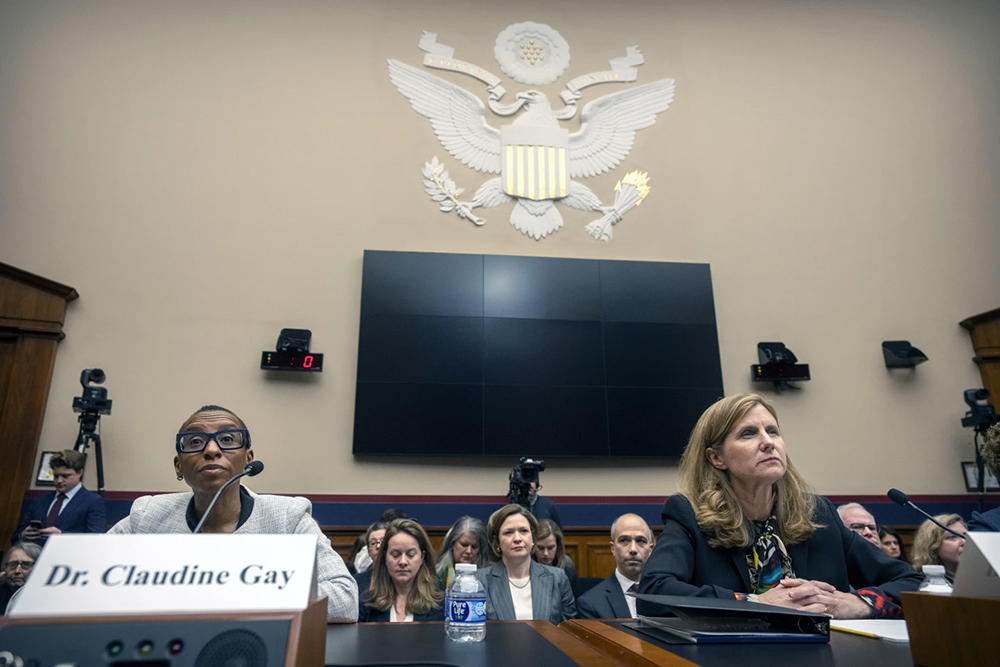
Stefanik, a Harvard University alumna, has emerged as one of Congress’s fiercest critics of higher education’s drift toward ideological conformity. Her now-famous December 5, 2023 congressional hearing, dubbed by The New York Post as the “hearing heard around the world,” featured the presidents of Harvard, MIT, and the University of Pennsylvania—Claudine Gay, Sally Kornbluth, and Liz Magill—each of whom refused to explicitly condemn student calls for genocide against Jews.
That moment, captured in video clips viewed billions of times online, sparked a nationwide reckoning. Within weeks, both Gay and Magill resigned under public pressure. Stefanik calls that episode “the earthquake that exposed academia’s hypocrisy.”
“This is an important chapter in the history of American education to tell in one book,” Stefanik told The Post, “of the really sick situation that was occurring on these campuses—whether it was the assaults of Jewish students, the chants of ‘Death to Israel, Death to America,’ or the faculty’s inability to show any moral compass or leadership.”
According to the information provided in The New York Post report, Stefanik began drafting Poisoned Ivies shortly after that hearing, expanding on years of oversight work in the House Education and Workforce Committee. The congresswoman dissects not only campus antisemitism but also the structural decay that has eroded public trust: tuition inflation, foreign influence, curricular radicalism, and a near-monopoly of political thought among faculty.
Her case, The Post report noted, is supported by stark statistics. A 2022 Harvard Crimson survey found that 82% of Harvard faculty identified as liberal or very liberal, compared with just 1.46% who identified as conservative. “That ideological imbalance isn’t just academic,” Stefanik said. “It’s political engineering—and it shapes the minds of future leaders who now believe that free speech and patriotism are dangerous relics.”
She contends that the leftward monoculture of elite academia has bred a generation of policymakers and activists who despise capitalism, distrust religion, and view America through the prism of guilt and oppression.
“The rise of a figure like Mamdani is no accident,” Stefanik told The Post. “He is a direct product of an education system that replaced critical thinking with critical theory.”
The timing of Stefanik’s revelations has placed her at the center of the political crossfire surrounding New York’s mayoral race, in which Mamdani’s anti-Israel statements and open praise for “intifada solidarity” have drawn widespread condemnation.
As The New York Post recently reported, Mamdani’s positions—calling for the arrest of Israeli Prime Minister Benjamin Netanyahu, labeling Israel an apartheid state, and advocating for the Boycott, Divestment, and Sanctions (BDS) movement—have alarmed Jewish organizations and alienated moderate Democrats.
Stefanik argues that this ideological extremism didn’t begin in politics; it began in classrooms. “The moral relativism and victim politics taught on college campuses are now running for mayor of New York City,” she said. “And the results are terrifying.”
In Poisoned Ivies, Stefanik breaks down what she describes as five pillars of institutional decline:
Tenured Radicalism – “Permanent faculty employment has turned universities into echo chambers,” she writes, noting that professors once dedicated to scholarship now serve as “political commissars” for the left.
Foreign Funding and Influence – Stefanik traces the billions funneled into U.S. universities by China, Qatar, and Saudi Arabia, arguing that “foreign adversaries are buying silence on human rights while shaping curricula to undermine Western values.”
Administrative Bloat and Tuition Inflation – Citing The New York Post’s reporting on record tuition hikes, she accuses universities of using diversity bureaucracies to justify spiraling costs that “saddle American families with debt while enriching a managerial class.”
Curricular Deconstructionism – Stefanik lambastes what she calls “the weaponization of critical theory,” replacing merit with identity and erasing Western civilization from the core curriculum.
Moral Cowardice and Antisemitism – “The refusal of university leaders to condemn Jew-hatred is not neutrality,” she said. “It’s complicity.”
“Antisemitism,” Stefanik told The Post, “is not a campus issue—it’s a national moral test. And the universities are failing it.”
According to the information contained in The New York Post report, Stefanik’s book doesn’t just diagnose; it prescribes. She proposes a sweeping reform agenda designed to “defund moral decay” and “restore academic integrity.”
Among her recommendations:
Ban foreign funding from adversarial nations such as China, Qatar, and Iran.
Eliminate DEI mandates from admissions, faculty hiring, and research funding.
Reform accreditation standards to emphasize intellectual diversity and free inquiry.
Condition federal funding on compliance with constitutional protections and transparency in endowment spending.
Hold administrators personally accountable for campus hate speech and harassment.
“These schools are not entitled to taxpayer funds,” she told The Post, “if they are promoting anti-American ideals that are not representative of the morals of the American people.”
Stefanik pointed to the Trump administration’s recent Department of Education investigation into UC Berkeley, which received $220 million in Chinese government funding, as a model for aggressive oversight.
Poisoned Ivies also devotes significant space to “the counter-revolution in education.” She highlights the rapid rise of new institutions such as the University of Austin, co-founded by journalist Bari Weiss, which she said represents a “rebirth of open inquiry.”
According to The New York Post, Stefanik sees hope in the migration of students toward public universities in the South, including the University of Florida and University of Georgia, where enrollment is booming amid a backlash against Ivy League elitism.
“You’re seeing a new generation of Americans vote with their feet,” she said. “They’re rejecting indoctrination for education. That is the true American spirit.”
While Stefanik insists her book is a work of cultural analysis, its political reverberations are unmistakable. As speculation grows about her possible 2026 gubernatorial run, Poisoned Ivies positions her as the nation’s most visible critic of elite academia and a defender of free expression.
“I haven’t made any decision about 2026,” she told The Post, “but I can promise this: we’re going to continue being the congressional office that leads on this issue.”
Her congressional hearings and public advocacy have already reshaped the conversation around university governance and antisemitism. “We exposed the rot,” she said. “Now we have to excise it.”
Stefanik told The New York Post that her campaign to reform higher education “will take decades,” requiring both legislative action and “a cultural awakening among alumni, parents, and donors.”
“This didn’t happen overnight, and it’s not going to be a quick fix,” she cautioned. “But exposure is power—and we’re just getting started.”
The implications of Stefanik’s work stretch far beyond academia. As The New York Post report observed, her critique dovetails with a broader conservative effort to reclaim cultural institutions—from schools to media to corporate boardrooms—from what she and her allies describe as “ideological capture.”
Yet Poisoned Ivies is as much a cultural warning as it is a political manifesto. It challenges Americans to recognize that the intellectual rot once confined to faculty lounges has now seeped into every sector of national life—from Wall Street to Hollywood, from Silicon Valley to City Hall.
“We are living through the harvest of our universities’ failures,” Stefanik told The Post. “When schools teach young Americans to despise their country, you shouldn’t be surprised when they run for office to dismantle it.”
In its final chapters, Stefanik’s Poisoned Ivies returns to the theme that animates her entire project: moral clarity. The congresswoman argues that America’s survival depends on rekindling the civic and spiritual foundations once nurtured by its universities.
Her message, as she put it to The New York Post, is simple but urgent: “If we want to save the Republic, we must first save the classroom.”
She frames the struggle not merely as political but existential. “The values that sustain Western civilization—truth, freedom, merit, and faith—are under siege from within,” she said. “The battle for the university is the battle for America’s soul.”
As Poisoned Ivies nears publication, Stefanik stands at the intersection of two defining conflicts—one cultural, one political. In her telling, the moral decline of academia has birthed not only a generation of radicals like Zohran Mamdani but an entire crisis of American identity.
And in her view, the cure will not come from within the Ivy walls. “It will come from the American people—who still know right from wrong, who still believe in truth, and who will no longer fund the destruction of their own country,” she told The Post.
That, Stefanik insists, is the ultimate lesson of Poisoned Ivies: when the nation’s most powerful institutions forget their purpose, it falls to ordinary citizens—and the leaders who defend them—to remind them what it means to be American.