



|
Getting your Trinity Audio player ready...
|
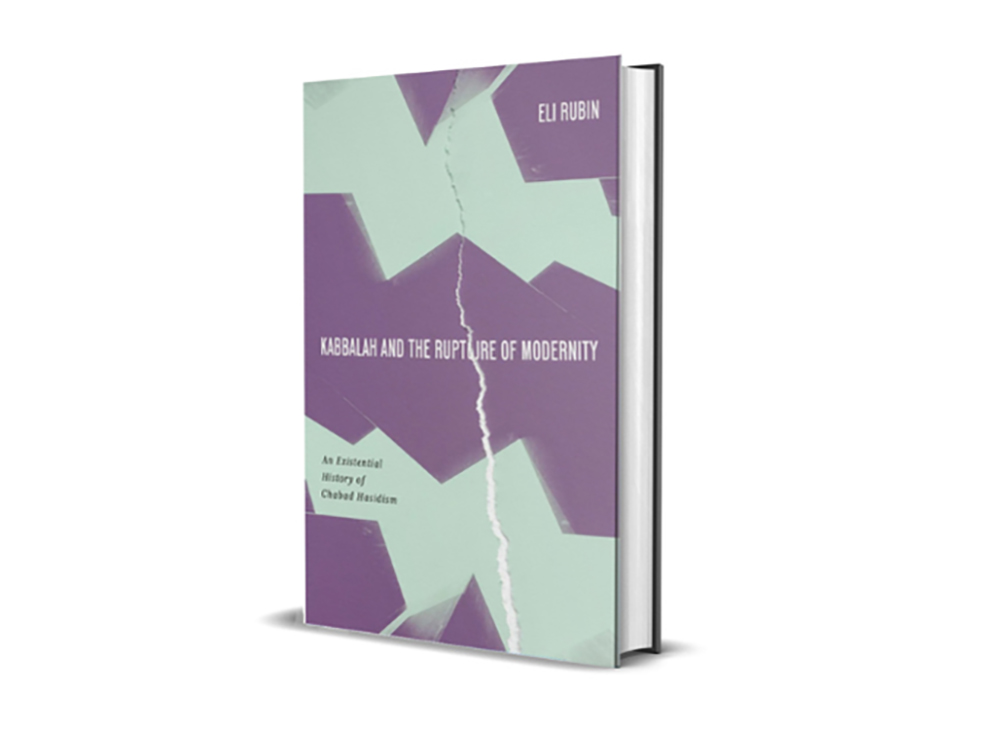
Why This Book Is Important and What It Says
By: Tzvi Freeman
Writing a book review is reminiscent of high school, an enduring trauma to which I have no desire to return. Instead, I’ll just write a perspective I’ve gained by reading Eli Rubin’s latest book.
Rubin weaves Chabad metaphysics and significant events so they illuminate one another, taking us through the forks in the roads to better understand the path that forged forward. In each case, the vision of Chabad unfolds and reveals more of its true meaning. It’s an approach that presents a major leap forward in the study of Chabad history and philosophy.
In Rubin’s narrative, the Lurianic description of tzimtzum represents that rupture. The history of Chabad is a history of confrontation with that tzimtzum head-on, embracing it, struggling with it, and healing it.
What Is Modernity?
What is that rupture? We need to know, because if Rubin is correct (and I think he is), we cannot have a proper understanding of Chabad without some knowledge of the great shift in thought that was occurring in Europe, a shift that distinguishes modernity from all that came before it. As it turns out, that shift was far more related to Jewish, and in particular, kabbalistic thought, than most imagine.
Rubin points to René Descartes with his mind-body duality. However, to lay a seismic shift in the destiny of civilization on the shoulders of one bright and gleeful Frenchman who spent much time lying in bed staring at the fly on the wall and pondering how he could prove his own existence—I’m sure that’s not what Rubin means.
When Rubin’s book landed on my desk, I was in the middle of Jessica Riskin’s landmark work, “The Restless Clock—a history of the centuries-long argument over what makes things tick.” This was more than serendipity. I don’t think I could have grasped the import of Rubin’s thesis without Riskin at my side.
Riskin is a formidable scholar whose book has left its mark in the field of biology, cited in numerous papers since its publication in 2016. She brilliantly and skillfully tells the story of a civilization shaken by a great rupture that has left its wounds to this day.
The civilization was post-Reformation Europe. Having relegated the Great Designer/Primal Cause to a position outside His creation, intelligentsia were now stuck with a universe of divinely designed automata that have no spirit or agency of their own. Or perhaps they do. That was the debate.
The Protestant church of the time rathered that they don’t. G‑d, the reformers preached, has exclusive rights to life, spirit, and destiny. Allowing every living creature the autonomy to somehow own its own life ran against the theology of the time, certainly of Calvinist doctrine, but generally throughout Western Europe.
And so, the spirits within things were banished. Even the organs within churches were dismantled, as they represented just that notion—a spirit running through the pipes to create music and life.
The aristocracy also found the notion of distributed agency threatening. Better to keep it exclusively at the top of the hierarchy of things. Naturalists and philosophers, including Descartes, were wont to bow to their patrons and to curry favor of the church.
And it was enabling. If living organisms are messy things that make up their own minds with a spirit of their own, why bother studying them? How reliable could any predictions be? How can mathematics apply to deliberate, voluntary actions?
But if they are divine automatons, the craft of a Great Mind who has permitted us to peer into the mechanics and wondrous patterns of His work, then the naturalist is G‑d’s apprentice and the philosopher His PR man.
The wrench in the works was that those fuzzy creatures seemed so sensitive, even sentient, and, well…alive. Descartes had provided a special dispensation for humans who just had to have a soul, because, well, they do. Somehow the church was good with that. But others, notably Henry More, could not swallow the lifeless-machine pill.
The outlier of the time, and perhaps the most creative mind of the 17th century, was Gottfried Leibniz. On the one hand, Leibniz accepted that all of G‑d’s creatures are machines—wondrous machines made of smaller machines made of yet smaller machines, ad infinitum. And yet they are alive. Because machines are alive. They have to be, because everything is alive, not only humans, not only animals and vegetation, but even the fundamental elements.
Leibniz called the life force of all things vis viva (Latin for life force) and demonstrated that it never vanishes, but only transforms from one form to another. Vis viva eventually joined our vocabulary as “energy,” and Leibniz’ insight into its preservation became known as the conservation of energy—one of the most important principles of science. Where would we be if we couldn’t speak of “energy and matter?”
To us, today, energy is just another predictable element of the universe. To Leibniz, however, energy was a kind of god-likeness within each thing, so that each thing, even the clock, moved by its own agency in search of equilibrium.
Almost a century later, inspired by Leibniz, Jean-Baptiste Lamarck authored the discipline of biology. He defined it as the study of “vital mechanical striving.” Living organisms, according to Lamarck, strove autonomously towards perfection through their own will and agency. We can credit Lamarck for the notions of biological adaptation and evolution over time. Only that, for him, it was not by external natural selection, but rather by the purposeful striving of these organisms themselves.
Yet the dominant voices continued to overwhelm the protests of such Romantics and mavericks. As the steam engine powered Europe, the brute-matter machine idea dominated human thought, the Great Designer was eventually dropped from the picture, and we ended up with a flat, vacuous world. Progress and evolution proceed counter-entropically toward greater complexity without navigation. Lots of action, no actors. Great design, no designer. Stuff happens because stuff happened beforehand that made it happen.
As Riskin describes the determinist belief system elsewhere, it’s turtles all the way down, and anyone who believes otherwise is insane.
This is modernity. A rupture between spirit and matter, mind and body, Creator and created, then and now. An internally contradictory concept of reality, but convenient and enabling nonetheless. And into modernity stepped the Jewish mind.
Tzimtzum as Rupture
Although modernity began two centuries earlier, its landmark eruption was the French Revolution, which sent seismic waves throughout Europe in the final decade of the 18th century. It was during that decade that Rabbi Schneur Zalman was busy writing his classic work, the first part of which he called “The Book of the Beinoni.”
A beinoni is a person in the middle, not wicked, not saintly. The guy on the street. The wannabe tzadik, who just doesn’t have what it takes to make it all the way. Much like the bourgeoisie out to emulate aristocracy. A work directed towards the beinoni couldn’t be more in synch with the period of the French Revolution.
The second book of this work references the rupture of modernity directly. Neither Descartes, nor Leibniz, nor Spinoza receive any mention. Rather, a yet earlier articulation is at play here. Two decades before Descartes’ birth, in Tzfat, under the rule of the Ottomans, Rabbi Yitzchak Luria espoused the notion of tzimtzum.
Tzimtzum, as Rubin points out, was a radical break from the Neoplatonic cause-and-effect model of the cosmos that had dominated Western thought for almost 2,000 years. In that cosmology, there’s a continuity, clean and simple. It begins with a formless Primal Cause whose introspection spontaneously generates perfect forms that then mechanically set off a long chain of steady ontological descent, finally resulting in our coarse, imperfect world.
The implication is that whatever is, had to be. There is no intimacy between Creator and created, only a long chain of the inevitable. Forced to debate on such ground, Maimonides was hard put to argue that there was a first point of creation. If the world has to be, how could there have been a point when it was not?
Rabbi Luria now turned the tables. He made an assertion that is a radical break from that cosmology and a return to the Biblical tradition of a deliberate act of creation. Before the beginning, he taught, there was no space for a world. Divine infinite light filled all. Any creation, anything at all other than G‑d, was not just unnecessary. It was an absurdity.
And then there was a deliberate action. Not of creation, but of withdrawal. A tzimtzum. Within the infinite light, a vacuum came to be, entirely devoid of any light whatsoever. It is this void of absolute darkness that provides the background upon which the act of creation can proceed.
Into that void, a fine thread of light pierced the barrier from the infinite light beyond. Only now could a system of cause and effect begin, and even then entailing more mini-tzimtzumim and similar catastrophes, until this physical world was able to be.
At the very core of existence, then, is a rupture. A barrier of utter darkness stands between the divine infinite light and the created worlds. Between Creator and created.
Truth be told, as Rubin is quick to point out, the Lurianic world is full of life. Divine life, pervading everything. Did Luria or any of his disciples see in this narrative a sustained barrier between spirit and matter? Or was such a perspective entirely outside their frame of reference? I don’t know of anyone who settles this question, Rubin included.
(Chabad.org)