




|
Getting your Trinity Audio player ready...
|
By: Fern Sidman
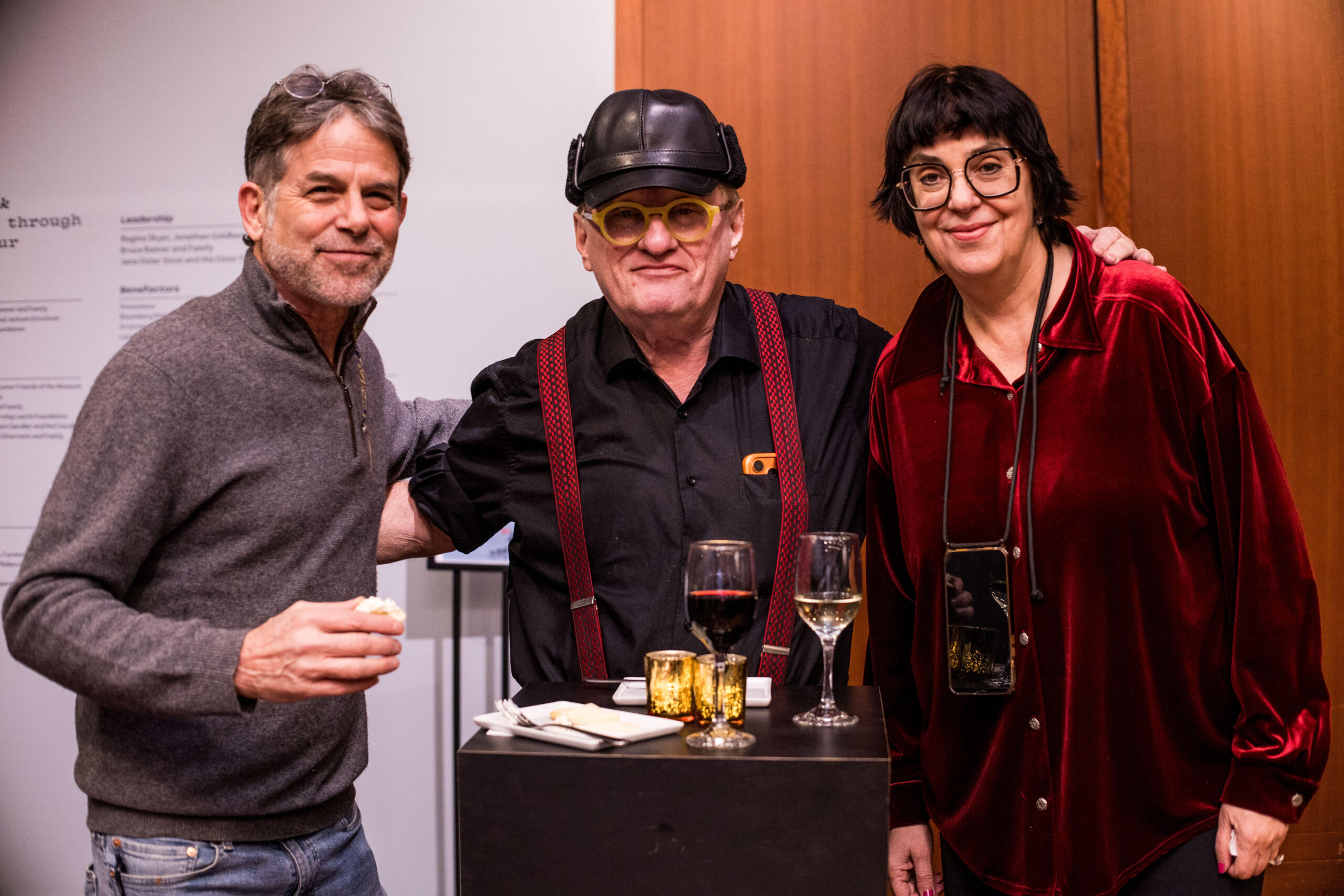
In a rare and resonant convergence of theater, diplomacy, memory, and political thought, the Israeli stage production “Jabotinsky’s Dream — The Man & the Legend” made its New York premiere at the Museum of Jewish Heritage in Manhattan, transforming one of the city’s most sacred spaces of historical remembrance into a living forum for cultural reflection and ideological dialogue. Hosted by the Consulate General of Israel in New York and attended by an array of distinguished figures—including Yossi Dagan, Governor of Samaria; Ofir Akunis, Consul General of Israel in New York; and GOP gubernatorial hopeful Bruce Blakeman, the current Nassau County Executive—the evening unfolded not merely as a theatrical debut, but as a symbolic event of transnational significance.

The premiere marked far more than the arrival of an Israeli production on an American stage. It represented the migration of an idea—an ideology, a vision, a historical consciousness—across oceans and generations. At its core, “Jabotinsky’s Dream — The Man & the Legend” is not simply a biographical drama. It is a meditation on Jewish destiny, national survival, moral responsibility, and the enduring tension between vulnerability and power that has defined Jewish history from exile to statehood.
Theater as National Memory
The choice of venue was itself profoundly symbolic. The Museum of Jewish Heritage, devoted to preserving the memory of Jewish life destroyed by the Holocaust and honoring the resilience of Jewish civilization, provided a sacred architectural and emotional backdrop for a play centered on one of Zionism’s most uncompromising architects. By staging the production within this space, the organizers framed the narrative of Ze’ev Jabotinsky not as isolated political history, but as part of a continuous civilizational arc—from persecution to sovereignty, from diaspora to nationhood, from memory to destiny.
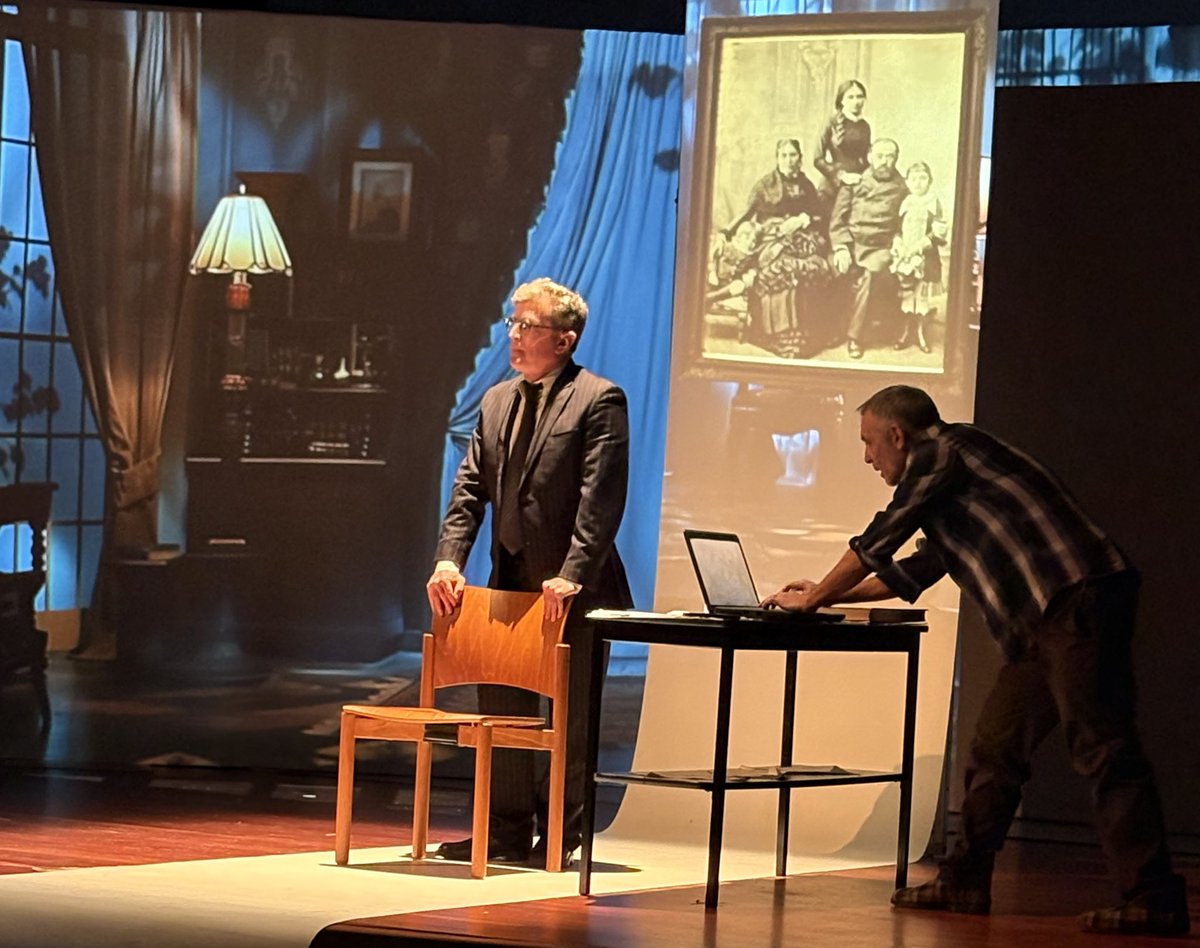
The production was initiated by the Consulate General of Israel in New York, Israel’s Ministry of Culture and Sports, and the Shomron Theater as a commemorative cultural project marking the 85th anniversary of Jabotinsky’s passing at Camp Betar in Hunter, New York. The geographical symmetry is striking: a visionary who died in American exile is now being remembered through art on an American stage, his ideas returning to the diaspora in dramatic form.
Ze’ev Jabotinsky: From Poet to Prophet of Power
Born Vladimir Yevgenyevich Zhabotinsky in Odessa in 1880, Ze’ev Jabotinsky began his life not as a political activist, but as a writer, poet, journalist, and intellectual. His early career was rooted in literature and cultural expression. Yet history intervened. The pogroms against Jews in Eastern Europe transformed his worldview, redirecting his life from cultural creation to political construction.
Jabotinsky’s Zionism was forged in persecution, and existential urgency. He came to reject the passivity and accommodationism of mainstream Zionist leadership, founding the Revisionist movement to advance a philosophy of unapologetic Jewish self-assertion. For him, survival without sovereignty was illusion; dignity without power was vulnerability disguised as morality.
At the heart of his vision was the creation of Jewish strength—not merely as defense, but as identity. This vision materialized through institutions that still shape Jewish and Israeli history: the Hebrew Battalions, the Revisionist Party, the Betar youth movement (Brit Trumpeldor), the Etzel organization (Irgun), and the ideological foundations of Liberal-National Zionism. These were not abstract ideas; they were structural instruments of nation-building.
Perhaps his most enduring intellectual contribution was the doctrine of the “Iron Wall”—the belief that peace would only become possible when Jewish strength became unquestionable. Only when hostile forces accepted the impossibility of destroying Jewish sovereignty would coexistence emerge. Security, in Jabotinsky’s worldview, was not the opposite of peace—it was its prerequisite.
Dream Versus Reality
“Jabotinsky’s Dream — The Man & the Legend” dramatizes this philosophy not as doctrine, but as human struggle. Written by Zvia Huberman and directed by Sarel Piterman, the play adopts a powerful and innovative dramatic structure: an imagined encounter between Ze’ev Jabotinsky and a modern Israeli playwright who is attempting to write a play about him—despite fundamentally disagreeing with his worldview.
This narrative device transforms the production into a dialogue across time, ideology, and identity. The playwright represents contemporary Israel’s internal conflicts: moral anxiety, political fragmentation, and the struggle to reconcile power with ethics. Jabotinsky represents an earlier generation’s clarity of purpose, forged in existential threat and historical urgency.

The tension between these two figures becomes the central dramatic engine of the play. It is not a hagiography. It is a confrontation—between past and present, dream and reality, fear and fortitude, vulnerability and sovereignty.
Artistry and Performance
The production is anchored by the performance of Nitzan Sitzer as Ze’ev Jabotinsky, a performance artist whose diverse background—from classical theater to street performance, opera, children’s theater, television, and voice acting—infuses the role with both gravitas and emotional fluidity. Sitzer’s portrayal renders Jabotinsky not as an icon, but as a human being: conflicted, driven, visionary, and unyielding.
Opposite him, Nati Ravitz plays the modern playwright—a character defined by intellectual struggle and ideological doubt. Ravitz, a highly accomplished Israeli actor and Artistic Director of the Shomron Theater, brings psychological depth to the role, embodying the contemporary Israeli conscience wrestling with the legacy of militant Zionism.
The creative vision of playwright Zvia Huberman—an acclaimed Israeli dramatist, director, and educator known for her work in children’s and youth theater—adds a layer of symbolic accessibility to the narrative. Her writing does not simplify Jabotinsky’s ideas; it humanizes them. Director Sarel Piterman shapes the production with restraint and intensity, allowing ideology to emerge through character rather than rhetoric.
Thematic Depth
At its philosophical core, the play explores several enduring questions: Can a people move from victimhood to power without losing moral identity? Is strength a corruption of ethics—or its protector? Does security require hardness, or can compassion coexist with power? What is the role of imagination in nation-building?
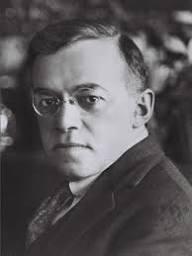
By dramatizing Jabotinsky’s transformation—from poet to political architect—the play suggests that Jewish history itself is a story of forced evolution: from culture to survival, from vulnerability to sovereignty, from exile to homeland.
The title, Jabotinsky’s Dream, is deeply ironic. His dream was not utopian peace—it was security. Not harmony—it was survival. Not universal approval—it was Jewish continuity. The dream, in this sense, is not soft; it is steel.
Cultural Significance in New York
Bringing this production to New York carries profound symbolic weight. New York is not merely a cultural capital—it is the heart of the Jewish diaspora. It is a city where Jewish identity is simultaneously ancient and modern, religious and secular, Zionist and critical.
In this environment, Jabotinsky’s Dream becomes more than theater—it becomes dialogue. It invites American Jewish audiences to confront foundational questions about Zionism, identity, power, and history. For younger generations, it offers not a sanitized narrative, but a complex and challenging encounter with one of Zionism’s most inspiring, brilliant and prescient architects.
For older generations, particularly descendants of early Zionist pioneers, the play resonates as memory reanimated—history given voice and form.
Tribute and Interrogation
Ultimately, “Jabotinsky’s Dream — The Man & the Legend” functions as both homage and examination. It honors Jabotinsky’s role in shaping Jewish political destiny while refusing to reduce him to myth. It celebrates his courage while probing the ethical tensions his philosophy generates.
The production does not offer answers—it offers confrontation. It does not resolve contradictions—it illuminates them. In doing so, it transforms theater into a space of national introspection.
A Dream That Endures
As the final lights dimmed at the Museum of Jewish Heritage, what lingered was not simply applause, but silence—a reflective silence charged with memory, identity, and unresolved questions. Jabotinsky’s Dream does not end with closure. It ends with tension, with thought, with challenge.
Ze’ev Jabotinsky’s story is not merely the story of one man. It is the story of a people forced to redefine itself in the crucible of history. It is the story of a transformation from fragility to fortitude, from exile to sovereignty, from prayer to power.
And in this remarkable New York premiere, that story was not merely told—it was reawakened.
In a world once again grappling with questions of identity, security, nationalism, and survival, “Jabotinsky’s Dream — The Man & the Legend” does not feel like history. It feels like prophecy remembered, dream reimagined, and destiny still unfolding.
