



|
Getting your Trinity Audio player ready...
|
By: Jerome Brookshire
When a spreadsheet cataloguing dozens of masterworks quietly arrived in the inbox of Christie’s vice chairman Max Carter this spring, it caused an audible stir. The veteran auctioneer had seen many private collections, but as he told The New York Times, this one was startling: a constellation of postwar and modern icons—Mark Rothko, Henri Matisse, Pablo Picasso, Max Ernst—paintings of extraordinary rarity and value, virtually unknown to the art world. Many had never appeared at auction, never toured a museum, and rarely even been seen beyond the pages of dusty black-and-white reproductions in catalogues.
The answer to the mystery was as unlikely as it was revealing: Robert F. Weis, the late chairman of Weis Markets, and his wife, Patricia G. Ross Weis, had quietly assembled the collection over nearly seven decades. From their modest ranch-style home in Sunbury, Pennsylvania, a Susquehanna Valley town of fewer than 10,000, the Weises lived in understated privacy, even as multimillion-dollar canvases adorned their walls.
Now, following Patricia’s death in 2024 (Robert died in 2015), their children have consigned the collection to Christie’s. In November, 80 works will be dispersed at the house’s marquee New York sales, with estimates surpassing $180 million. Christie’s has gone further, according to the recently published report in the NYT. In a rare show of confidence, it offered the family a minimum financial guarantee approaching $200 million, locking in a payout regardless of how individual lots perform.
The highlight of the Weis holdings is a 1958 Rothko, a searing composition of orange and crimson blocks, valued at approximately $50 million. Alongside it will be a 1932 Picasso portrait of Marie-Thérèse Walter, estimated at around $40 million, and a Matisse interior from 1937 carrying an expectation of $15–25 million.
The Weises’ taste ranged widely across 20th-century masters. As The New York Times report observed, the collection contains a Mondrian geometric abstraction (1939–41) that failed to find a buyer when offered at Christie’s in 1998 for $2.5 million. Nearly 30 years later, it returns with a tenfold estimate: $20–30 million.
What distinguishes this collection, advisers told the NYT, is not only its quality but its near-total invisibility. At a time when today’s billionaires flaunt acquisitions on Instagram or house them in private museums, the Weises maintained old-fashioned discretion. They rarely lent to exhibitions, almost never allowed scholars into their home, and lived without the social swirl that defines the global collector elite.
Robert Weis, who led the family supermarket empire, was as shrewd in art as in business. According to the information provided in The New York Times report, he enjoyed studying catalogues and watching the ebb of auctions, often swooping in to acquire unsold works at discounts. Unlike collectors who bought at record-setting prices, he delighted in bargains that later became treasures.
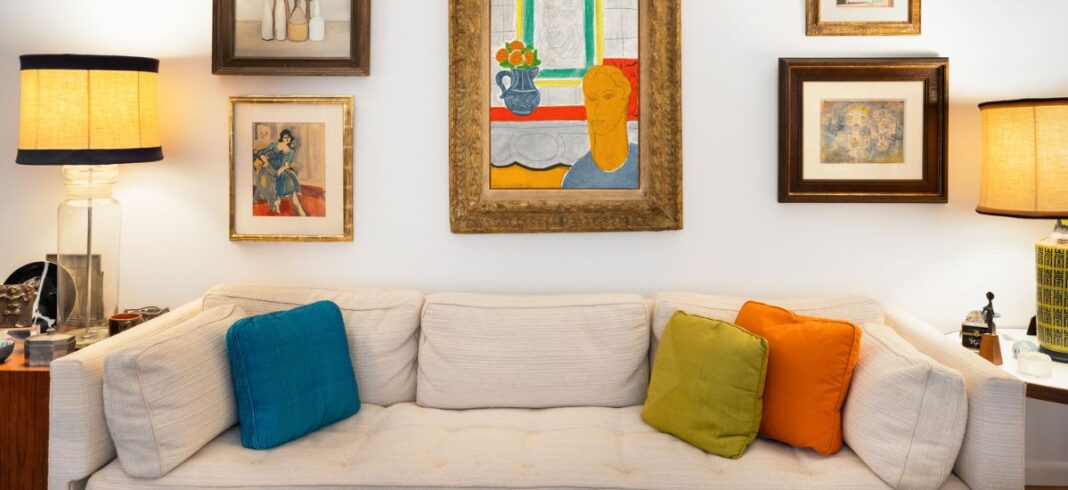
The juxtaposition of masterpieces with ordinary domestic life defined the Weis household. Their daughter Jennifer recalled her mother matching couch cushions to a Matisse interior scene, while children’s pottery sat proudly alongside ceramics by Lucie Rie and Hans Coper. Even disputes over art became part of family lore: when Patricia resisted a 12-foot bronze by Julian Schnabel, she forced Robert to install it at the edge of their property. Later, she grew so attached to the sculpture that Robert moved the pool house to bring it into view—shifting architecture rather than the 3,190-pound artwork.
Jonathan Weis, now CEO of Weis Markets, told the New York Times that living in small-town Pennsylvania shielded the family from scrutiny. “Living in a small town where a lot of people didn’t know” the significance of their collection, he said, “created a magical world within a world.”
The decision to sell coincides with a turbulent period for the global art market. As The New York Times reported, sales at Christie’s, Sotheby’s, and Phillips declined 6 percent in the first half of 2025 compared with the same period in 2024. Particularly worrisome was the postwar and contemporary category, which contracted by 19 percent.
Some of the season’s biggest hopes have already disappointed. Sotheby’s failed to sell a major Giacometti bust—“Grande tête mince (Grande tête de Diego)”—which carried an estimate above $70 million. Art advisers say such high-profile misses underscore how thin demand has become at the top of the market.
Christie’s, keen to avoid embarrassment, has pressed sellers to lower expectations. “We lived through an incredible bubble,” adviser Wendy Cromwell told the New York Times referring to the exuberant rise from 2008 through 2022. Demand remains for top-tier names like Rothko or Franz Kline, she said, “but there are fewer of them [buyers]. A lot of people bought already who could afford it, and now they are doing other things with their money.”
In this context, Christie’s aggressive guarantee for the Weis collection is striking. It signals deep confidence not only in the quality of the works but also in their ability to attract collectors even amid macroeconomic uncertainty.
Advisers quoted by The New York Times called the Weis trove a “unicorn” collection—a perfectly preserved ensemble of modernist icons acquired in quieter times. Unlike contemporary trophy hunters, the Weises purchased without fanfare, often during down cycles in the market. Their strategy now offers Christie’s precisely what it needs: works fresh to market, untouched by speculative hype, with provenance rooted in decades of careful stewardship.
For collectors worldwide, the November sales will represent an opportunity to secure works absent from circulation for generations. For the art trade, the event will serve as a litmus test of resilience: can the allure of Rothko and Picasso overcome the prevailing chill?
The Weis story is also a study in generational contrast. While today’s magnates race to build cultural institutions, the Weises seemed content to live quietly among their treasures. The New York Times noted how their lifestyle—assembling masterpieces in a Pennsylvania ranch house, away from New York’s art-world spotlight—evokes a bygone era when collecting was more personal than performative.
This contrast lends poignancy to the sale. Once the works leave Christie’s, they will likely scatter to global buyers, enter museum collections, or disappear again into private vaults. The modest Sunbury home that once housed a Rothko, a Picasso, and a Matisse will revert to something more ordinary, while the art world absorbs a landmark auction.
For Christie’s, winning the Weis consignment was itself a coup. As The New York Times report emphasized, the financial guarantee—nearly $200 million—commits the auction house to paying the family regardless of outcome. Such guarantees are used selectively, often to woo high-value estates, and reflect not just optimism but strategic necessity in a competitive landscape.
By locking in the Weis trove, Christie’s ensures that its November sales will command global attention. Rival Sotheby’s will be under pressure to respond, even as it reels from its Giacometti setback. The success or struggle of these auctions will shape perceptions of the high-end art market going into 2026.
Beyond the numbers, the Weis auction is a story of legacy. Robert and Patricia Weis built their collection not to impress, but to live with beauty. Their idiosyncrasies—matching furniture to Matisse, relegating Schnabel bronzes out of sight—reflect the intimacy of art in private life. Now, their children are translating that legacy into public view, allowing the world to finally glimpse what had been hidden in Sunbury for decades.
As the New York Times concluded in its profile, the Weis collection represents not just an extraordinary financial event but a cultural one: a reminder that some of the greatest treasures may sit quietly in unexpected places, waiting for the right moment to emerge.
The Weis collection auction at Christie’s promises to be one of the defining art events of 2025. With Rothko’s luminous abstraction, Picasso’s portrait of Marie-Thérèse, and Matisse’s interior scene leading the way, the sale will test the resilience of the market at a time of contraction.
As The New York Times report highlighted, the event embodies multiple paradoxes: a hidden collection becoming public, an old-school couple thrusting their legacy into a hyper-visible art economy, and a cooling market suddenly infused with a unicorn cache of masterpieces.
Whether the auction achieves or surpasses its $180 million estimate, it will mark the end of an era for one Pennsylvania family and perhaps the beginning of a new chapter for collectors worldwide.
