



|
Getting your Trinity Audio player ready...
|
CBS Report Honors Americans Who Defied Nazi Rule to Save Jews, Including Marc Chagall, as Holocaust Remembrance Day Nears
By: Fern Sidman
As the world approaches International Holocaust Remembrance Day on Jan. 27, the narrative of the Holocaust is once again drawn into public consciousness—its scale of horror, its industrialized cruelty, and its devastating human toll. Yet woven into that immense darkness are rare and luminous threads of moral courage: individuals who, at immense personal risk, chose to resist evil not with weapons, but with conscience. Among these figures stands Varian Fry, an American journalist whose extraordinary rescue operation in Nazi-occupied France saved thousands of lives, including the world-renowned Jewish artist Marc Chagall.
According to a report on Sunday by VIN News, Fry’s legacy has once again been brought to public attention through a series of interviews and historical reflections aired by CBS News correspondent Lee Cowan, who spoke with descendants of both Fry and Chagall, alongside historians, authors, and filmmakers who have devoted their work to preserving these stories. The renewed focus, timed to coincide with International Holocaust Remembrance Day, underscores a profound truth: while the machinery of genocide sought to erase Jewish existence, individual acts of courage preserved not only lives, but culture, memory, and the moral fabric of humanity itself.
At the center of this remembrance stands Yad Vashem, Israel’s official Holocaust memorial authority, which bestows the title “Righteous Among the Nations” upon non-Jews who risked their lives to save Jews during the Holocaust. As the VIN News report emphasized, this honor is not symbolic decoration; it is reserved for those who acted with no expectation of reward, often under conditions of mortal danger. Among the honored Americans, Varian Fry occupies a singular place in history as the first U.S. citizen to receive this recognition.
Fry’s story is one of improbable heroism. Trained as a journalist, not a soldier or diplomat, he arrived in Vichy France in 1940 armed not with institutional power but with moral conviction. The Nazi occupation had transformed France into a labyrinth of terror, bureaucracy, and betrayal. Jewish intellectuals, artists, writers, and political dissidents were systematically identified, hunted, and marked for deportation. Escape routes were closing. Borders were hardening. Governments hesitated. Fear was everywhere.
It was in this suffocating environment that Fry established his emergency rescue operation. Operating under constant surveillance and threat of arrest, he built clandestine networks, forged documents, bribed officials, arranged transport routes, and created escape corridors through Spain and Portugal. Fry worked with minimal institutional backing and limited resources, yet his operation ultimately enabled thousands of endangered individuals to flee Europe.
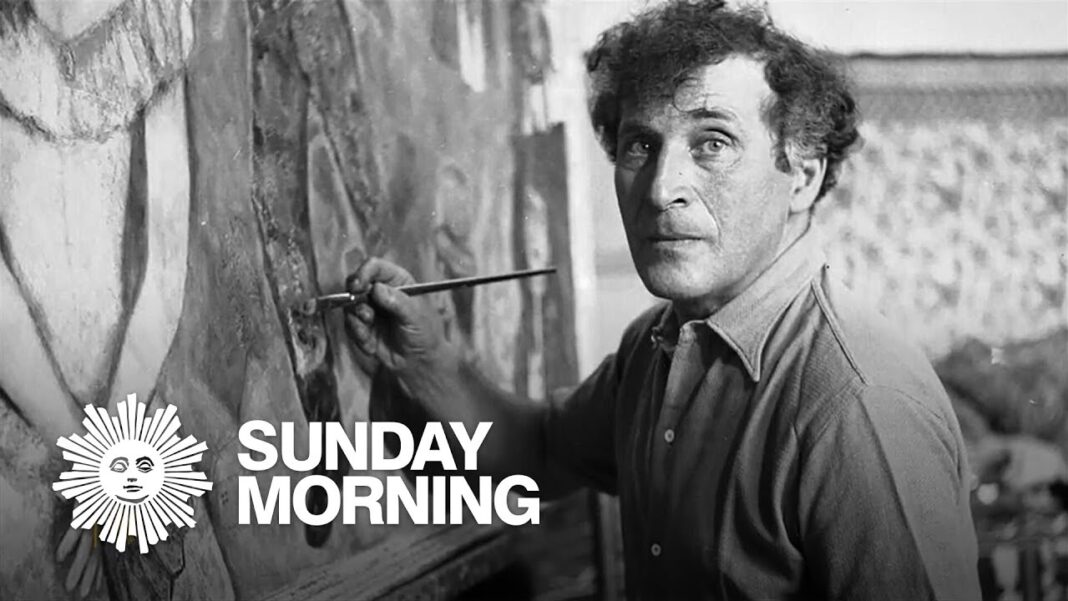
Among those he saved was Marc Chagall, one of the most influential artists of the 20th century. Targeted explicitly because of his Jewish identity, Chagall’s life—and the artistic legacy embodied in his work—was in imminent danger. Fry not only orchestrated Chagall’s escape to the United States, but also safeguarded his artwork, preserving a cultural heritage that would otherwise have been annihilated. As the VIN News report noted, this act of rescue was not merely the salvation of a man, but the preservation of a civilization’s creative soul.
The moral weight of Fry’s actions has been explored by historian Deborah Dwork, author of “Saints and Liars: The Story of Americans Who Saved Refugees from the Nazis.” In interviews cited by VIN News, Dwork emphasizes that such rescue efforts were neither simple nor romantic. They involved ethical dilemmas, profound fear, and agonizing choices. Rescuers were forced to decide whom to help when resources were limited, whom to prioritize when time was short, and how to navigate a moral landscape where any mistake could mean death—not only for the refugees, but for the rescuers themselves.
Dwork’s scholarship reveals that Fry was not an isolated anomaly. He was part of a small but morally formidable group of Americans who refused to accept the passive role of bystanders. These individuals acted at a time when official channels were largely closed to Jewish refugees, when immigration quotas restricted entry, and when political leadership often prioritized neutrality over humanitarian obligation. These rescuers functioned in a moral vacuum where conscience replaced policy and courage substituted for authority.
This theme is further explored in filmmaker Nick Davis’s documentary, ‘This Ordinary Thing’ which recounts 45 true stories of individuals who stepped forward to save Jews during the Holocaust. Davis’s work is built on a radical yet profoundly human premise: the rescuers did not view themselves as heroes. They did not perceive their actions as extraordinary. They simply believed that decency demanded action.
Davis argues that this is precisely what makes their courage so powerful. They were not saints in the theological sense, nor revolutionaries in the political sense. They were teachers, journalists, farmers, bureaucrats, neighbors—ordinary people who refused to surrender their moral agency to the surrounding evil. As Davis explains, these individuals acted not because they sought recognition, but because they believed that to do nothing would make them complicit.
Varian Fry embodies this ethos. His rescue operation was not driven by ideology or nationalism, but by a visceral rejection of injustice. He saw what was happening, understood its implications, and acted. According to the information provided in the VIN News report, Fry’s work continued despite repeated warnings, diplomatic pressure, and threats from both Nazi and Vichy authorities. Eventually expelled from France, his mission was cut short—but not before thousands had escaped through the corridors he helped create.
Yad Vashem’s posthumous recognition of Fry as Righteous Among the Nations reflects not only his actions, but the ethical universe he represents. This designation is reserved for those who acted selflessly, without material gain, and under conditions of genuine danger. Fry’s recognition situates him within a moral lineage that transcends nationality and religion—a universal category of human decency.
Yet the renewed attention to Fry and others is not merely historical commemoration. It carries contemporary relevance. As the VIN News report noted, these stories illuminate a neglected chapter of Holocaust history: the proactive involvement of some Americans in countering Nazi persecution at a time when many official doors remained closed to refugees. This challenges the simplified narrative of passive distance and highlights the power of individual agency even within oppressive systems.
The legacy of these rescuers also exposes uncomfortable truths. For every Varian Fry, there were thousands who remained silent. For every escape route, there were countless closed borders. For every act of courage, there were layers of indifference. The heroism of a few does not erase the moral failure of the many—but it does illuminate what was possible.
In reflecting on these stories, the VIN News report emphasized that remembrance is not only about mourning the dead, but about interrogating the living. The question is not simply what happened, but what people did when it happened. Who acted? Who looked away? Who chose safety over solidarity? Who chose conscience over comfort?
The story of Varian Fry and the others honored by Yad Vashem reframes Holocaust memory not only as a chronicle of atrocity, but as a testament to moral resistance. It reveals that even within systems designed to crush humanity, individuals can still choose to preserve it.
As International Holocaust Remembrance Day approaches, these narratives offer a counterpoint to despair. They remind the world that evil does not possess total power—not over conscience, not over courage, not over moral choice. The Holocaust stands as one of history’s darkest chapters, but within it are pages written in light.
Through the work of scholars like Deborah Dwork, filmmakers like Nick Davis, and the ongoing recognition by Yad Vashem, these stories continue to surface. And through reporting and historical reflection highlighted by VIN News, they continue to reach new generations.
Varian Fry did not set out to become a hero. He did not seek immortality in memorials or honorific titles. He simply refused to accept a world in which human beings were hunted and abandoned. In doing so, he preserved not only lives, but values.
In an age where moral clarity often feels elusive, his legacy offers something rare: a reminder that decency is not abstract, that courage is not theoretical, and that even in humanity’s darkest hours, light is possible—if someone is willing to carry it
