



|
Getting your Trinity Audio player ready...
|
By: Tzirel Rosenblatt
What began as a fleeting digital gesture — the accidental tap of a heart icon on a smartphone screen — has erupted into a far-reaching public controversy, exposing the volatile intersection of social media, antisemitism, celebrity influence, and the fragile ethics of online culture. According to a report that appeared on Thursday in The Algemeiner, children’s educator and YouTube phenomenon Ms. Rachel found herself at the center of a firestorm after admitting that she had “accidentally” liked an Instagram comment calling for America to be “free from the Jews,” a phrase that many Jewish advocacy groups describe as explicitly genocidal in its rhetoric and historical resonance.
The incident has reverberated far beyond the mechanics of a single social media interaction. As The Algemeiner has reported, it has become a symbol of a much larger cultural crisis — one in which antisemitic language increasingly circulates in digital spaces, often normalized, obscured, or dismissed as error, misunderstanding, or collateral damage in polarized political discourse.
Ms. Rachel, whose real name is Rachel Griffin Accurso, commands a vast digital empire. With 18.6 million subscribers on YouTube and an Instagram following of approximately 4.8 million, she is one of the most influential figures in children’s digital education. Her toddler learning videos have become staples in millions of households, shaping early childhood development across cultural, religious, and political boundaries. This extraordinary reach, as The Algemeiner report noted, transforms any controversy surrounding her into something far more consequential than a routine celebrity misstep.
The controversy began when Ms. Rachel posted a statement from her notes app on Instagram that read, “Free Palestine, Free Sudan, Free Congo, Free Iran.” Beneath the post, a social media user replied with the comment: “Free America from the Jews.” According to screenshots cited by multiple outlets and referenced by The Algemeiner, the antisemitic comment garnered four likes — one of which appeared to be from Ms. Rachel’s verified account.
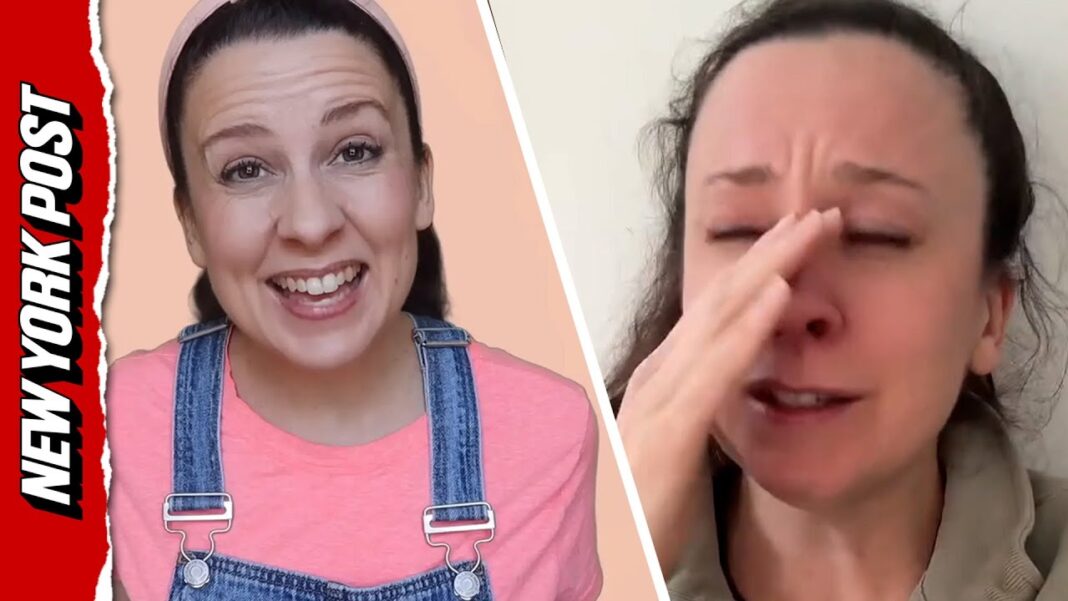
The reaction was swift. A private message sent to Ms. Rachel on Instagram pointed out the “like,” prompting her to issue a public apology video on Wednesday. In the emotional Instagram post, she claimed the interaction was a technical error, stating that she had intended to delete the comment but had instead accidentally selected “like and hide.”
“I thought I deleted a comment, and I accidentally hit ‘like’ and hide,” she said. “I don’t know how or why. I’ve accidentally liked comments before. It happens. I’m a human who makes mistakes.”
She went on to stress that she would never agree with antisemitic content, emphasizing her personal relationships with Jewish friends and family members and stating that she actively deletes antisemitic comments whenever she encounters them. “I would never agree with an antisemitic thing like the comment,” she said. “We have Jewish family, a lot of my friends are Jewish. I delete antisemitic comments.”
Yet, as The Algemeiner has documented, the incident did not occur in a vacuum. Ms. Rachel has been an outspoken critic of Israel and has previously shared content accusing the Jewish state of “genocide” during the Israel-Hamas war. This ideological positioning has made her a polarizing figure in Jewish communities and among watchdog organizations, including StopAntisemitism.org, which has accused her of spreading Hamas propaganda and misinformation about Israel’s military operations in Gaza.
The “like,” accidental or not, landed in an already charged atmosphere — one where antisemitic rhetoric, anti-Zionist activism, and online radicalization increasingly overlap in ways that blur moral and political boundaries. The Algemeiner has repeatedly reported on this phenomenon, documenting how antisemitic language is often embedded within broader political discourse, disguised as activism, and amplified through digital platforms with little accountability.
Ms. Rachel’s apology, though emotional, failed to quiet the controversy. In her video, she lamented the nature of online life, stating, “I feel like we can’t be human anymore online,” and apologizing for the confusion and harm the incident caused. “I’m so broken over it,” she said. “I’m so sorry if anyone thought that I would ever agree with something horrible and antisemitic like that. I don’t.”
She also posted a written statement reiterating her position: “I delete antisemitism ANY time I see it. I am against all forms of hate including antisemitism against the Jewish people.”
Yet critics, as reported by The Algemeiner, have argued that the issue extends beyond technical error. In an era when antisemitic rhetoric is increasingly normalized in digital spaces, even accidental amplification carries symbolic weight. A “like” from a figure with millions of followers can function as perceived validation, regardless of intent.
The controversy deepened further with claims circulating on X (formerly Twitter), posted by an account known as “The Persian Princess,” alleging that Ms. Rachel has Jewish ancestry through her family and is allegedly attempting to conceal it. The post quoted comedian Jeff Lawrence, described as a relative, who claimed that Ms. Rachel’s children and husband are of Jewish descent and accused her of hiding this lineage. These claims, though unverified, added another emotionally charged layer to the controversy and fueled further online speculation.
The Algemeiner report noted that such narratives — particularly those involving identity, ancestry, and ideological betrayal — often intensify digital outrage cycles, transforming isolated incidents into broader symbolic battles over loyalty, authenticity, and moral alignment.
What makes this episode uniquely disturbing, as The Algemeiner report emphasized, is the identity of the figure at its center. Ms. Rachel is not a political influencer, activist, or pundit. She is a children’s educator whose brand is built on trust, safety, and emotional warmth. Her audience is not primarily adult activists but parents, caregivers, and children. That such a figure could become entangled in explicit antisemitic rhetoric — even accidentally — raises profound questions about platform responsibility, content moderation, and the psychological environment in which children’s media now exists.
The broader implications extend well beyond Ms. Rachel herself. The Algemeiner report framed the incident as emblematic of a digital culture where extremist language circulates freely, often disguised as political expression, and where moral boundaries become increasingly blurred. Antisemitic phrases that would once have been universally condemned now appear in comment sections, trend cycles, and activist discourse with alarming frequency.
Jewish advocacy groups warn that this normalization is not accidental. It is the result of sustained rhetorical shifts in which Jews and Israel are increasingly portrayed as collective moral villains, enabling language that dehumanizes Jewish identity under the guise of political critique. The Algemeiner has repeatedly documented how such rhetoric creates fertile ground for explicit antisemitism to flourish.
Ms. Rachel’s case illustrates how even those who claim opposition to antisemitism can become entangled in its dissemination, intentionally or not. The speed of digital interaction, the complexity of platform interfaces, and the performative nature of online activism create an environment where ethical responsibility is often overshadowed by algorithmic engagement.
Her statement, “I’m old, so I am not as good with touching things online,” was met with mixed reactions. Some saw it as a sincere acknowledgment of technological fallibility. Others, as The Algemeiner reported, viewed it as an inadequate response to the gravity of the language involved — language that evokes historical patterns of persecution, exclusion, and violence.
The phrase “free America from the Jews” is not ambiguous. It echoes centuries-old antisemitic ideologies rooted in conspiracy theories, ethnic cleansing narratives, and genocidal logic. It is not merely offensive speech; it is historically charged language with lethal precedent. That such a phrase could appear under a post by a children’s educator — and receive engagement — underscores the severity of the cultural moment.
As The Algemeiner report observed, this controversy is not solely about one influencer’s mistake. It is about the erosion of moral clarity in digital spaces. It is about how antisemitism is increasingly embedded within political discourse. It is about how algorithms reward outrage while flattening ethical nuance. And it is about how figures with massive platforms wield influence — whether intentionally or inadvertently — over public norms.
Ms. Rachel’s apology may close the immediate incident, but the broader questions remain unresolved. What responsibility do public figures have to monitor and manage the discourse around their platforms? How should antisemitic content be addressed when it appears within political activism? And how can society draw clear moral boundaries in digital environments where outrage, identity, and ideology collide?
According to The Algemeiner report, the episode should serve as a warning. In a digital ecosystem driven by speed, spectacle, and engagement, even accidental actions can carry profound symbolic consequences. Influence without vigilance becomes vulnerability. Silence becomes ambiguity. Mistakes become signals.
Ultimately, this controversy reveals not only the fragility of online reputation but the fragility of ethical discourse itself. A single “like” became a national conversation not because of technical error, but because of what it symbolized in a world where antisemitism is no longer confined to the fringes.
As The Algemeiner report argued, combating antisemitism in the digital age requires more than apologies. It requires clarity, accountability, moral courage, and a refusal to normalize language that dehumanizes entire communities.
In that sense, the story of Ms. Rachel is not just about a YouTube star, a comment, or a mistake. It is about the cultural moment we inhabit — a moment where the boundaries between activism and hatred, speech and harm, error and consequence are increasingly blurred.
And it is a reminder that in the digital world, even the smallest gesture can carry the weight of history.
